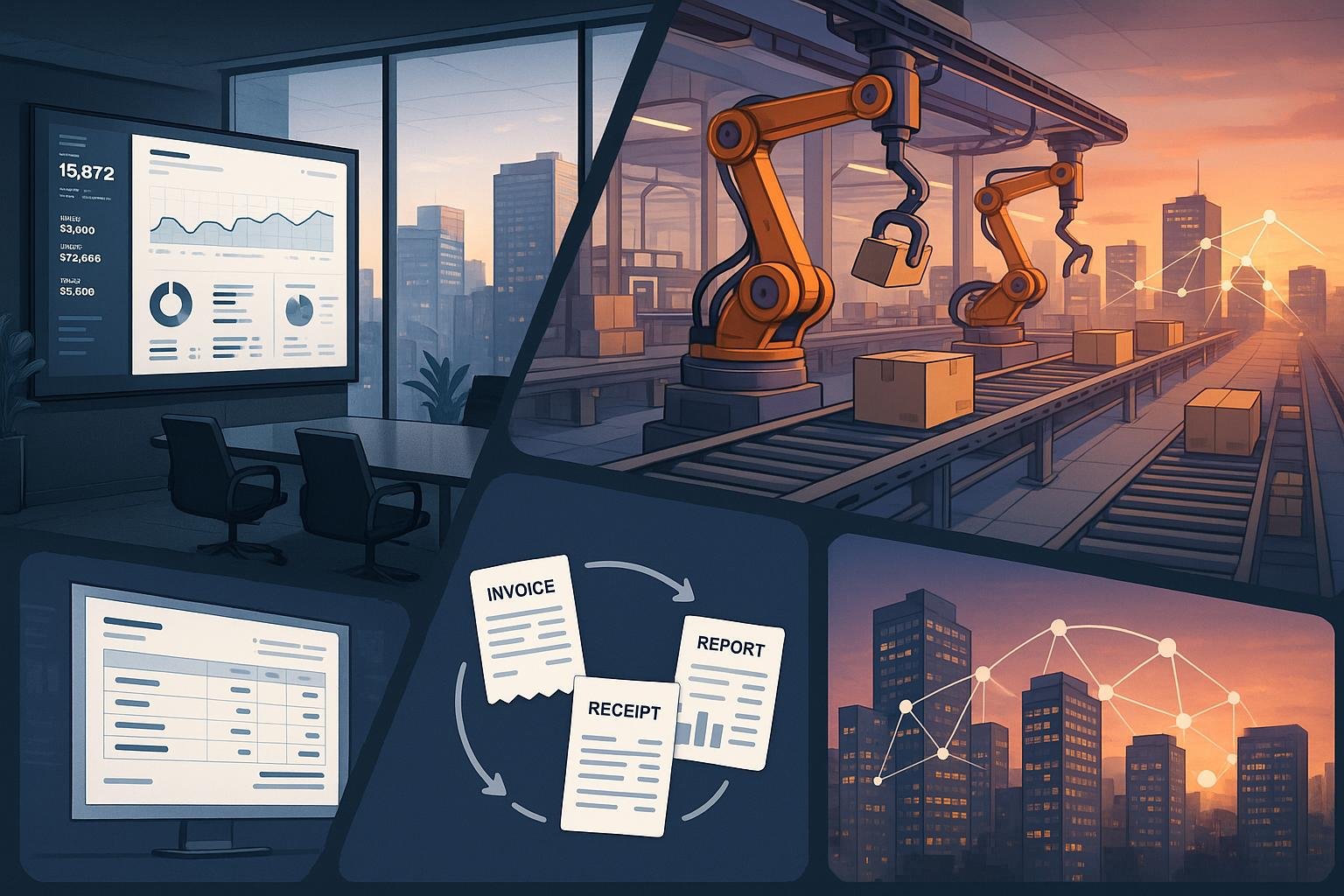
The evolution from manual processes to full automation in procure‑to‑pay systems enhances visibility, reduces errors, and strengthens financial governance, transforming procurement from a transactional task into a strategic asset.

Procurement has moved far beyond paper requisitions and threaded email approvals into interconnected digital workflows that link purchasing and finance. Yet many organisations persist with piecemeal tools and manual handoffs that fragment ...
Continue Reading This Article
Enjoy this article as well as all of our content, including reports, news, tips and more.
By registering or signing into your SRM Today account, you agree to SRM Today's Terms of Use and consent to the processing of your personal information as described in our Privacy Policy.
At its core, the procure‑to‑pay (P2P) sequence covers the lifecycle from recognising a purchasing need to settling the supplier’s invoice. According to IBM, that includes requisitioning, sourcing, issuing purchase orders, receiving goods, matching invoices and effecting payment, with the aim of streamlining operations and enforcing policy. The Association for Financial Professionals likewise highlights the role of P2P in cash‑flow management, cost control and supplier relationships, noting that optimisation supports more informed financial decisions.
Many vendors and consultants draw a distinction between e‑procurement tools and full P2P platforms. E‑procurement typically digitises the buying phase: creating requisitions, routing approvals, managing supplier catalogues and generating purchase orders. Procure‑to‑pay suites extend that chain into accounts payable, providing automated invoice matching, payment execution and deeper integrations with accounting systems. Industry comparisons show that while e‑procurement can improve purchasing controls, only an end‑to‑end P2P solution delivers continuous visibility from commitment to cash disbursement.
A still broader category, source‑to‑pay (S2P), absorbs upstream supplier lifecycle activities. Deltek describes S2P as encompassing strategic sourcing, supplier selection, contract management and risk assessment as well as the transactional flows handled by P2P. Organisations with complex supply bases or rigorous compliance obligations may favour S2P for its ability to combine supplier performance and contract terms with transactional discipline; mid‑market firms often prioritise P2P for operational efficiency.
Automation delivers measurable advantages across common failure points in manual practice. Automated workflows reduce approval bottlenecks and routing errors, three‑way matching between purchase orders, goods receipts and invoices lowers the incidence of duplicate or incorrect payments, and vendor portals improve transparency for suppliers by allowing order tracking and electronic invoice submission. Bill.com stresses that integrating purchasing and payables eliminates unnecessary manual input and can cut staff hours while improving profitability.
Risk control and auditability are frequent drivers for investment. Digital P2P systems create persistent records of requests, approvals and payments, flag policy deviations and provide searchable audit trails, features organisations in regulated sectors increasingly require. Built‑in validations and approval gates also mitigate unauthorised spend and fraud exposure, while centralised budget monitoring surfaces committed liabilities before they impact cash flow.
Cost remains a consideration for prospective buyers, but long‑term economics often favour automation. Savings arise from lower processing costs, fewer errors, reduced physical‑document overheads and the ability to capture early‑payment discounts. Procurement consultants advise assessing total cost of ownership, implementation, integrations and change management, rather than focusing solely on licence fees.
Feature sets to prioritise depend on scale and objectives. Effective platforms commonly offer configurable approval flows, vendor master capabilities, budget controls, audit logs, deep accounting integrations and advanced analytics. Vendors such as ProcureSuite emphasise AI and analytics to drive process efficiencies, while providers like TYASuite promote workflow customisation and reporting as means to improve transparency and supplier performance. Selecting a tool that aligns with transaction volumes, integration needs and user adoption capacity matters more than choosing the system with the longest feature list.
Looking ahead, the procurement technology landscape is moving toward greater intelligence. Predictive analytics and AI‑assisted recommendations are increasingly applied to spot savings opportunities, forecast demand and prioritise supplier risk interventions. Such capabilities promise to elevate procurement from a transactional function to a strategic contributor to working capital management and operational planning.
The business case for P2P automation rests on more than efficiency gains. By joining purchasing and finance in a single, governed workflow organisations gain tighter financial control, clearer supplier relationships and scalability without commensurate increases in administrative cost. For companies weighing options, the pragmatic path is to identify the capabilities that address current pain points while providing room to incorporate sourcing, analytics and advanced automation as needs evolve. In that way, digital procurement becomes not merely a systems upgrade but a foundation for more disciplined, strategic financial management.
Source: Noah Wire Services
Subscribe to Industry Updates