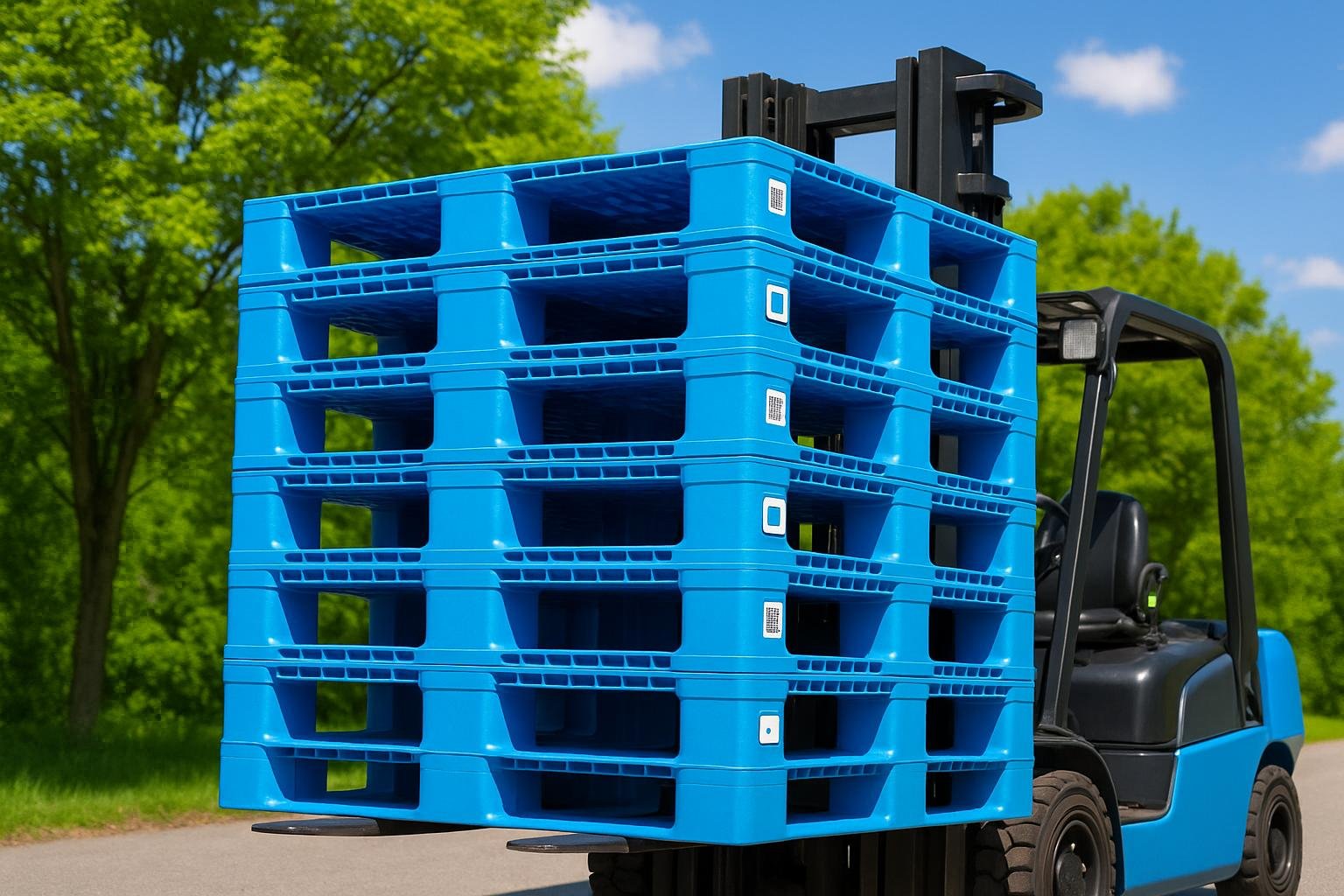
British company Digipal plans to fit its full range of reusable plastic pallets with GPS, 4G, Wi‑Fi and Bluetooth trackers by early 2026, promising enhanced visibility, loss reduction, and environmental benefits across retail and temperature-sensitive sectors.
Digipal has said it will equip its entire fleet of reusable plastic pallets with active trackers by the first quarter of 2026, a move the company frames as a step-change in visibility for pooled pallet networks ...
Continue Reading This Article
Enjoy this article as well as all of our content, including reports, news, tips and more.
By registering or signing into your SRM Today account, you agree to SRM Today's Terms of Use and consent to the processing of your personal information as described in our Privacy Policy.
serving retail and temperature-sensitive supply chains. According to PackagingRevolution, the announcement follows Digipal’s launch of its combined hardware and software model in 2020 and builds on deployments already in use with major UK retailers, including Asda toyou.
The trackers blend GPS, 4G, Wi‑Fi and Bluetooth to deliver continuous location and temperature telemetry, a configuration Digipal argues removes the need for fixed scanning points and helps curb losses while enabling tighter inventory control. The company describes the capability as integral to its DigiPortal platform and says the data supports leaner operations and improved asset utilisation. According to the firm’s website, the system is already fitted to products such as the Digipal 5S pallet and the DigiBox container.
Mattan David, Managing Director at Digipal, said in the announcement: “We’re very proud to share that, by Q1 2026, 100% of our stock of reusable plastic containers will be tracked.” He added that tracking delivers multiple benefits for both Digipal and its customers, including loss reduction and temperature monitoring.
Digipal produces its pallets in the UK using recycled feedstock and supplies them via pooled rental and direct sale models. The company states its plastic pallets weigh roughly 10 kilograms less than equivalent wooden units and report a damage rate below one percent, features it says support sustainability and total-cost-of-ownership improvements. Industry commentary highlights that combining reusable packaging with digital monitoring is increasingly promoted as a way to meet corporate environmental targets while tightening supply chain processes.
Independent coverage and case material point to early operational gains where tracking has been implemented. A case study referenced by Robotics and Automation describes improvements at Asda toyou after adopting Digipal’s pallets, with tracking cited as a key enabler for repeatable reuse across a large, distributed last‑mile network. Digipal has also marketed the solution to grocery and fresh‑produce supply chains, emphasising the temperature-sensing element for perishable loads.
The company’s claim of full tracker coverage aligns with a broader industry trend toward IoT-enabled reusable transport packaging, where pooled systems increasingly rely on embedded sensors to manage asset movement and prevent leakage. OpenPR and other trade sources note that as pooling schemes expand and networks fragment, real‑time asset data is being positioned as a commercial and operational imperative for retailers and logistics providers.
Digipal’s announcement will be watched by procurement and supply‑chain teams weighing the trade-offs between the capital and operational costs of fitted trackers and the anticipated reductions in loss, damage and manual handling. The company presents its approach as a single integrated solution combining UK manufacture, recycled materials and an IoT platform to support both environmental and efficiency goals.
Source: Noah Wire Services