


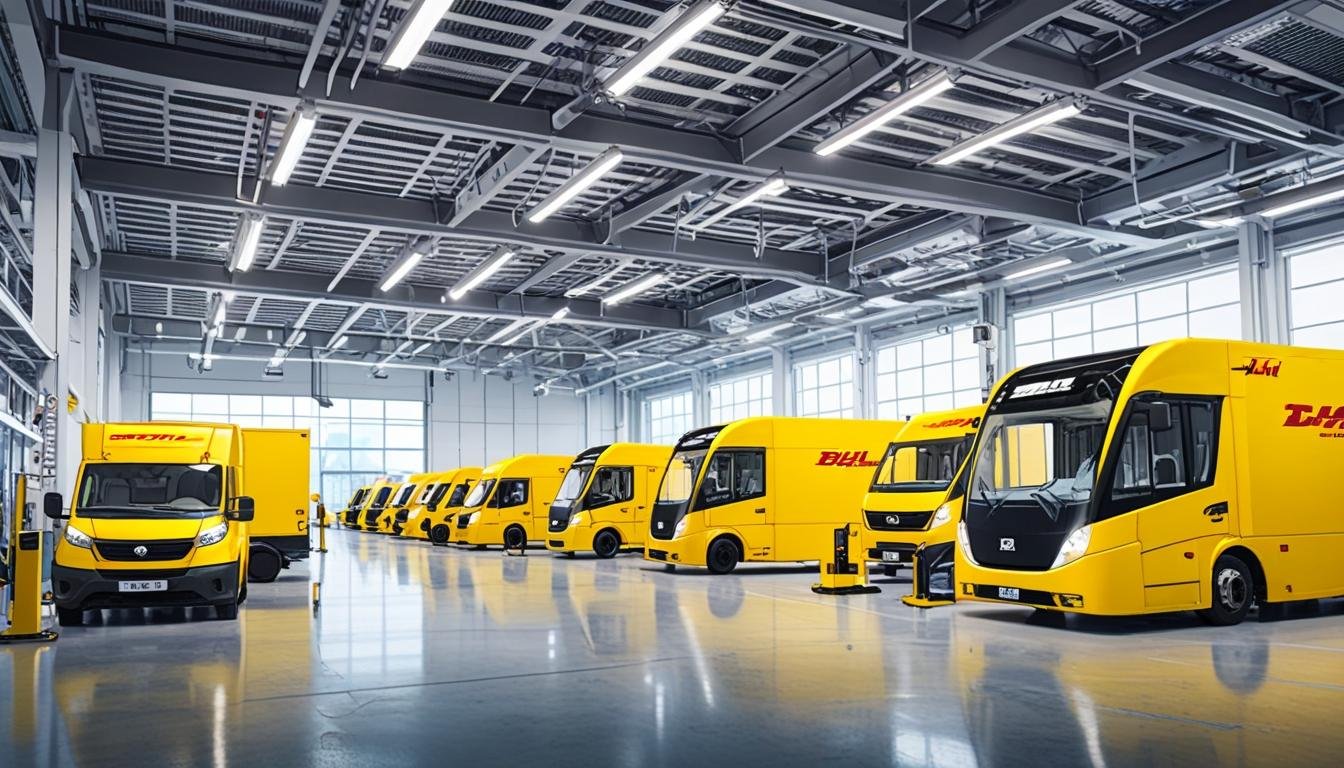
**Asia Pacific**: DHL Group will establish three Electric Vehicle Centers of Excellence in Shanghai, Singapore, and Indonesia in 2024 to support the surge in electric vehicle sales, showcasing a commitment to integrating advanced logistics capabilities for the growing EV market in the region.
DHL Group, a leading global logistics company, is set to enhance its electric vehicle (EV) logistics and supply chain capabilities in the Asia Pacific region with the establishment of three new Electric Vehicle Centers of Excellence (COEs) in 2024. These facilities will be located in Shanghai, Singapore, and Indonesia, aimed at supporting the expected surge in EV sales in Asia, which is projected to account for 63% of the 115 million new EVs sold worldwide over the next five years.
Fathi Tlatli, Global Auto-Mobility Sector President at DHL Customer Solutions and Innovation, emphasised the importance of a robust logistics supply chain to meet this growing demand, stating, “A robust and compliant logistics supply chain ecosystem is needed to support this growing demand, and our EV Centers of Excellence in Shanghai, Singapore, and Indonesia serve as hubs of competencies and resources for the growing EV industry across the Asia Pacific.”

The new COEs are designed to provide a comprehensive suite of services throughout the EV supply chain. They will showcase DHL’s existing expertise and capabilities in logistics for EV manufacturers. According to Audrey Gerard, Vice President of Auto-Mobility for Asia Pacific at DHL, “When people think of EVs, it is often associated with the finished vehicle itself. However, there is an entire complex ecosystem behind the EV value chain, which is crucial in orchestrating the process.” She highlighted that DHL’s extensive global network enables them to offer tailored solutions for every segment of the EV supply chain.
The three COEs in Singapore, Shanghai, and Jakarta will be part of a broader network that includes 10 countries, such as Italy, the United Kingdom, Mexico, and the United Arab Emirates. Additional COEs are also planned for other nations with established EV industries, including India, Japan, Malaysia, and Thailand.
DHL Group’s Strategy 2030 identifies the New Energy sector as a vital area for growth, reflecting the company’s focus on adapting to the evolving needs of the EV market. As the sector matures, DHL is also exploring logistical solutions for repurposing end-of-life EV parts and batteries—a necessity for enhancing sustainability in the industry. Tlatli noted, “This segment will require complex logistics support, which we are exploring in the region leveraging solutions implemented in Europe and the Middle East networks.”
The new EV COEs will provide a variety of customised solutions, including managing the logistics of capital equipment and battery materials for gigafactories, ensuring efficient inbound-to-manufacturing (I2M) processes for EV assembly plants, as well as support for finished vehicle distribution and aftermarket services. DHL has demonstrated its capability as a logistics partner by managing the door-to-door transport of EV batteries and components for numerous global vehicle manufacturers, utilising control towers for efficient supply chain oversight.
Additionally, for companies engaged in the expansion of mining operations and battery manufacturing, DHL offers comprehensive logistics management from transportation of materials to in-plant logistics for assembly. This includes air transport for urgent deliveries of critical components and prototypes across international markets.
DHL’s commitment to the electric vehicle industry and its newly established Centers of Excellence signify a strategic move to bolster the logistics ecosystem supporting the rapid growth of EV adoption across the Asia Pacific region.
Source: Noah Wire Services

