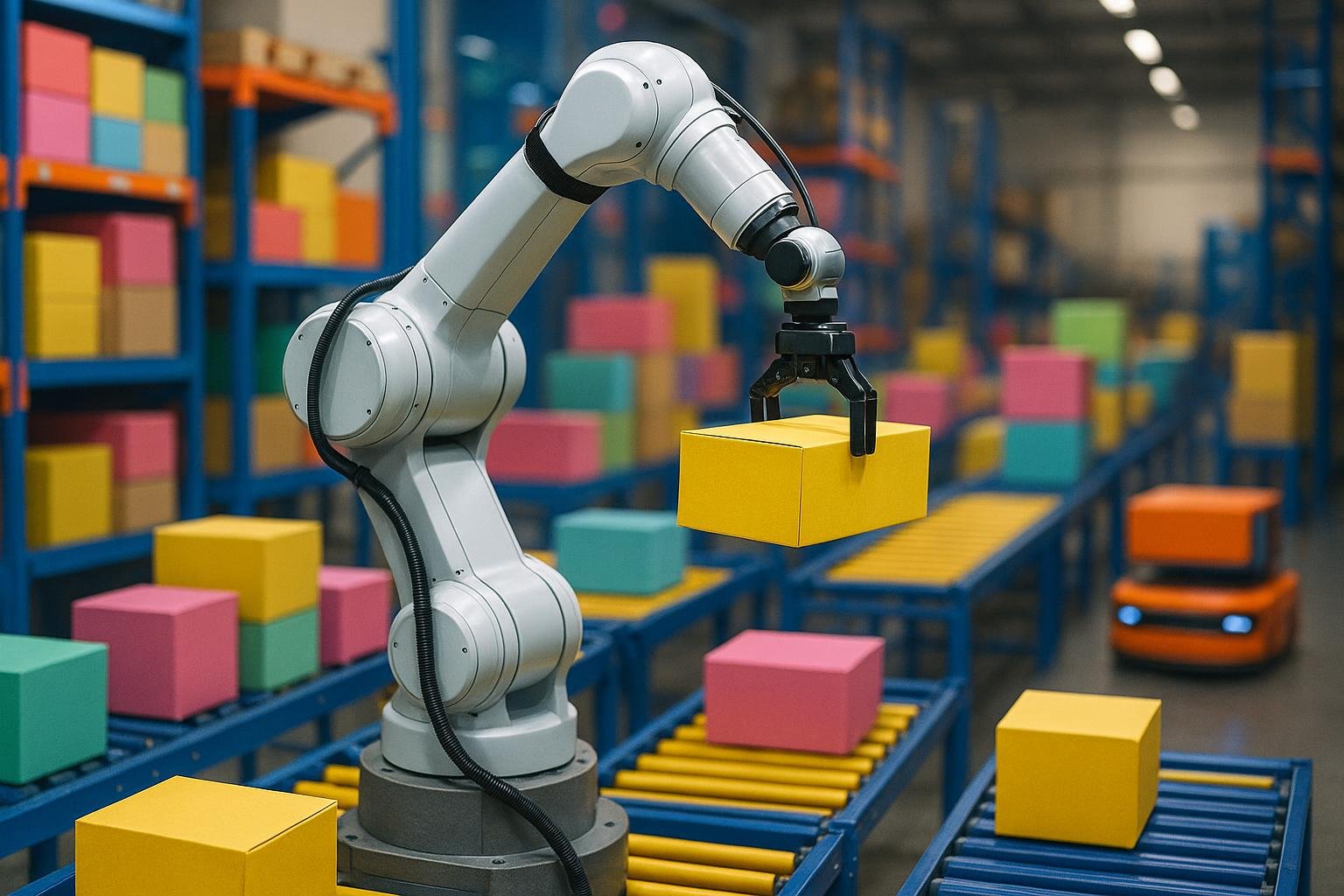
DHL Supply Chain partners with AI startup HappyRobot to deploy agentic AI across its global operations, streamlining communication, enhancing customer service, and automating routine tasks, signalling a new era in supply chain automation.

DHL Group is advancing its enterprise-wide artificial intelligence (AI) strategy through a significant new partnership between its contract logistics division, DHL Supply Chain, and the AI startup HappyRobot. This collaboration is aimed at deploying agentic AI to optimise communication processes, enhance customer service, and improve employee experience within its global supply chain operations.
DHL has already implemented HappyRobot’s AI agents in multiple regions, applying them to a range of tasks such as appointment scheduling, driver follow-up calls, and coordination of high-priority warehouse activities. These AI agents autonomously manage large volumes of phone and email interactions, which results in faster response times, greater consistency, and scalability of communications that are critical for logistics operations.
According to DHL Supply Chain’s Chief Information Officer, Sally Miller, this partnership follows more than 18 months of evaluating the operational uses of generative and agentic AI. The aim is to drive enhanced process efficiency for customers while making operational roles more engaging by automating repetitive and time-heavy tasks like manual data entry, routine scheduling, and standardised communications. This approach is designed to alleviate operational burdens on employees, enabling them to focus on more strategic and rewarding activities.
HappyRobot’s engineering team has developed a sophisticated orchestration layer that allows these AI agents to operate seamlessly across multiple communication platforms including email, WhatsApp, and SMS, while ensuring fault tolerance and recovery amid any system disruptions. The system currently handles hundreds of thousands of emails and millions of minutes of voice communication annually, showcasing the scale and impact of AI integration within DHL’s supply network.
Pablo Palafox, CEO of HappyRobot, articulated the long-term vision for these AI agents to serve as a foundational operational layer across global logistics. He noted that DHL was an early recogniser of the potential for AI agents to deliver enhanced speed, visibility, and consistency, which are vital in the complex and dynamic logistics landscape.
This strategic AI deployment aligns with broader trends in the logistics and supply chain sectors where automation and digital transformation are increasingly critical. The use of agentic AI not only supports operational efficiencies but also addresses growing customer expectations for responsive, accurate communication. Furthermore, it enhances workforce satisfaction by reducing monotonous tasks.
While DHL is focusing on communication-based AI solutions with HappyRobot, the company is also exploring other advanced automation technologies. For instance, in a separate initiative, DHL Supply Chain has partnered with robotics firm Robust.AI to develop warehouse robots designed to automate material handling, demonstrating the company’s comprehensive embrace of AI and robotics to optimise multiple facets of its logistics operations.
Meanwhile, HappyRobot itself is experiencing rapid growth, having recently raised $44 million in a funding round led by Base10 Partners to expand its AI agent technologies across freight operators and global logistics markets. This infusion of capital could accelerate both the development of their AI capabilities and wider adoption in the logistics sector, potentially solidifying their partnership with DHL as a landmark case of AI-enabled supply chain transformation.
In summary, DHL’s collaboration with HappyRobot represents a key milestone in the evolution of AI within the logistics industry, illustrating how agentic AI technologies can be integrated to streamline communications and support workforce productivity on a global scale. As AI continues to evolve, the logistics sector is likely to see deeper adoption of such intelligent systems driving greater efficiency, agility, and service quality.
Source: Noah Wire Services