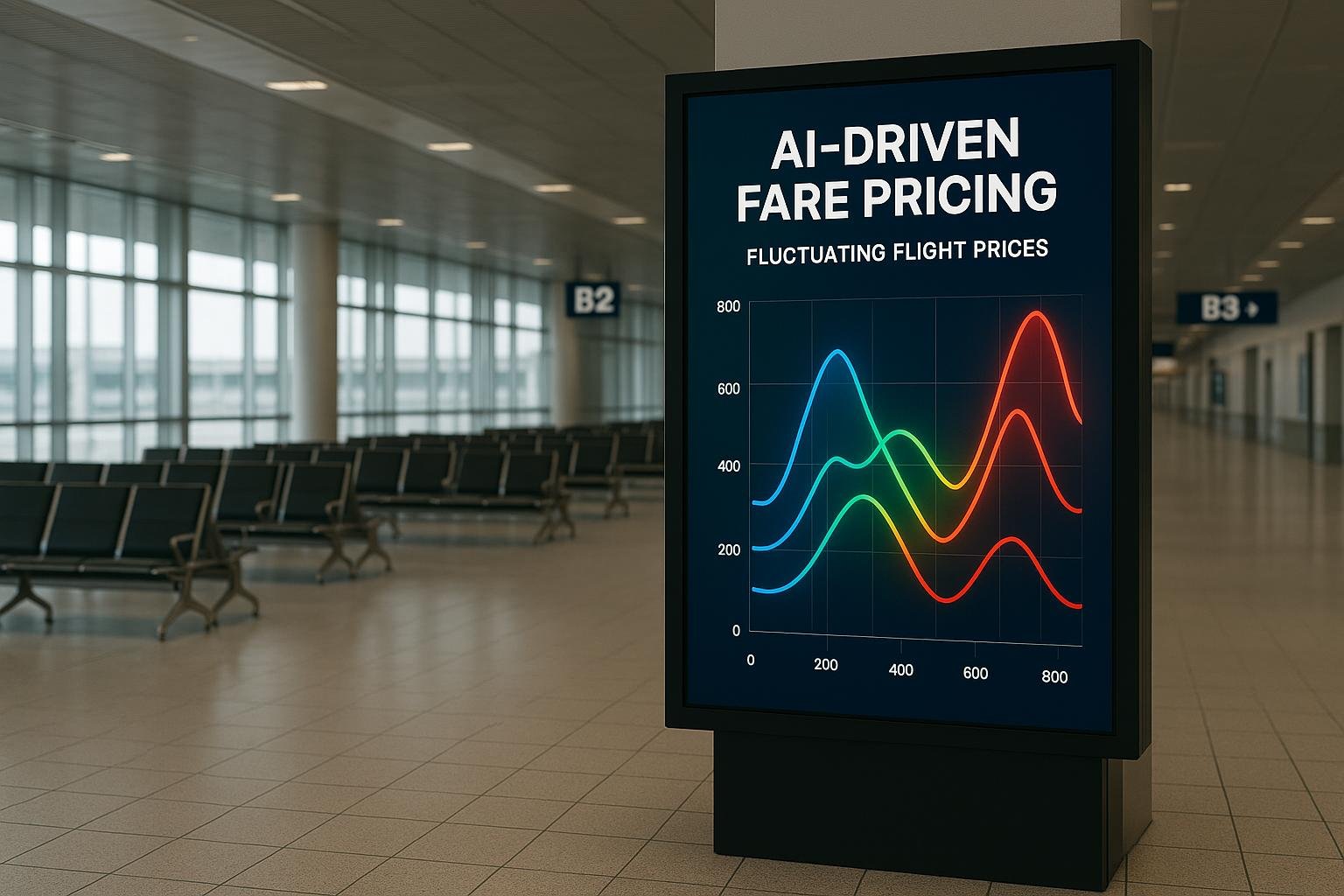
Delta Air Lines is deploying artificial intelligence to revolutionise airline ticket pricing, using real-time data to optimise revenue while navigating ethical concerns and regulatory oversight. The airline’s current focus is on faster, more precise traditional models, with plans for personalised offers in development.

Delta Air Lines is pioneering the use of artificial intelligence (AI) in airline ticket pricing, a move that has sparked controversy and regulatory scrutiny despite the company’s efforts to clarify its intentions. According to a detailed white paper titled Speed of Data: The New Airline AI Arms Race, Delta’s deployment of AI pricing technology in partnership with the Israeli startup Fetcherr is designed to optimise fare setting by continuously adjusting prices in near real-time. This technology, described by Delta as a “super analyst,” uses a transformer-based Large Market Model that ingests a broad spectrum of data—including inventory, historical fares, competitor pricing, events, and weather—to generate optimal prices and update them in seconds, thereby significantly increasing revenue potential.
Delta began its AI pilot on about 1% of its domestic fares in autumn 2024, expanding to roughly 3% by July 2025 with plans to cover 20% of its domestic network by the end of the year. Fetcherr claims its AI model can deliver a 10% boost in revenue through improved pricing accuracy and pace. This represents a departure from traditional airline revenue management systems that have historically relied on slower, human-in-the-loop decision-making processes. By automating repricing, Delta aims to gain a competitive edge through speed.
However, the company has faced criticism and concern from U.S. lawmakers and regulators over fears that AI could lead to personalized fare pricing, where individual customers might be charged different prices based on personal data—raising ethical and fairness issues. Senators Ruben Gallego, Mark Warner, and Richard Blumenthal expressed apprehensions that AI-driven pricing might exploit consumer vulnerabilities or “pain points,” prompting Delta to publicly reaffirm that, despite the technology’s sophistication, it does not currently—or plan to—use customer-specific data for setting ticket prices. The company insists that the AI operates on aggregated, classical revenue management data rather than personalized profiles.
Delta’s President, Glen Hauenstein, has acknowledged that while the airline is not engaging in personalized pricing today, the future vision includes a form of “offer management” where the price offered could be tailored to specific customers for specific flights. This approach would blend pricing and revenue management into a single, sophisticated process offering individualised prices dynamically. Nonetheless, this remains a goal rather than present practice.
The use of AI for fare pricing is rapidly becoming an industry-wide trend. Several airlines, including Azul, Virgin Atlantic (partially owned by Delta), WestJet, and Viva Aerobus, also use Fetcherr’s technology, with Virgin Atlantic reporting a 10% increase in seat fees through dynamic pricing. Other carriers like JetBlue and flydubai have partnered with competing AI pricing firms such as FLYR and PROS, while Lufthansa has also adopted PROS AI solutions.
Despite the promise of AI in pricing, challenges remain. Industry experts highlight risks such as “flash-crash” style price spirals triggered by AI algorithms reacting to each other, potential over-discounting on low-demand days, and questions about the extent of human oversight required when decision-making is largely automated. Airlines also face the technical complexity of integrating and unifying vast datasets—a process Delta has reportedly spent a decade refining, giving it a temporal advantage over competitors.
Crucially, AI-driven fare pricing is more likely to enable airlines to confidently offer lower fares to price-sensitive leisure travellers to fill empty seats while protecting higher fares charged to less price-sensitive business travellers. This strategic segmentation aims to attract new customers with competitive pricing without undercutting revenue from customers willing to pay premium fares. Classical methods such as advance purchase requirements and pricing restrictions like basic economy have been blunt instruments; AI promises finer, data-informed segmentation without compromising profitability.
Delta’s AI approach therefore focuses on optimising access and pricing strategies rather than exploiting individualized personal data. Nevertheless, the U.S. Department of Transportation, under Secretary Sean Duffy, has signalled it will closely investigate any airline adopting AI-based personalized fare setting that might discriminate based on personal attributes. This regulatory vigilance underlines ongoing concerns about privacy and fairness in AI applications within the travel industry.
American Airlines’ CEO Robert Isom has publicly criticised Delta’s AI initiatives, framing the debate in terms of trust and ethics amid the competitive pressures in airline revenue management. Meanwhile, American Airlines itself recognises AI’s potential, with its Vice Chair and Chief Strategy Officer, Steve Johnson, highlighting opportunities for deploying AI in revenue management.
In summary, Delta’s current AI pricing operations focus on accelerating and refining traditional pricing models to respond faster to market dynamics without using personal data for fare-setting. The airline’s future ambitions for personalised offer management remain under development and regulatory observation. As the airline industry races to integrate AI, the ultimate challenge will be balancing technological advancement with ethical pricing practices and consumer trust.
Source: Noah Wire Services