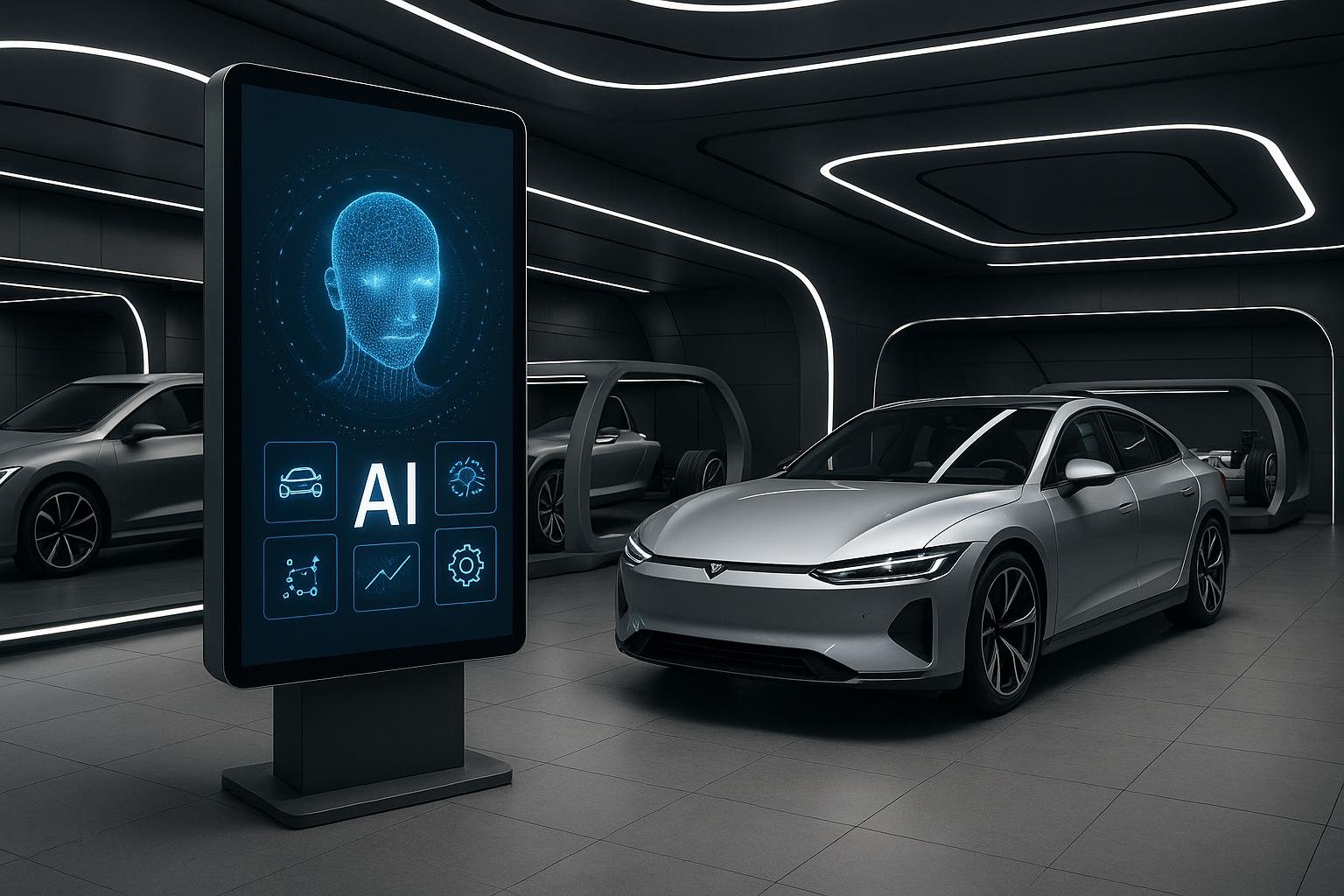
Industry experts highlight the importance of integrating modular, AI-driven solutions to create a seamless, measurable automotive retail journey aligned with modern consumer expectations.

Technology must bind the retail motor experience into a single, measurable fabric if dealer groups are to meet modern customer expectations, industry speakers said.
According to the original report from Automotive Management, Keyloop’s chief strategy officer Tim Smith told del...
Continue Reading This Article
Enjoy this article as well as all of our content, including reports, news, tips and more.
By registering or signing into your SRM Today account, you agree to SRM Today's Terms of Use and consent to the processing of your personal information as described in our Privacy Policy.
Keyloop’s chief product officer Adrian Nash highlighted how the modern customer researches and narrows choices over time and said that the spread of artificial intelligence will accelerate that change. He warned that mobile assistants will increasingly do the heavy lifting for consumers: “People are going to use assistants on their mobile phones that do a ton of research for the end consumer. They’re going to actually recommend, at the right point of time, which vehicles they should change and where has the best offer.” Nash set out the need to build a technology “fabric” that enables those assistants to find, service and help sell vehicles while feeding a single system of record.
Industry data supports the urgency of that integration. A Cox Automotive study shows consumer satisfaction with the car-buying experience rose from 61% in 2022 to 69% in 2023 and that omnichannel behaviour is already common, with a substantial share of buyers combining online and in-person steps. Other surveys cited alongside the seminar findings report that the majority of buyers expect a mixed online/in-person purchase path and that up to three-quarters of shoppers anticipate car buying will feel like other e-commerce experiences within a few years. Those trends underline Smith’s warning that “you can’t manage what you can’t measure” , insights and analytics must deliver measurable business value by saving time, reducing risk and enabling data-driven decisions.
Speakers emphasised the operational consequences of poor integration. Data silos , valuable information trapped in departmental or technological boundaries , break the continuity of the customer experience and blunt aftersales and retention opportunities. The recommended architecture is dual-layered: retain the dealer management system (DMS) as the secure system of record at the core, while running cloud-native, composable solutions on top to enable agility, third-party integrations and visible dashboards for the right decision-makers.
For dealer groups this means three practical priorities: put a unified platform at the centre of processes so sales and service share customer context; adopt composable tools that allow rapid substitution and improvement without wholesale replacement; and invest in analytics and AI-driven augmentation to enhance staff productivity and personalise customer journeys. As Smith put it, the aim is not to own every component but to provide “a road map or a staircase to an ultimately connected journey.”
The industry’s move towards a connected, measurable tech stack is, therefore, both a customer-experience imperative and an operational necessity , a transition that will determine which dealer groups thrive as consumers bring e-commerce expectations and AI-enabled assistants into the vehicle purchase and ownership lifecycle.
Source: Noah Wire Services
Subscribe to Industry Updates