


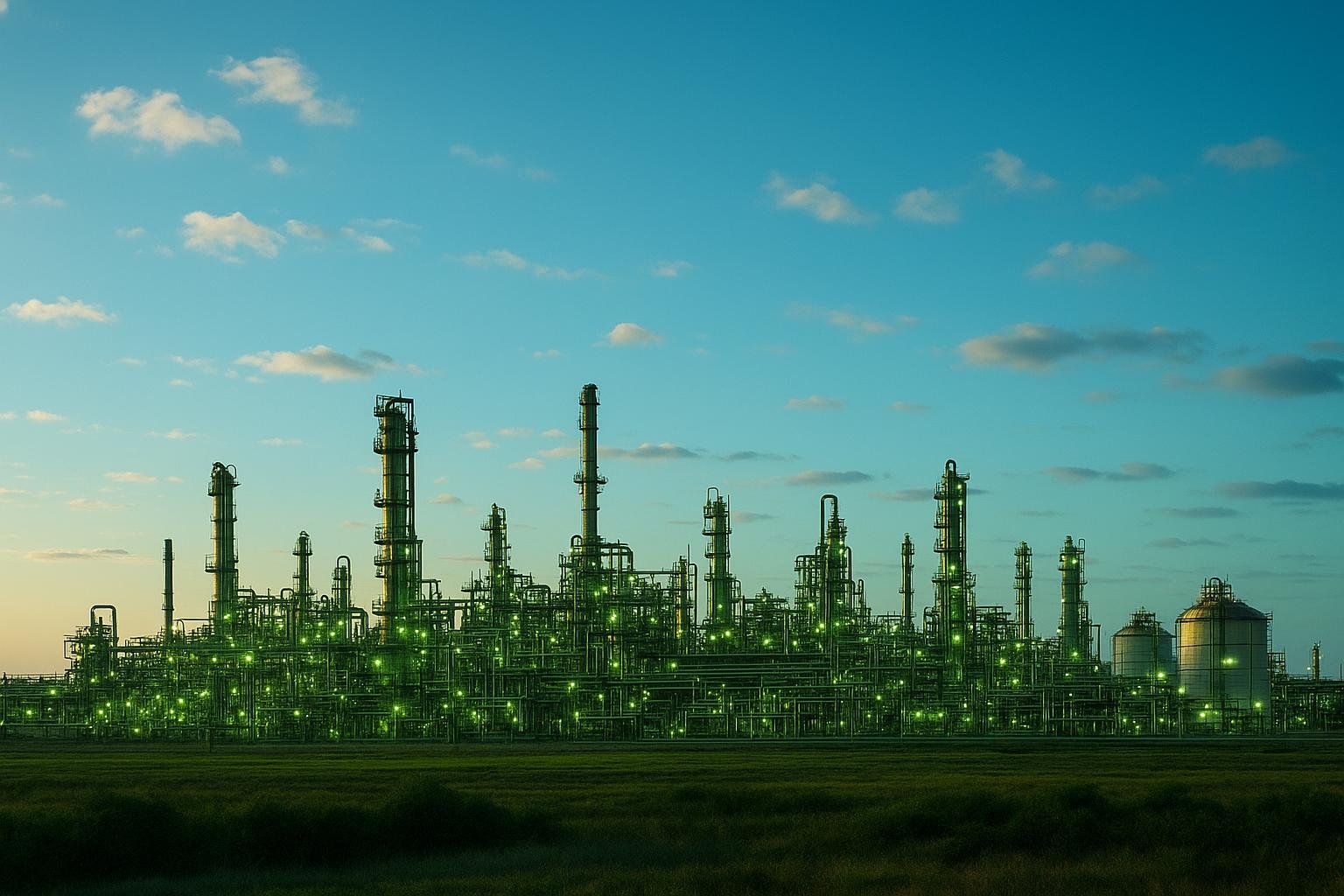
At COP30, the chemical industry faces intensifying scrutiny and innovative pathways, including biofuels, hydrogen, and recycling, as stakeholders push for a critical overhaul to meet the Paris Agreement targets amidst concerns over environmental and social impacts.

At the recent COP30 climate summit in Belém, Brazil, the chemical industry has faced intensified scrutiny and dialogue regarding its critical role in global greenhouse gas emissions and the formidable challe...
Continue Reading This Article
Enjoy this article as well as all of our content, including reports, news, tips and more.
By registering or signing into your SRM Today account, you agree to SRM Today's Terms of Use and consent to the processing of your personal information as described in our Privacy Policy.
The Brazilian presidency of COP30 introduced the ambitious Belém 4X initiative, calling for a quadrupling of biofuels, biogas, hydrogen, and other alternative fuel usage by 2035. This pledge has been endorsed by over 20 countries and aims to significantly curb emissions from difficult sectors such as chemicals, aviation, and heavy industry. However, this push towards bio-based fuels has sparked considerable debate. Environmental advocates warn that expanding biofuel production risks exacerbating deforestation, infringing on Indigenous land rights, and displacing food production, particularly in sensitive regions like the Amazon rainforest. Critics within networks such as the Climate Action Network challenge the notion that bioenergy alone is a sustainable climate solution, advocating instead for renewable-based hydrogen produced from solar and wind power as a cleaner alternative.
Industry players like Brazil’s Braskem have been prominent proponents of biobased products at the summit, emphasising the need for supportive regulatory frameworks to help biobased chemicals compete with fossil-derived materials. Braskem, for instance, sources sugarcane from degraded lands in southern Brazil to mitigate environmental harm. Yet, experts like Chris Malins of Cerulogy point out a global biomass supply constraint, warning that the growing demand for biofuels across sectors cannot be sustainably met without jeopardising ecosystems. This view is echoed by Mighty Earth’s Amanda Hurowitz who stresses preserving natural forests amid industrial-scale biofuel production.
In parallel to biobased advances, hydrogen, especially green hydrogen generated via renewable energy, has emerged as a key theme at COP30. The technology is recognised as pivotal for certain chemical processes and other hard-to-abate industries. Nonetheless, experts caution against viewing hydrogen as a catch-all solution; its high costs and deployment limitations mean it should be targeted strategically, prioritised only after efficiency gains and electrification efforts. Alessandro Sanches Pereira of Instituto 17 highlighted that hydrogen must not serve as mere greenwashing but as part of a comprehensive decarbonisation strategy.
Beyond biofuels and hydrogen, the summit spotlighted the necessity of adopting a multifaceted approach to chemical sector emissions. The International Council of Chemical Associations (ICCA) released a report underscoring various pathways including circular economy models, enhanced recycling of plastic waste, carbon capture technologies, and low-carbon feedstocks. Sekab’s Eva-Marie Byberg described the sector’s belated engagement with sustainability as necessitating “everything, all at once” to deliver meaningful impact.
The United Nations Industrial Development Organization (UNIDO) reinforced this perspective during COP30’s Technology Day by showcasing cutting-edge innovations such as electrification of chemical processes and energy efficiency improvements. UNIDO stressed that chemical and petrochemical industries consume nearly 60% of industrial energy and produce about 70% of industrial emissions, thus transforming these sectors is critical to limiting global warming to 1.5°C.
An important development was the launch of the Low-Emission Ammonia Fertilizer (LEAF) Initiative, promoted by the Hydrogen Council and partners including UNIDO. This alliance aims to reduce the annual 510 million tonnes of greenhouse gases emitted by conventional ammonia fertilizer production, an amount comparable to national emissions from countries like Brazil or Germany, by advancing low-emission ammonia technologies.
Nevertheless, the chemical industry as a whole remains behind other hard-to-abate sectors in aligning with the Paris climate targets. Industry insiders and UN officials alike acknowledge that while many large companies have climate goals, the sector is still transitioning from narrative to transformation. Measures such as transparent emissions reporting are gaining traction in places like the U.S., but comprehensive restructuring at scale is yet to materialise.
In summary, COP30 underscored the chemical sector’s urgent need for a radical emissions overhaul incorporating diverse technological and policy measures. While biofuels and hydrogen offer promising pathways, their deployment must be balanced with ecosystem preservation and efficiency improvements to avoid unintended consequences. The sector’s complexity and scale pose formidable obstacles, but its transformation is undeniably vital to achieving global climate commitments. With ongoing innovation efforts and international collaboration, COP30 marked a notable step forward, though much work remains to bring the chemical industry into alignment with a sustainable, net-zero future.
Source: Noah Wire Services
Subscribe to Industry Updates

