


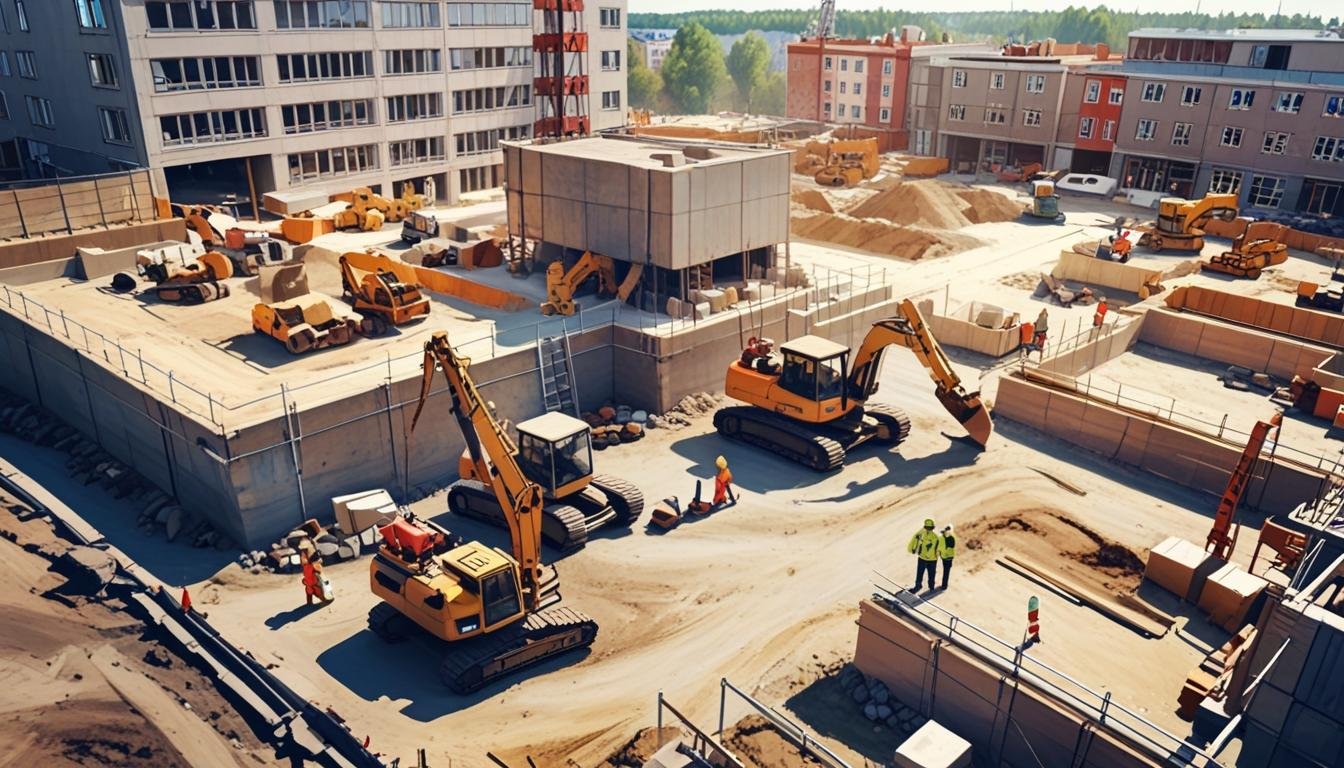
**Sweden**: Public procurement in Sweden, valued at 900 billion kronor annually, is facing scrutiny. Industry experts urge stakeholders to engage in meaningful dialogue to promote fairness and quality, amidst rising concerns about substandard practices driven by a focus on the lowest costs, potentially jeopardising future developments.
In Sweden, public procurement, which encompasses the contracts awarded by government bodies to businesses for goods and services, has come under scrutiny as it reaches an annual value of approximately 900 billion kronor. According to Anders Fredriksson, Industry and Association Manager for the Construction Companies of Eastern Skåne & Blekinge, there is a pressing need for all stakeholders in the public procurement process—comprising municipalities, county councils, authorities, and private companies—to engage in a meaningful dialogue to enhance predictability and ensure fair competition.
Fredriksson emphasizes that a well-functioning public procurement system could lead to lucrative deals for both procurers and contractors while minimising the financial burden placed on taxpayers. However, he cautions that the emphasis on selecting the cheapest option may not yield the most advantageous outcomes. A survey conducted among construction companies revealed that over 500 contractors had significant concerns regarding current practices. It was found that 75 percent of respondents indicated that procuring organisations seldom initiate discussions ahead of forthcoming procurements. Moreover, more than half of the contractors expressed that the dialogues that do occur rarely result in any meaningful improvements.

The findings highlight a prevalent issue within the construction sector, where public procurement is primarily driven by the pursuit of the lowest cost. According to Fredriksson, this focus leads to a scenario ripe for the emergence of opportunistic contractors who may not adhere to necessary standards within the industry. Alarmingly, the proportion of procurements featuring only one bidder has seen a substantial increase—nearly doubling over the past decade—which Fredriksson calls a “warning signal.”
Concerns extend beyond merely financial implications; unreliable contractors, motivated by competitive pricing, may resort to compromising on quality. This approach can result in substandard materials and insufficient workforce conditions, ultimately detracting from the durability and longevity of the final construction projects. Fredriksson notes that undeclared work and poor working conditions often arise from procurement processes that fail to set adequate criteria or follow up effectively.
The potential for public procurement in Sweden to serve as a catalyst for societal development is significant, according to Fredriksson. However, he argues that a shift is necessary—from a focus on immediate savings towards long-term investments. By cultivating a procurement environment grounded in fair principles, stakeholders can contribute to future-proofing Sweden’s construction industry and society at large.
Source: Noah Wire Services

