


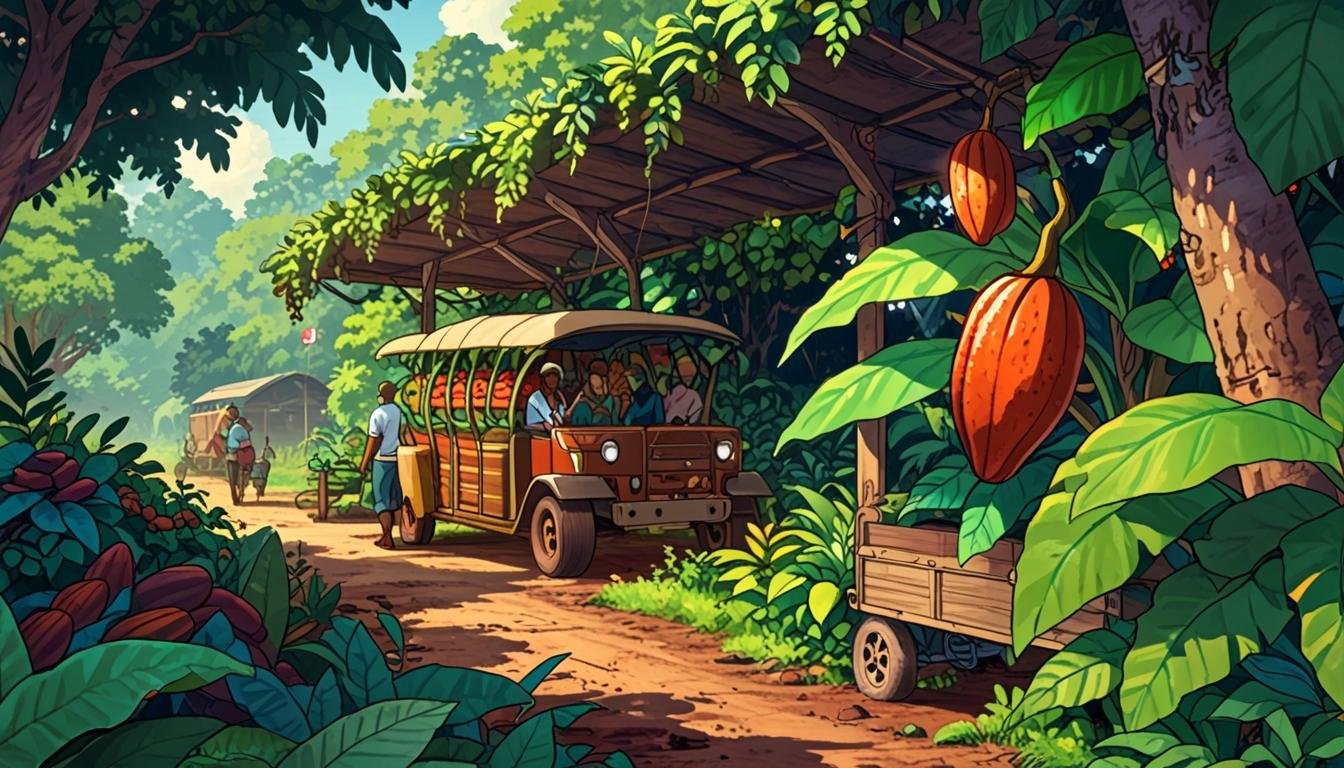
**Global**: The cocoa sector is grappling with severe political and economic instability, prompting industry leaders to convene in São Paulo in March 2025 to discuss collaborative strategies for overcoming ongoing challenges, including climate impacts and regulatory changes aimed at securing a resilient future for smallholder farmers.
The global cocoa sector is currently facing heightened instability due to a confluence of political and economic factors, leading to concerns about its resilience in the upcoming 2024/2025 season and beyond. This period is marked by unprecedented challenges that have compounded the difficulties inherent to cocoa production, as reported by Confectionery News.
The World Cocoa Foundation (WCF), a non-profit organisation, is vocal about the multiple trials impacting cocoa leaders today. With the cocoa crisis now entering its third consecutive season, the industry is scrutinising how these complex issues will evolve by 2025. The organisation’s President, Chris Vincent, stated, “Unprecedented challenges require unprecedented collaboration.” In a bid to address these issues, the WCF has scheduled a significant gathering for March 19-20, 2025, in São Paulo, where global cocoa leaders will discuss strategies for collaboration, innovation, and bolstering supply chain resilience.

Vincent elaborated on the situation, highlighting that cocoa leaders are contending with an “unprecedented convergence of challenges” that have been exacerbated by geopolitical turbulence and shifting economic conditions. Climate change has drastically affected cocoa growing conditions in recent years, contributing to a supply deficit that has resulted in notable price spikes. Vincent noted, “As a result of this deficit, the cocoa price spikes we’ve seen over the past year are starting to impact the consumer.”
The regulatory landscape has also shifted dramatically, particularly with the implementation of new policies such as the European Union’s Deforestation Regulation (EUDR), which demands that cocoa be sourced from deforestation-free areas. These changes not only affect consumer access to cocoa-based products but also jeopardise the livelihoods of millions of smallholder farmers, who are the backbone of the global cocoa supply. Vincent underlined the urgency of the situation by saying, “Safeguarding the sustainability of the cocoa supply chain and its long-term health demands more agile and coordinated responses.”
The tensions leading into 2025 could see an intensification of these pressures. Vincent remarked, “Compared to the last season, these pressures have only intensified going into 2025, as dramatic policy shifts and funding freezes further complicate production realities for smallholder farmers.” The challenges are multifaceted, encompassing tree diseases, climate complications, dwindling productivity, low farmer incomes, global political changes, and evolving regulatory frameworks.
In response, confectionery producers are adapting to this ‘new’ cocoa landscape by enhancing their traceability and sustainability initiatives. Vincent noted, “Manufacturers have been quick to respond to emerging challenges by ramping up their traceability and sustainability initiatives.” The integration of digital technologies for supply chain transparency is among the pivotal steps companies are taking to navigate upcoming regulatory requirements. However, Vincent cautions that these adaptations need to evolve further to cater to an increasingly volatile market and stricter regulations.
The WCF aims to foster a culture of collaboration during its upcoming meeting, focusing on sharing best practices in crucial areas like disease prevention, mechanisation, and navigating both climate change and geopolitical challenges. Vincent stated, “A more adaptive sector will be better equipped to withstand shocks and secure a sustainable future.” The foundation emphasises that integrating sustainability into product development will not only meet rising consumer demands for ethically sourced chocolate but also serve as a strategic response to industry challenges.
Noteworthy participants set to attend the March 2025 meeting include representatives from initiatives and organisations such as the Initiative Cacao Côte d’Ivoire-Ghana, the Brazilian Agribusiness Association, the Rainforest Alliance, and various research and investment entities. Their collective goal is to establish stronger partnerships that facilitate meaningful change within the cocoa sector.
In this context, Vincent summarises the overarching theme of the meeting, stating, “‘Resilience through sustainability’ goes beyond a theme – it is a strategic imperative that defines our approach to overcoming the sector’s challenges.” The conversations and collaborations initiated at this event are expected to play a crucial role in reshaping the future of the cocoa industry, responding proactively to increasing regulatory demands and ensuring the welfare of smallholder farmers who are vital to cocoa production.
Source: Noah Wire Services

