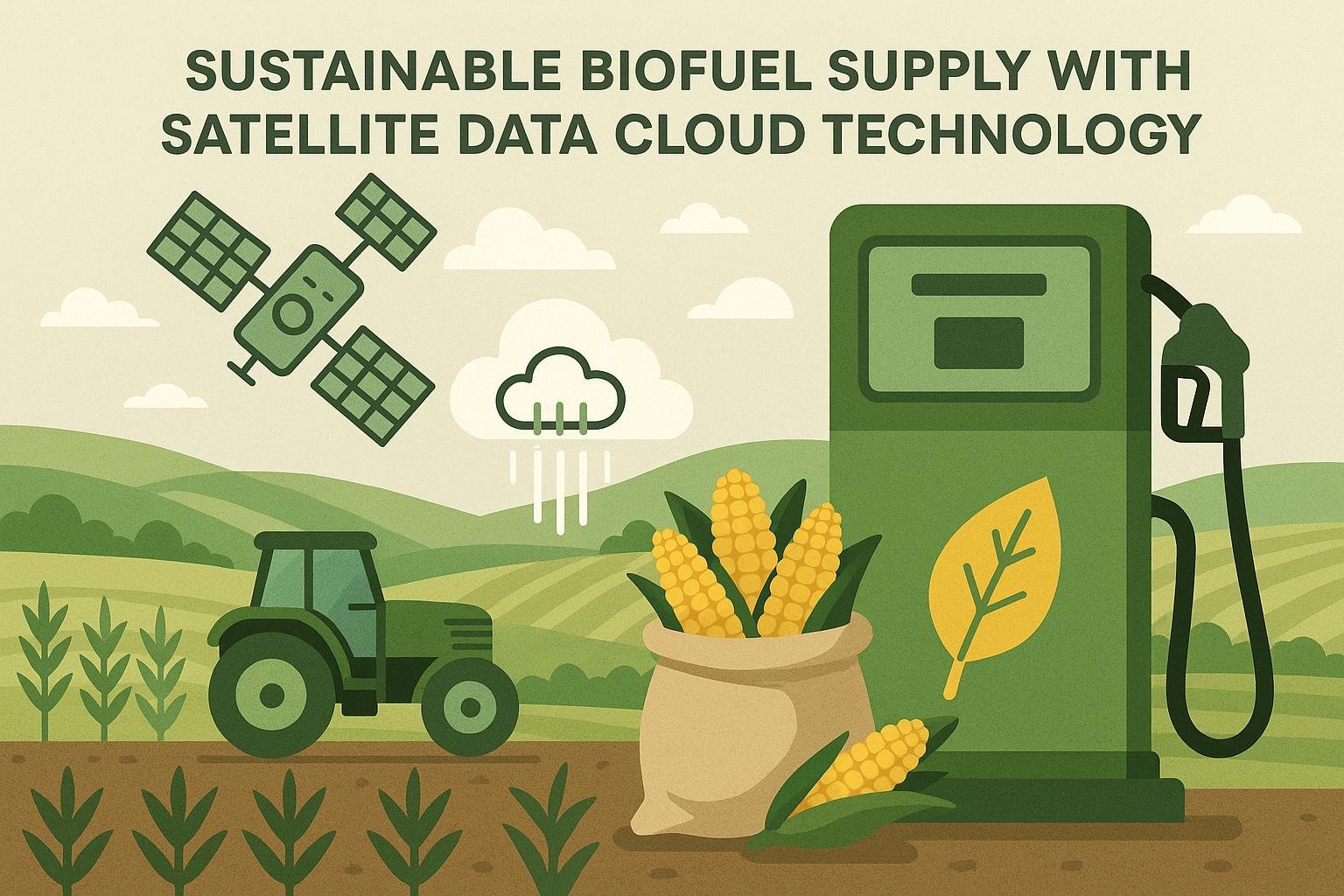
Energy firms harness satellite data, IoT, and machine learning on cloud platforms like AWS to enhance traceability, compliance, and efficiency in low-carbon liquid fuel production, set to transform industry standards.

Cloud computing is becoming a central tool for energy firms seeking to scale production of low‑carbon liquid fuels while meeting stringent sustainability standards. Firms working with hydrotreated vegetable oil (HVO) and other advanced biofuels are combi...
Continue Reading This Article
Enjoy this article as well as all of our content, including reports, news, tips and more.
By registering or signing into your SRM Today account, you agree to SRM Today's Terms of Use and consent to the processing of your personal information as described in our Privacy Policy.
HVO is valued by refiners and fleets because it behaves like fossil diesel yet can lower lifecycle emissions substantially. Industry figures cited by the technology providers show HVO production can cut particulate matter by roughly half to four fifths, NOx by low tens of percent and greenhouse‑gas emissions by many tens of percent depending on feedstock and processing choices. Those environmental gains, however, hinge on rigorous supply‑chain oversight from field to pump.
Energy companies face several persistent obstacles: assessing land and feedstock suitability in remote, smallholder‑dominated regions; replacing paper‑based or fragmented traceability systems; unlocking data trapped in on‑site historians and legacy control systems; and limiting quality deterioration as materials move through pre‑treatment and refining. Providers of cloud and geospatial services argue these gaps can be narrowed by automating land and crop analysis with satellite‑derived indices and by ingesting operational telemetry from collectors, processors and refineries into a single governed repository.
The technical blueprint now favoured by suppliers centres on a lakehouse architecture that consolidates earth‑observation products, laboratory feedstock analyses, IoT‑collected plant telemetry and enterprise transactional data. On this foundation, geospatial AI models flag abandoned or erosion‑prone parcels, polygon‑ and crop‑type classifiers support field‑level provenance, and industrial analytics drive predictive quality and maintenance. Amazon’s managed blockchain services are being positioned to provide an immutable record of transactions and movements, while document‑extraction and language models are used to convert legacy reports into auditable digital records. According to AWS guidance, such managed services can also be harnessed to integrate sustainability metrics into optimisation models for lower carbon supply chains.
Proponents say the operational benefits can be material: initial remote land screening can shrink months of field scouting to weeks, sharply reduce the number of soil tests required and allow scarce agronomy experts to focus on verification rather than discovery. Automated computation of compliance KPIs can shorten reporting cycles from months to days and reduce human error in audits, the vendors claim. On the production side, machine‑learning models trained on combined plant and feedstock data are being used to stabilise yields and improve conversion efficiency.
The cases for cloud migration are also being bolstered by independent assessments of infrastructure efficiency. A study highlighted by AWS and its partners found optimising AI workloads on hyperscale cloud infrastructure can cut the carbon footprint of those workloads dramatically, with comparative efficiency gains over many on‑premises setups. Major energy companies are already piloting or rolling out generative and machine‑learning applications: in August 2024 Iberdrola announced a partnership with AWS to develop more than 100 AI applications to enhance operations and sustainability, and in June 2025 RWE entered a strategic collaboration with AWS to accelerate its digital transformation and renewable projects. Those industry moves underline that digital and energy transition strategies are increasingly being pursued together.
There remain caveats. Companies and auditors must still verify feedstock origins where agricultural expansion or indirect land‑use change risks exist; algorithmic outputs require ground‑truthing and careful governance to avoid misplaced confidence; and a decentralised supplier base poses contractual and logistical challenges that technology alone cannot erase. In addition, statements from cloud providers about efficiency and emissions reductions reflect platform capabilities and vendor testing, and should be weighed alongside independent verification and auditors’ findings.
For firms seeking to scale sustainable liquid fuels, combining satellite‑led mapping, federated industrial telemetry and governed analytics offers a pathway to faster, cheaper verification and tighter operational control. Whether those digital interventions translate into durable market confidence and verified emission reductions will depend on transparent data practices, independent auditing and continued integration between technology stacks and the human expertise that validates them.
Source: Noah Wire Services
Subscribe to Industry Updates