


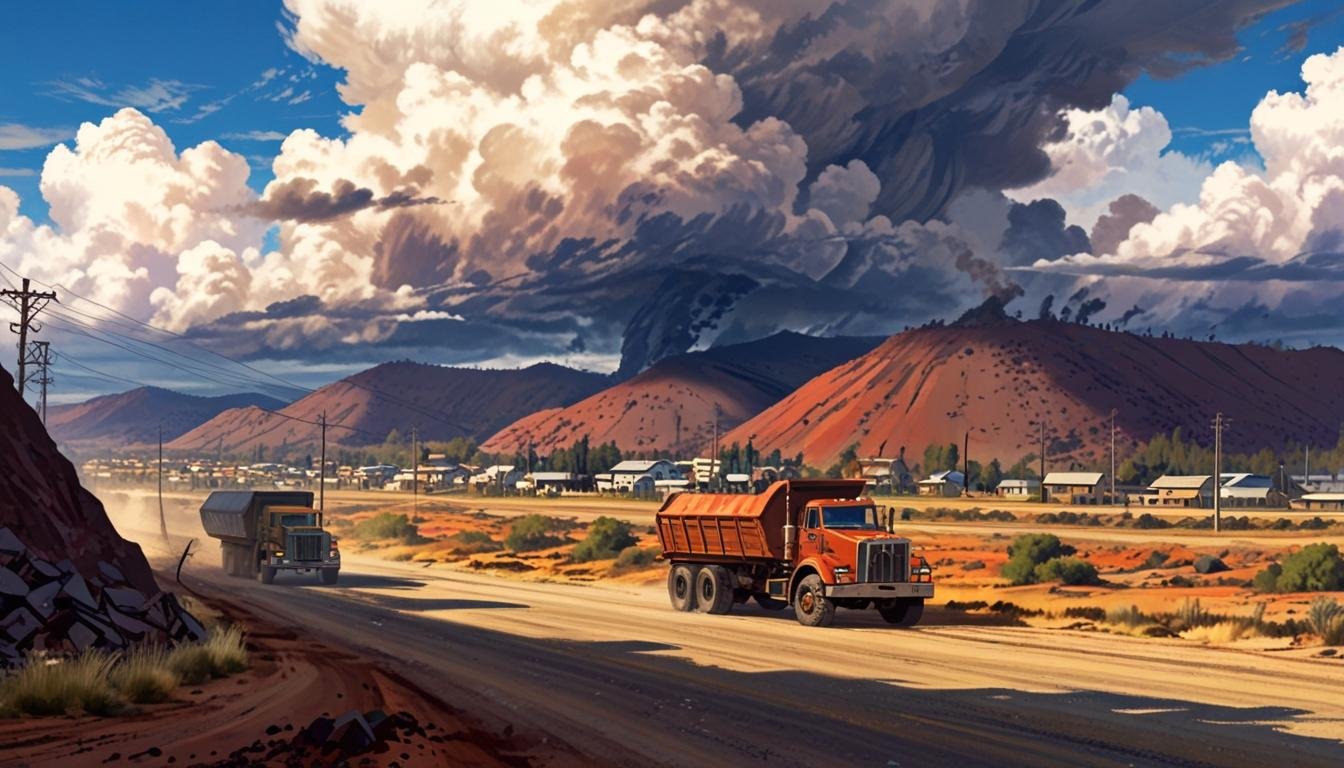
**Chisholm**: As controlled explosions echo through Minnesota’s mining town, the community anxiously watches the effects of President Trump’s new tariffs on automobiles, which might disrupt the economic balance reliant on taconite and steel production, amid rising trade tensions with Canada.
In Chisholm, Minnesota, a town with deep-rooted ties to the mining industry, the weekly seismic activity of controlled explosions at the nearby Hibbing Taconite mine has become a familiar backdrop. City Council member Jed Holewa remarked on how these blasts reverberate through the town, stating, “When they blast over here, we can feel it in town over there.” The mine, a significant source of taconite—the iron-rich rock that forms the backbone of the American iron ore market—creates not just a physical landscape of deep pits but is also integral to the livelihoods of many residents in the Iron Range region.
However, recent developments have introduced an element of unpredictability into this otherwise stable environment. On March 26, 2023, President Trump announced a sweeping 25 percent tariff on all automobiles and auto parts imported into the United States. The decision, which aims to bolster the domestic auto industry, has elicited a mixed response. While some labour leaders have praised the move for its potential to protect American jobs, analysts caution that the tariff could precipitate turmoil within the auto sector.

The implications of such a tariff extend beyond the immediate auto industry; they ripple through the broader economic fabric of regions like Chisholm, where the iron mined from taconite is a crucial input for steel production, primarily used in automobiles. Following the announcement, several domestic automakers experienced declines in their stock prices, signalling investor concern over the potential repercussions of the tariff on manufacturing and sales.
This announcement has also surfaced amid escalating trade tensions between the United States and Canada. Trump’s earlier threats to institute broad tariffs targeted at Canada had already set off a reciprocal reaction from the Canadian government, which has implemented its own tariffs. Such developments may further complicate the dynamics of cross-border trade in the automotive sector and related industries.
As this situation unfolds, communities like Chisholm will be closely observing how changes in national policy might reshape their economic landscape, reflecting a microcosm of the broader industrial challenges facing the country.
Source: Noah Wire Services

