


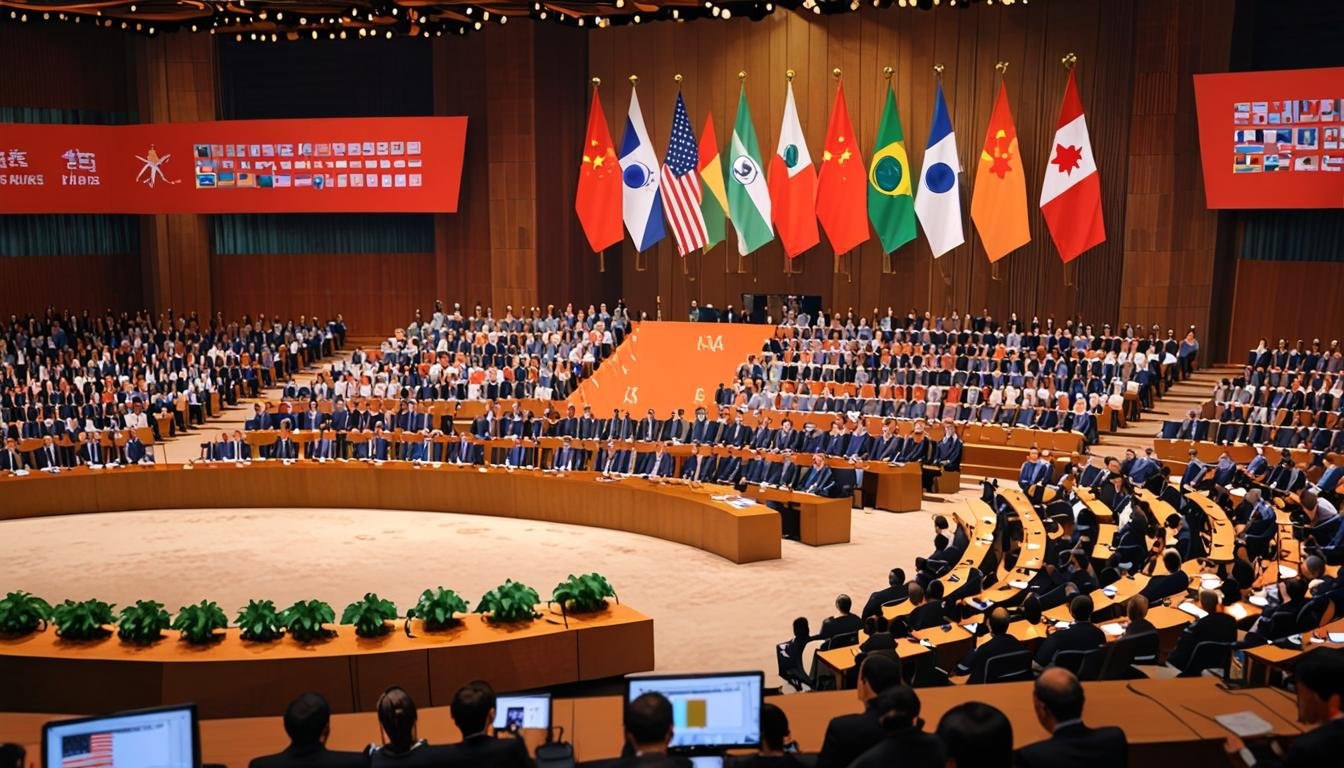
**Beijing**: During the annual Chinese Development Forum, Premier Li Qiang highlighted the necessity for nations to open their markets amid growing economic instability. He urged global cooperation to counteract the effects of anticipated U.S. tariffs, underscoring the importance of attracting foreign investment.
Chinese Premier Li Qiang addressed significant concerns regarding global economic stability during the annual Chinese Development Forum, which commenced in Beijing on Sunday and is set to continue through Monday. In his keynote speech, Li urged countries to open their markets to mitigate the rising tide of instability and uncertainty, particularly in the context of anticipated additional tariffs from the United States.
Speaking to an audience comprising numerous foreign CEOs and notable figures such as U.S. Republican Senator Steve Daines, Li articulated the necessity for nations to collaborate in addressing these mounting challenges. “In today’s world where global division is intensifying amid rising instability and uncertainty,” Li stated, “it is increasingly necessary for countries to open their markets and companies… to resist risks and challenges,” as reported by Al-Ittihad.

The Chinese Development Forum, hosted in Beijing, features prominent industry leaders, including Tim Cook of Apple, Cristiano Amon of Qualcomm, and Pascal Soriot of AstraZeneca. Some of these executives are expected to engage in discussions with President Xi Jinping later in the week.
Li Qiang emphasised the importance of attracting foreign investment amidst escalating geopolitical tensions. The Chinese government is keen to bolster domestic consumption as a countermeasure to the adverse effects of American tariffs. According to state media, he noted, “We will focus on combining policy intensification and stimulating market forces,” although he did not provide specific details regarding the anticipated economic stimulus measures.
Additionally, Li expressed hope that business leaders would act as “staunch defenders and promoters of globalization” and advocate against unilateral approaches and protectionist policies. The backdrop to these discussions includes recent developments in U.S.-China trade relations, such as President Donald Trump’s announcement of new tariffs on China, which aims to target nations perceived to impose barriers against U.S. products. In a reciprocal move, China has also indicated its intention to impose additional tariffs on U.S. agricultural goods.
The current situation poses significant implications not only for China and the United States but for the global economic landscape as countries navigate the complexities of trade relations in an increasingly interconnected yet divided world.
Source: Noah Wire Services

