


Chinese companies are stepping up their efforts to purge foreign components from their supply chains, a strategy significantly intensified by escalating trade tensions with the United States. This movement, sparked by former President Donald Trump’s imposition of hefty tariffs, is not just a reactionary measure but also a reinforcement of China’s long-held aspirations for industrial self-sufficiency. Policies like “Made in China 2025” and President Xi Jinping’s “dual circulation” strategy are coming to the forefront as companies seek to localise their production processes amidst a shifting geopolitical landscape.
In the aftermath of the tariffs, over two dozen companies registered on the Shanghai and Shenzhen stock exchanges have reported plans to prioritise sourcing domestic materials over foreign products. Industries as diverse as semiconductors, chemicals, and medical devices are involved in this strategic realignment. The financial disclosures reveal a structural shift; as firms adapt to both the immediate economic pressures and the longer-term implications of U.S. trade policy, they are signalling their intent to reshape global supply chains fundamentally.

Beijing’s commitment to fostering self-reliance gained further traction from the significant retaliatory tariffs imposed on American products, which have reached as high as 125%. Analysts suggest that these tariffs have created a renewed urgency among Chinese businesses to bolster their domestic sourcing capabilities. Camille Boullenois, an analyst at Rhodium Group, noted that the current geopolitical strain is encouraging companies to accelerate their localisation efforts. “They’re clearly feeling the urgency,” she stated, indicating that firms are increasingly motivated to insulate themselves from international disruptions.
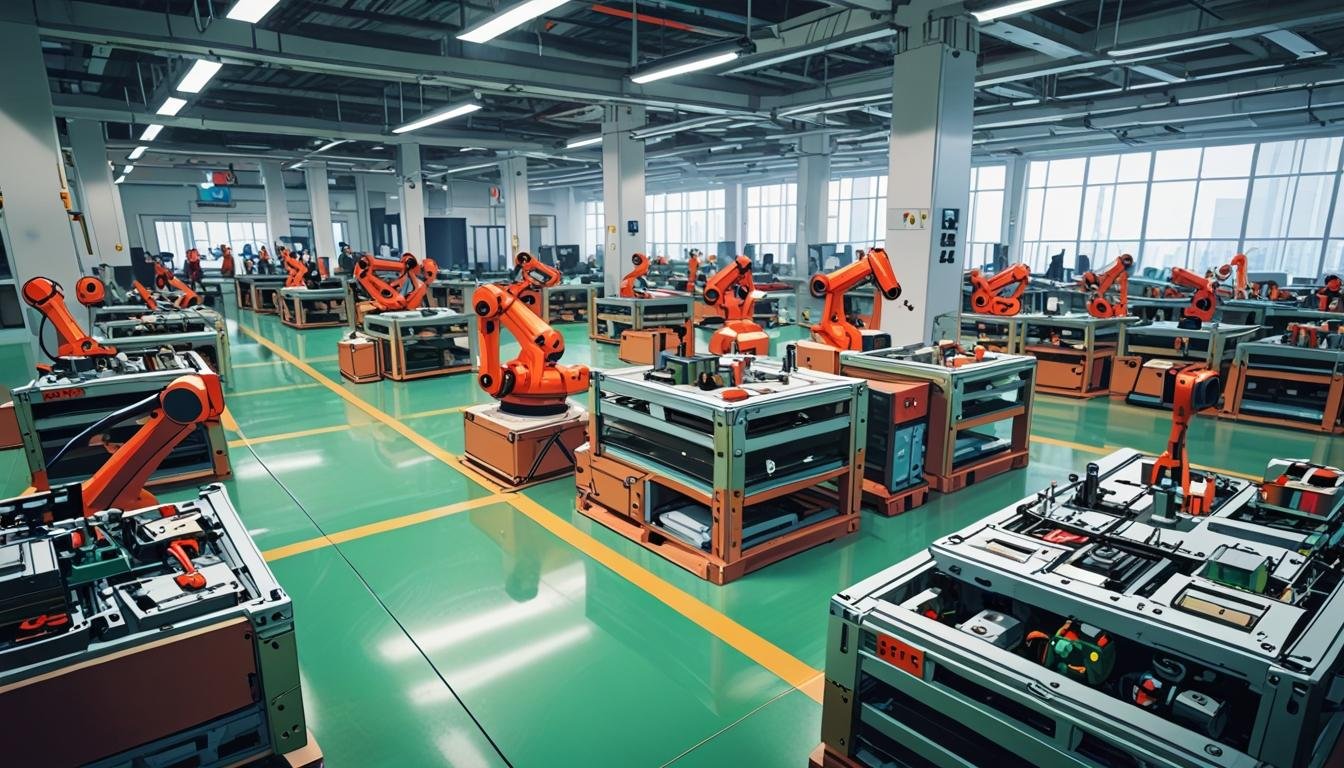
Companies like Estun Automation, a leading industrial robot manufacturer, have highlighted the strategic advantages of enhancing local supply chains. In their recent investor communications, they stated that their initiatives to localise sourcing have enabled them to capture market share previously dominated by foreign competitors. This pivot is not solely about responding to trade tensions; it is also viewed as a necessity in an increasingly unstable global economy. A manager from Estun remarked, “Increasing localisation cuts costs,” further underscoring the dual imperative of economic efficiency and risk mitigation.
The broader implications of this shift extend beyond China, impacting global supply chains and third-country suppliers as well. For instance, Thinkon Semiconductor, a Liaoning-based provider, reported plans to eliminate foreign suppliers entirely, aiming to enhance resilience against external risks. This perspective aligns with the growing sentiment among manufacturers, as illustrated by comments from Hunan SUND Technological Corp, where officials noted a marked increase in demand for domestic bearings due to China’s retaliatory tariffs.
While the push for domestic sourcing is gaining momentum, analysts caution that the “Made in China 2025” initiative, which aimed to dominate strategic sectors, has also contributed to inefficiencies and sparked trade tensions with various partners. The EU Chamber of Commerce in China has highlighted successes in electric vehicles, shipbuilding, and rail equipment, but also warned of potential pitfalls such as overcapacity in certain industries. The ultimate effect could be a permanent alteration of global supply chains, with China’s increasing independence from Western products reshaping international trade dynamics.
Despite these extensive changes, the trade landscape remains fraught with challenges. Reports indicate that U.S.-China trade continues to fluctuate, with U.S. imports from China having dropped sharply in recent months, even while China’s overall exports to markets such as Vietnam and Thailand have surged. Such economic shifts suggest a broadening of China’s trade relationships, particularly with nations in Asia, Africa, and Latin America, reflecting a strategic pivot away from reliance on the U.S. market.
As negotiations between the two nations surrounding the tariff conflicts continue, underlying tensions persist, exacerbated by mutual economic dependencies. Both American consumers and manufacturers remain reliant on Chinese goods, posing questions about the long-term viability of protectionist policies. The unfolding scenario illustrates a complex interplay of strategic manoeuvring, economic pressures, and geopolitical considerations that could redefine the future of global trade.
Ultimately, China’s intensified drive for self-sufficiency suggests a transformative period in which domestic capabilities may be prioritised over foreign dependencies, fundamentally altering the global economic landscape in the long run.
Reference Map
- Paragraph 1
- Paragraph 2
- Paragraph 3
- Paragraph 4
- Paragraph 4
- Paragraph 5
- Paragraph 5
- Paragraph 6
Source: Noah Wire Services

