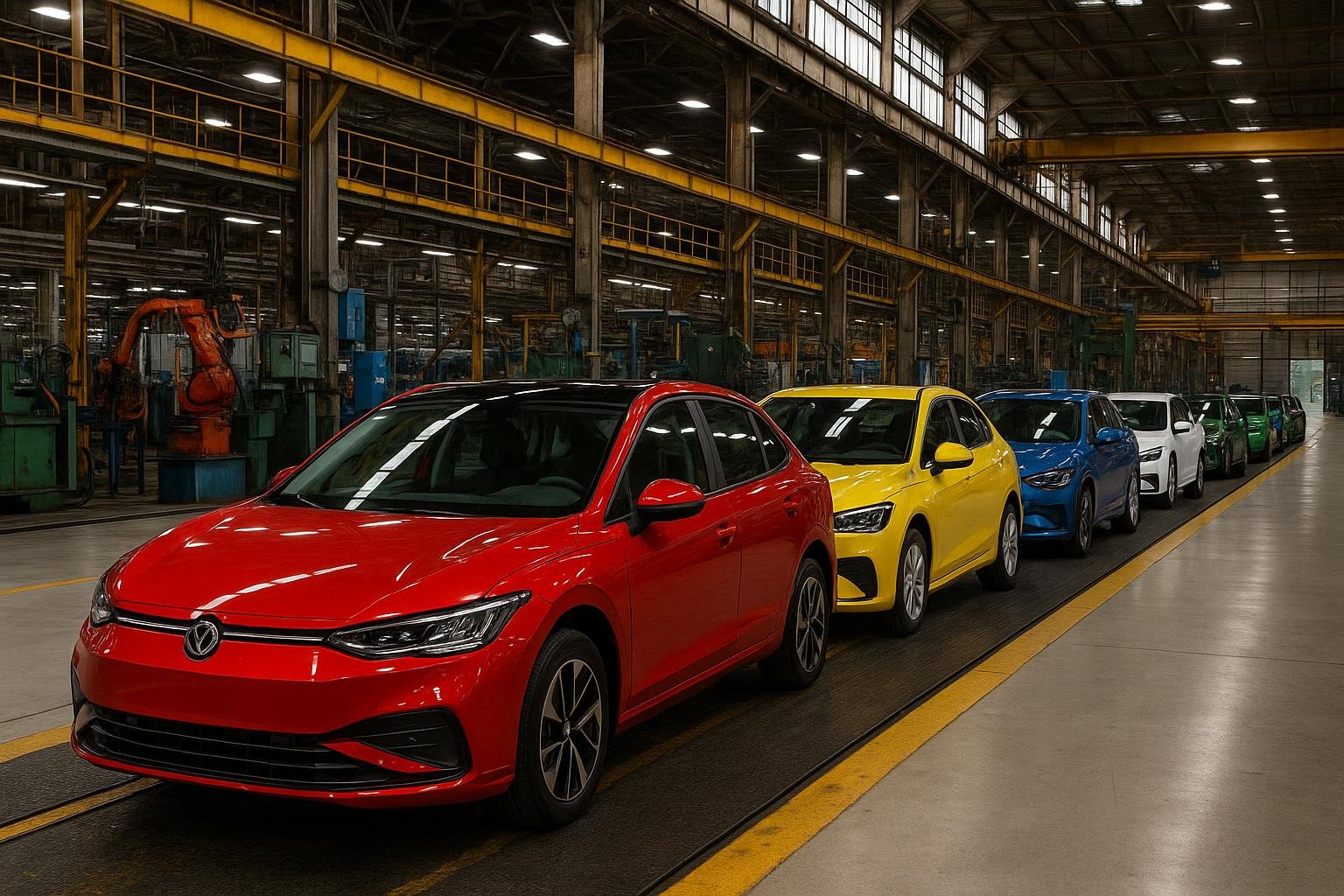
China’s rising auto presence in South Africa is shifting from imports to potential local manufacturing, as manufacturers weigh production choices while the domestic market fragments between low-cost internal-combustion models and a slowly emerging battery-electric segment.
According to Bizcommunity reporting, Great Wall Motor is evaluating possible plant options in South Africa, part of a broader push by Chinese marques to deepen their footprint on the continent rather than r...
Continue Reading This Article
Enjoy this article as well as all of our content, including reports, news, tips and more.
By registering or signing into your SRM Today account, you agree to SRM Today's Terms of Use and consent to the processing of your personal information as described in our Privacy Policy.
ely solely on exports. The move would follow earlier waves of localisation by global groups seeking tariff, logistics and market benefits from local assembly or full manufacturing. The company has not published firm commitments; industry observers say such decisions typically hinge on incentives, supplier ecosystems and projected local demand.
That demand is changing in two important ways. First, traditional compact crossovers remain the volume engine of the market. Renault South Africa has refreshed its Kiger Turbo with styling, technology and comfort upgrades including LED lighting, an 8-inch floating touchscreen and enhanced safety kit. According to Renault, the model now offers greater perceived value through interior refinements and a five‑year mechanical warranty, an update designed to keep it competitive against rivals such as Nissan’s Magnite and Suzuki’s entry-level SUVs. Independent reporting notes the facelifted Kiger was also re‑priced aggressively in late 2025, positioning it as one of the most affordable crossovers in the country and underscoring how price sensitivity shapes buyer choice.
Second, electrification is surfacing as a credible longer‑term alternative , but with important caveats. Research and reporting aggregated by Investing.com and specialist African outlets find that falling battery prices and expanding global EV production are bringing total-cost-of-ownership parity within reach for many African markets, particularly where consumers can pair vehicles with off‑grid solar charging. Analysis from BloombergNEF cited by regional commentators suggests cost competitiveness will first emerge in relatively stable economies such as South Africa, Mauritius and Botswana, while countries with greater macroeconomic volatility will require stronger policy support to bridge the affordability gap.
Local data and market studies point to clear operating-cost advantages for EVs: significantly lower energy cost per kilometre and reduced maintenance outlays compared with internal‑combustion cars. EV24.africa’s comparisons indicate that running costs can be 61% lower per kilometre and that certain models deliver substantial five‑year operating savings. However, those savings are counterbalanced by higher purchase prices, limited public charging infrastructure , South Africa currently has only a few hundred public chargers nationwide , and an electricity mix still dominated by coal, which clouds the environmental calculus unless drivers use renewable home generation.
The financing environment therefore becomes decisive. Investing.com’s coverage of recent research warns that without properly structured finance and incentives, upfront costs will continue to slow uptake even as lifetime costs improve. International experience also shows used‑EV depreciation, evolving battery warranties and insurer pricing remain practical considerations for buyers; recent analyses from US personal finance outlets highlight both falling used‑EV prices and persistently higher insurance costs tied to battery and electronics repairs.
For manufacturers considering local plants, these market dynamics create both an opportunity and a complication. Local assembly can lower retail prices and improve margins, helping firms compete on value against entrenched Japanese brands; but establishing a factory requires confidence in sustained volumes, a local supply chain for parts and viable electrification pathways. Manufacturers that align product strategies to South African buying patterns , compact, affordably priced crossovers with strong safety and infotainment packages , while planning phased electrification supported by financing solutions and charging partnerships, will be better placed to convert showroom interest into long‑term market share.
In the coming months, any formal investment decisions by Great Wall Motor or similar entrants will offer a clearer signal about whether the region will become a manufacturing outpost for Chinese automakers or remain primarily an import market adapted to local tastes. Until then, incumbents such as Renault will continue to sharpen their value propositions for price‑sensitive buyers, even as policymakers, financiers and energy providers wrestle with the structural changes required to scale electric mobility across South Africa and the wider continent.
Source: Noah Wire Services