


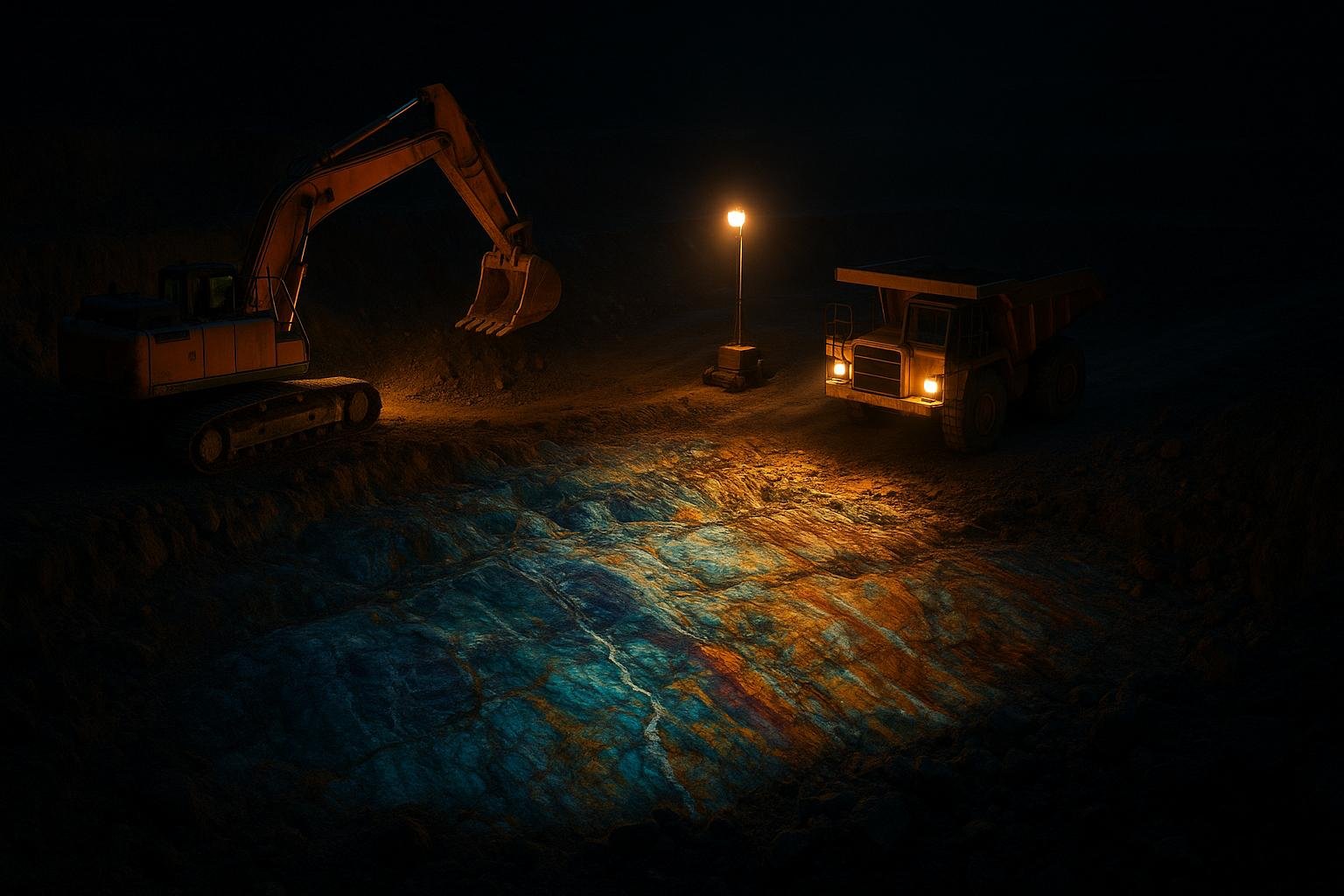
Tighter Chinese export controls on rare earths in 2025 have exposed deep dependencies in global manufacturing, prompting strategic shifts in technology and supply chain resilience across Japan, Europe and the US.

Rare earth elements have shifted from a technical detail of high‑tech manufacturing to a geopolitical lever with the power to ripple through global supply chains and industrial output. What began as tighter Chinese export controls in April 2025 has, within we...
Continue Reading This Article
Enjoy this article as well as all of our content, including reports, news, tips and more.
By registering or signing into your SRM Today account, you agree to SRM Today's Terms of Use and consent to the processing of your personal information as described in our Privacy Policy.
China already dominates the market: it supplies about 70% of mined rare earths and roughly 90% of refining capacity, a concentration that stems in part from the heavy environmental and regulatory burden of processing ores that often contain radioactive by‑products. According to reporting by The Sankei Shimbun, that dominance has long prompted concern in Tokyo; the Japan Organization for Metals and Energy Security expanded stockpiles and pushed development after a 2010 export stoppage to Japan highlighted the political risks.
The most immediate effect of the April 2025 measures , which limited exports of certain rare earths and tightened licensing for magnets , was felt in the auto sector. Industry reporting shows that Ford paused production of its Explorer in Chicago and Suzuki suspended output of its Swift after parts containing or dependent on restricted materials could not be sourced. Reuters reported that German suppliers warned of potential shutdowns within weeks as delays in export licences and customs clearance prevented delivery of components used in systems from wiper motors to anti‑lock brakes. CLEPA and other trade bodies sounded the alarm that inventories would run down and outages could multiply. By late June, however, Mercedes‑Benz said its own production had not been disrupted, while cautioning it remained vigilant.
Beijing reinforced its controls further by introducing a national tracking system for rare‑earth magnets that came into force in June 2025, requiring producers to record trading volumes and client information online. Reuters described the move as an additional layer of scrutiny that tightens oversight over exports already subject to licensing since April.
Japan’s industrial response underlines how countries and companies are attempting to blunt the strategic vulnerability. According to The Sankei Shimbun, Japanese firms and government bodies have accelerated two parallel tracks: reducing reliance on heavy rare earths in core components, and developing alternative motor technologies that avoid rare earths entirely.
One technical battleground is the neodymium magnet, essential for high‑output motors in electric vehicles. Heavy rare earths such as terbium and dysprosium have traditionally been added to improve heat resistance, but these elements are concentrated in China. Daido Steel and Honda, the report notes, developed neodymium magnets with improved heat resistance that do not use heavy rare earths; Honda installed motors using the technology in its hybrid Freed model in 2016, and Daido says the technology is now used in nearly all of Honda’s hybrids. Proterial (formerly Hitachi Metals) has also developed neodymium magnets that dispense with heavy rare earths, the company claims.
Other suppliers are exploring magnet‑free or low‑rare‑earth motors. Astemo has developed an EV motor relying mainly on ferrite magnets , a cheaper, more widely available iron‑based material with far lower magnetic strength than neodymium. To compensate, Astemo stacks layers of iron and magnets and uses controlled electric currents to magnetise the iron, boosting overall output. The approach increases physical size modestly and reduces energy efficiency by a few percentage points, but it cuts material costs and sidesteps dependence on constrained rare earth supplies, The Sankei Shimbun reported. Several automakers have expressed interest, according to the article.
The industrial manoeuvres in Japan sit alongside diplomatic and industrial pressure in Europe and the United States. Reuters coverage in June 2025 quoted Germany’s VDA and engineering association VDMA urging the EU to put diplomatic pressure on China as shortages mounted. At an October summit meeting, Japan and the United States signed a memorandum of cooperation to strengthen rare earth supply chains, including mining and processing, underscoring the strategic nature of the issue and the need for multilateral solutions.
Industry data and reporting illustrate why building capacity outside China is difficult: refining rare earths produces toxic and radioactive waste, and stricter environmental regulations and higher costs in many countries have historically deterred investment. That leaves governments and companies with two complementary options: diversify and onshore parts of the supply chain, and design products that reduce or eliminate reliance on the most constrained materials.
The recent export curbs and the introduction of a magnet tracking system show that rare earths have become a tool of statecraft as well as commerce. Reuters reporting noted the curbs were imposed amid wider trade tensions tied to U.S. tariffs; Beijing has also used rare earths diplomatically before, most prominently in 2010 with Japan. For manufacturers, the practical implications are immediate: even firms that have so far avoided disruption are reassessing inventories, supplier relationships and product design.
The technological shifts emerging from Japan , materials engineering to reduce heavy‑rare‑earth content, and novel motor architectures that rely on ferrites and electromagnetic compensation , point to one path out of dependence. But scaling mining, refining and recycling capacity outside China will take time, capital and political will. In the meantime, export controls and tracking measures introduced in 2025 have already demonstrated how a concentrated supply of critical minerals can translate into production stoppages, higher costs and a renewed focus on strategic industrial policy across advanced economies.
Source: Noah Wire Services
Subscribe to Industry Updates

