


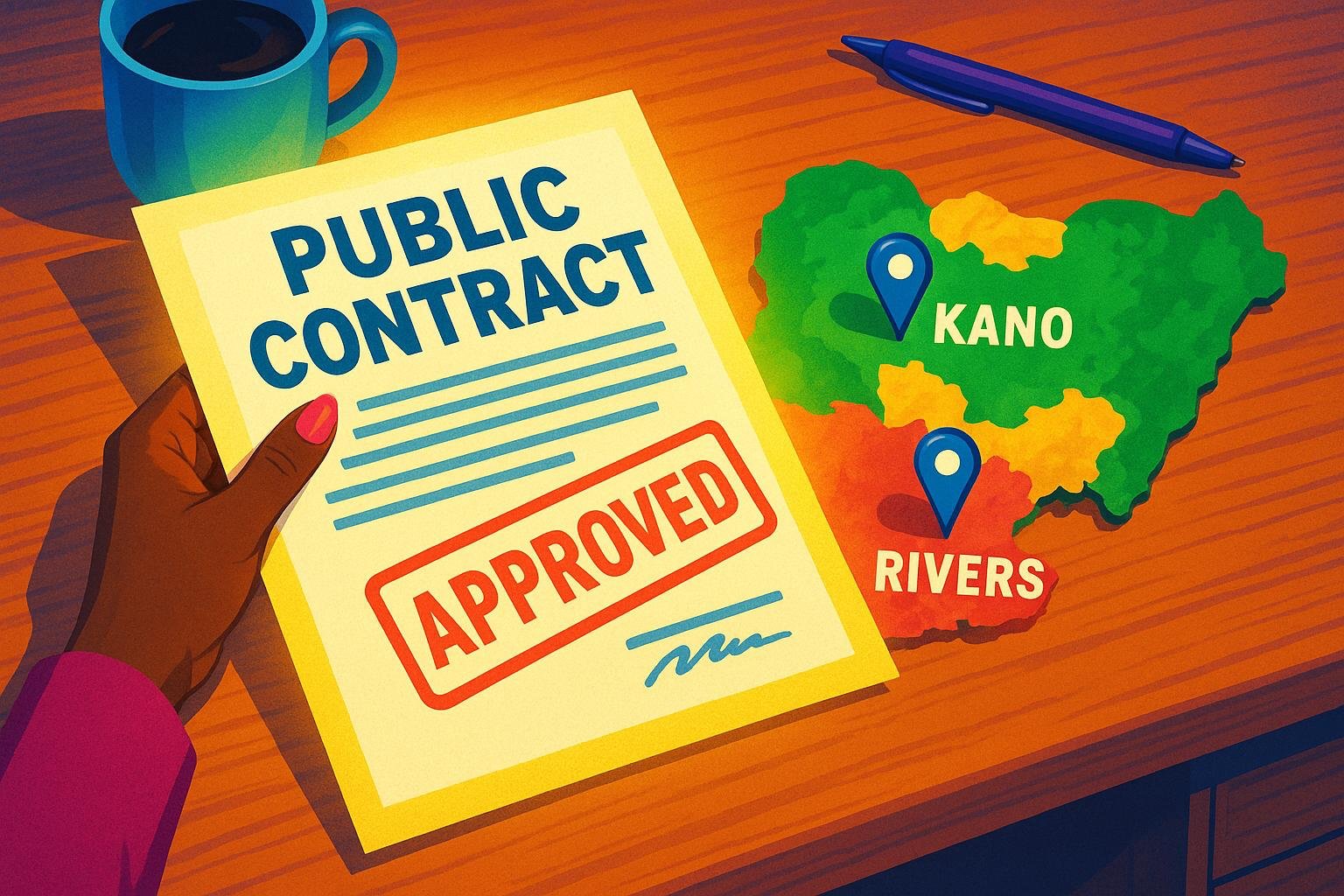
The Chevening Alumni Association of Nigeria and DO Take Action have launched SWEEAP, a CAPF‑backed one‑month virtual programme to equip 600 women‑owned and women‑led businesses in Kano and Rivers with procurement readiness, finance, digital and exporting skills. Applicants must be CAC‑registered; the course begins 1 September 2025.

The Chevening Alumni Association of Nigeria (CAAN) and civic group DO Take Action have launched a new drive to equip 600 women‑owned and women‑led businesses in Kano and Rivers states with the skills and networks to compete for public contracts. The initiative, named Scaling Women’s Economic Empowerment through Affirmative Procurement (SWEEAP), is backed by the Chevening Alumni Programme Fund (CAPF), a UK Foreign, Commonwealth & Development Office initiative that provides grants to Chevening alumni to deliver locally led, high‑impact projects.
The organisers say the one‑month programme, scheduled to begin on 1 September 2025 and to be delivered virtually, will cover procurement readiness alongside complementary modules in finance, digital skills and exporting. Applications are open to businesses duly registered with the Corporate Affairs Commission (CAC); the CAC is Nigeria’s statutory body for company and business name registration and issues the electronic certificates and legal recognition firms need to bid for contracts and open corporate bank accounts.
DO Take Action, which is leading delivery, framed SWEEAP as an expansion of earlier work. The organisation’s published materials and past press releases show it has previously collaborated with UN Women on a Women’s Economic Empowerment through Affirmative Procurement (WEEAP) programme that trained nearly 1,930 women entrepreneurs across Nigeria, Senegal, Côte d’Ivoire and Mali. It also ran pilots with World Bank support that trained more than 765 women in Abuja and Kaduna, preparing them to bid for and win public contracts. According to DO Take Action, SWEEAP will combine modular online learning with mentorship, stakeholder forums and advocacy intended to strengthen both firm‑level capacity and the institutional environment for gender‑responsive procurement.
Speaking at the programme launch, Precious Chinonso, chief executive of DO Take Action and a Chevening alumna, described the project as an attempt to “break barriers that have kept women at the margins of public procurement for too long,” saying the approach would pair capacity‑building with advocacy and stakeholder engagement to prioritise women in procurement systems. Kester Osahenye, president of CAAN, added that the programme aims not only to deliver practical tools and networks to 600 firms, but also to “inspire the behavioural change” needed for women to see themselves as competitive players and to influence procurement policy at the state level.
Chevening’s own programme materials make clear the funding route for initiatives such as SWEEAP: the CAPF is administered by Chevening and supports alumni to design projects that extend the scholarship network’s reach and legacy, typically in partnership with local British diplomatic missions. At the launch, Oluwafunmilayo Ladepo, programme officer at Chevening Awards, welcomed CAAN’s work and noted the British High Commission’s support for alumni‑led interventions that strengthen UK–Nigeria collaboration.
The initiative arrives amid growing attention to gender‑responsive procurement (GRP) as a tool for economic inclusion. Advocates argue that public contracting, when made more accessible to women entrepreneurs through affirmative policies and capacity support, can drive inclusive growth; critics caution that policy change must be paired with sustained market access and reform of procurement processes to avoid one‑off gains. DO Take Action’s model combines training with advocacy and forums to engage procuring entities — a design the organisation says aims to address both supply‑ and demand‑side barriers.
Operationally, organisers say SWEEAP will be delivered through a learning management system and is free for selected participants. Beyond immediate training outcomes, the stated objectives include increasing the number of women‑led firms that can register for and win public contracts, strengthening institutional capacity for GRP in the two states, and creating mentorship links that persist after the course ends.
While the programme’s organisers point to prior partnerships with UN Women and the World Bank as evidence of scalability and impact, the success of SWEEAP will depend on measurable outcomes: the number of firms that secure contracts, the value of those contracts, and any durable shifts in procurement practice at state level. CAAN and DO Take Action have said they will pursue policy engagement alongside training; independent monitoring or published evaluative data will be needed to verify longer‑term claims of economic empowerment.
For now, SWEEAP opens a new entry point for women entrepreneurs in Kano and Rivers seeking to formalise their businesses and to engage with Nigeria’s public procurement market. Interested firms are required to be registered with the CAC to apply; organisers have stated that cohort places will be allocated through an application process ahead of the September start date.
Source: Noah Wire Services

