


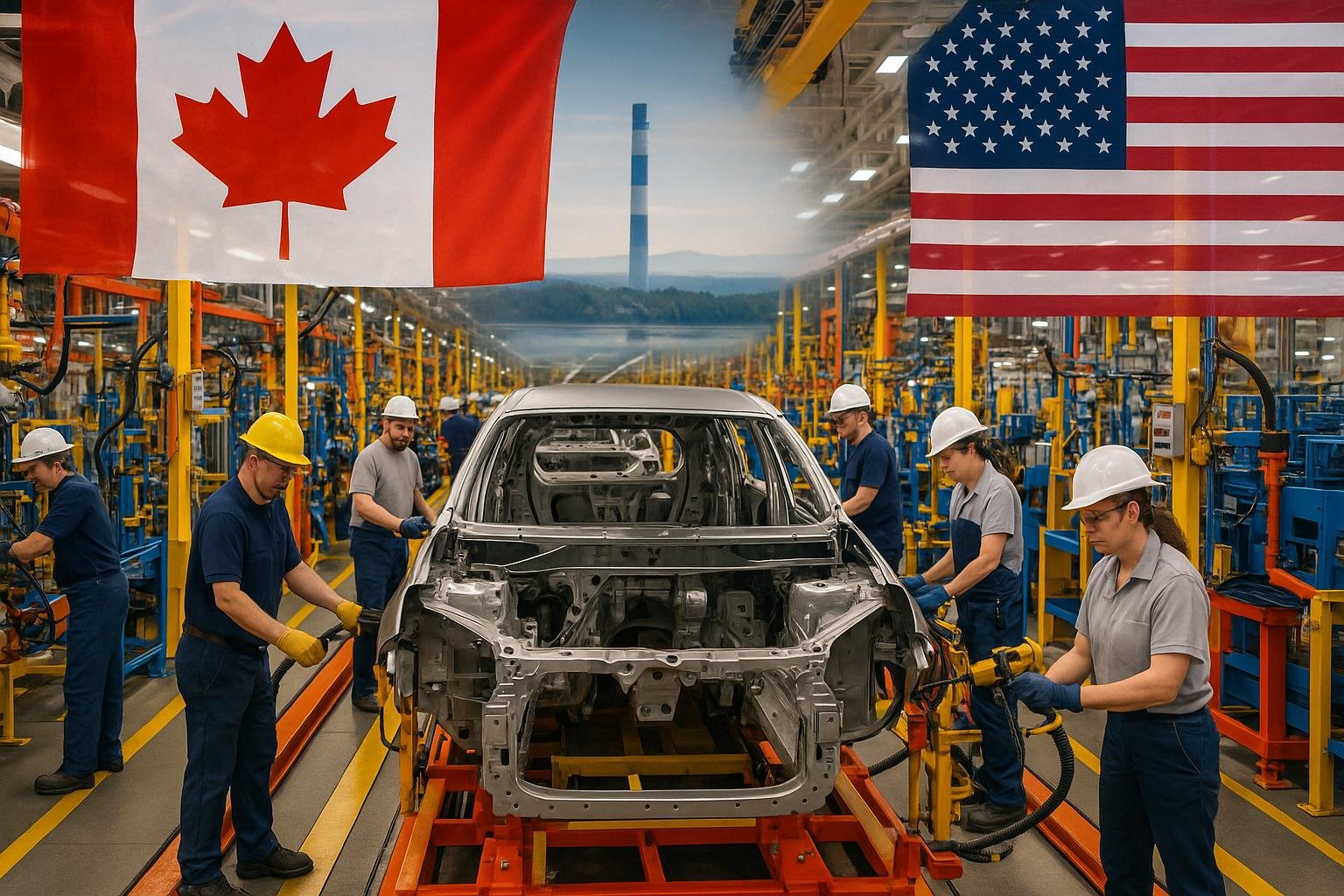
Amid escalating US tariffs and trade friction, Canada’s automotive sector is reshaping operations, investing in technology, and seeking new markets to ensure resilience and future growth.

Canada’s automotive sector is reworking the way it operates as a prolonged period of trade friction forces companies to shore up supply chains, rethink product lines and hunt for more certain export markets.
Industry leaders and suppliers across Southern Ontario have long be...
Continue Reading This Article
Enjoy this article as well as all of our content, including reports, news, tips and more.
By registering or signing into your SRM Today account, you agree to SRM Today's Terms of Use and consent to the processing of your personal information as described in our Privacy Policy.
“From our recent survey and in conversations with automotive leaders, parts suppliers, and dealers, it’s clear significant activity is underway to optimize their operations and explore new markets, partnerships, and opportunities,” Dave Power, partner and national automotive sector leader at KPMG Canada, said in the report.
KPMG’s February 2026 study found that 82% of original equipment manufacturers and suppliers are changing their supply‑chain strategies and 70% are actively looking beyond traditional partners for new customers. Firms are also shifting their offering mix to limit tariff exposure: 62% reported substantial changes to product lines, while 63% have passed higher costs through to customers by raising prices.
The survey captured a range of possible futures for companies in the sector. Seventeen percent of respondents expect their businesses will be “completely transformed” over the next three years, 12% anticipate being acquired or consolidated, and 9% said they face a material risk of failure. Nineteen percent reported minimal impact to date. Meanwhile executives are prioritising stability: securing raw materials and reinforcing supplier networks top the short‑term agenda, followed by productivity gains and cost optimisation.
Investment in technology is a prominent part of the industry’s playbook. KPMG reports that 69% of firms are making heavy investments in artificial intelligence and other advanced technologies, and one in five respondents credit AI with productivity improvements exceeding 25%.
The trade turbulence has also prompted calls for policy responses and market diversification. Joy Nott, partner, trade & customs at KPMG Canada, highlighted the lure of existing trade agreements, noting that Canada has 15 free trade agreements covering 51 countries, a market that spans around 1.8 billion people and roughly 60% of global GDP, which could provide alternatives to U.S.‑centric routes.
Government interventions have begun to move beyond rhetoric. In October 2025 the federal government reduced import quotas for General Motors and Stellantis after those automakers cut Canadian production below earlier commitments, and introduced an auto tariff remission mechanism that allows a controlled number of vehicle imports from the United States tariff‑free if companies meet specified Canadian production and investment thresholds, according to a federal announcement. Earlier proposals and measures outlined by KPMG in late 2025 envisaged a Strategic Response Fund and procurement policies designed to favour domestic suppliers as part of a wider resilience strategy.
Public sentiment appears aligned with a push for greater economic sovereignty. A January 2026 KPMG survey showed many Canadians back reducing reliance on the U.S. for critical manufacturing, with strong support for bolstering defence-related production, parts manufacturing and battery and critical‑minerals activity. That poll found 51% of respondents doubted the sector’s survival without new trade protections or an updated deal with the United States, and 59% supported applying Canadian tariffs to domestic automakers that shift assembly to the U.S.
Industry commentary frames the current phase as one of painful but potentially productive adjustment. Some executives believe their companies can emerge stronger while preserving core business models; others foresee sweeping change. A market summary published in February 2026 described the shift as an “unprecedented transformation” driven by tariff policy and broader geopolitical uncertainty.
The practical consequences are visible across the supply chain: pricing strategies have been adjusted, product portfolios rebalanced, and procurement and logistics maps rewritten. For many suppliers in Southern Ontario, the immediate objective is to build resilience while keeping export channels open. For policymakers, the challenge is to balance trade diplomacy with targeted domestic support to sustain jobs and attract investment.
As the sector adapts, the question for Canada will be whether the combination of corporate restructuring, technology adoption and selective government support can preserve the manufacturing base that for decades has been closely integrated with U.S. auto production. KPMG’s findings suggest momentum for change, but also underline the scale of the task: a significant share of firms expect their businesses will look very different within a few years, and a notable minority fear they may not survive the transition.
Source: Noah Wire Services
Subscribe to Industry Updates

