


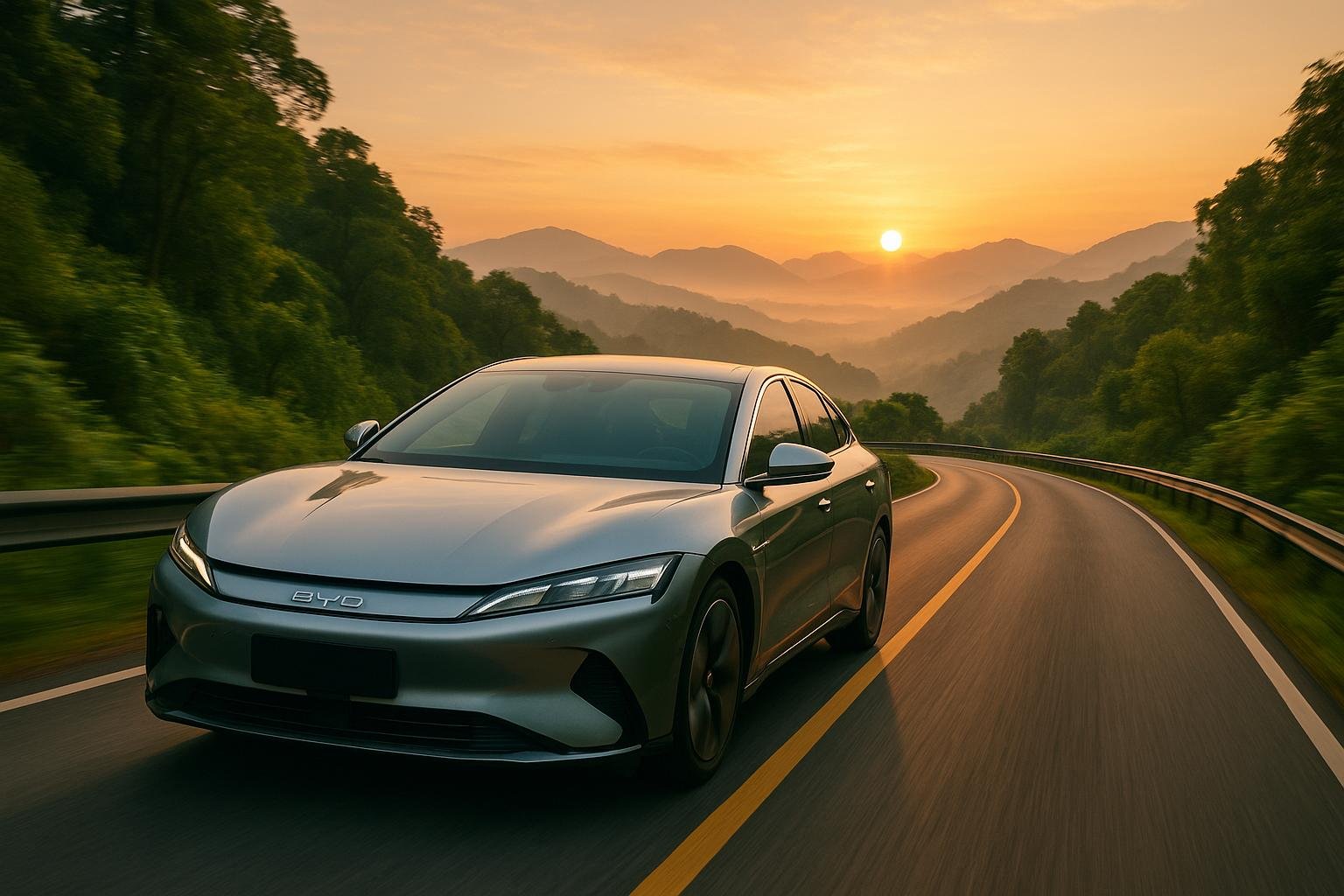
Chinese automaker BYD has surpassed Tesla in global electric vehicle sales for 2025, with a record 4.6 million units sold, highlighting rapid international expansion and shifting market dynamics amid rising competition and regulatory challenges.

BYD’s rapid rise from domestic challenger to a leading force in electric vehicles has reshaped the global market in ways few expected a decade ago. According to company and market tallies, BYD sold roughly 4.6 million vehicles...
Continue Reading This Article
Enjoy this article as well as all of our content, including reports, news, tips and more.
By registering or signing into your SRM Today account, you agree to SRM Today's Terms of Use and consent to the processing of your personal information as described in our Privacy Policy.
BYD’s annual mix tells a nuanced story. Industry tallies show 2025 deliveries split almost evenly between BEVs and plug‑in hybrids (PHEVs), with BEVs rising strongly year‑on‑year while PHEVs fell in some counts. According to CarNewsChina and other data providers, BYD reported around 4.55 million vehicles in 2025, including about 2.25 million BEVs and 2.29 million PHEVs, while overseas sales topped one million for the first time, up more than 150% year‑on‑year. That export surge, particularly in Europe, has been central to BYD’s claim to the top spot, even as precise aggregates differ slightly between sources.
The victory is both commercial and tactical. BYD’s expansion in Europe has been marked by rapid retail roll‑outs and notable market share gains: in Italy, for example, annual BYD sales jumped roughly eightfold to nearly 24,000 units in 2025 as the company expanded to more than 100 outlets, illustrating how targeted distribution and competitive pricing can win share even in contracting markets. But success abroad brings fresh risks: rising trade barriers, local regulatory hurdles and the need to tailor products and service networks to disparate consumer preferences all threaten to slow momentum.
Those headwinds are compounded by intense domestic competition and a sharpening price war. Governments worldwide have tapered EV subsidies, pushing buyers to be more price conscious and weighing on margins across the sector. Analysts and market commentators warn that BYD must balance volume growth with profitability as rivals such as Geely and new entrants from consumer electronics players increase pressure on price and feature sets. Morgan Stanley has suggested a potential domestic recovery for some players following major model refreshes, but the outlook remains contestable.
Financial markets are already reacting. BYD’s Shenzhen A‑shares closed at 97.72 yuan before the New Year break and will be watched closely for any move back above the psychologically important 100‑yuan level; traders will scrutinise upcoming earnings commentary for signs of margin compression or overseas mix shifts. Tesla’s quarterly results, due on 28 January 2026, and BYD’s year‑end report, scheduled for 31 March 2026, are expected to influence sentiment across the sector as investors re‑price risk and reward in the fast‑evolving EV contest. According to Forbes and other reports, Tesla’s fourth‑quarter deliveries fell in 2025, a decline that helped BYD overtake it in annual BEV counts.
Beyond automobiles, the BYD story has implications for adjacent sectors. Market observers point to potential synergies between EV supply chains and blockchain applications, tokenisation of battery materials for traceability, crypto payments at charging stations and decentralised energy trading among them, but such ideas remain largely experimental. Industry data shows that scaling charging infrastructure and green energy integration will be decisive for long‑term EV adoption; whether distributed ledger technologies become material enablers of that transition is still speculative.
BYD’s ascent therefore looks less like a single triumph than a new phase in an intensifying global contest. The company has converted retail expansion, product breadth and competitive pricing into market leadership, but sustaining that position will depend on managing margin pressure, navigating trade and regulatory hurdles overseas, and proving that rapid growth can be matched by resilient profitability and supply‑chain sustainability. As the calendar turns to 2026, investors, competitors and adjacent industries will be watching the coming quarterly disclosures and policy shifts for clues about how durable BYD’s advantage will be.
Source: Noah Wire Services
Subscribe to Industry Updates

