


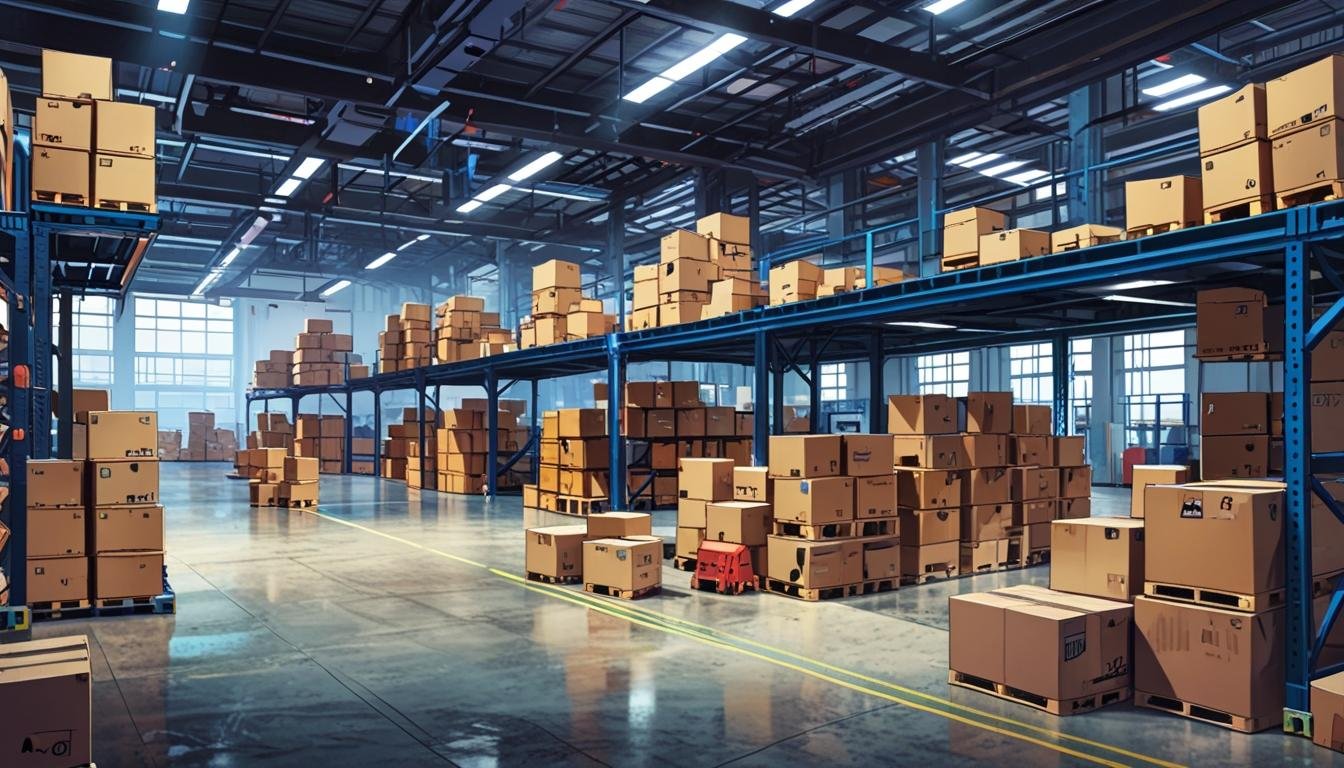
**London**: Recent disruptions in global supply chains have prompted companies to shift from cost-cutting strategies to prioritising resilience. With advancements in AI, automation, and sustainability practices, businesses like Walmart illustrate the importance of modernising supply chains to mitigate risks and enhance operational efficiency.
Supply chain management has emerged as a crucial concern for business leaders, primarily due to recent disruptions that have highlighted weaknesses in traditional supply chain models. Factors such as geopolitical instability, fluctuating demand, and operational inefficiencies have necessitated a shift in focus from mere cost-cutting to building resilience. The Logistics Viewpoints publication has reported that companies unable to modernise their supply chains risk facing supply shortages, revenue loss, and regulatory challenges.
In the past, many businesses favoured cost reduction strategies, with just-in-time (JIT) inventory models and lean supplier networks being prevalent. However, significant disruptions, including those caused by the COVID-19 pandemic, have showcased the vulnerabilities of relying solely on single-source suppliers and maintaining minimal inventory buffers. As a result, there has been a notable pivot towards prioritising resilience within supply chains. Companies are now restructuring their supplier networks, adopting just-in-case (JIC) inventory models, and implementing AI-driven forecasting tools to better anticipate and mitigate potential disruptions while balancing cost efficiencies.

The role of technology within supply chain management cannot be overlooked. AI, automation, and robotics are progressively transforming procurement, inventory management, logistics, and supplier negotiations. Companies investing in these technologies are witnessing measurable operational advantages. For example, AI-powered demand forecasting is enhancing inventory accuracy, while automated procurement systems standardise supplier negotiations. Robotics are being deployed to improve warehouse efficiency, and AI-driven logistics optimisation aims to decrease transportation costs and delays.
Walmart exemplifies how a major corporation is embracing this transformation in its supply chain. The company has integrated AI, automation, and predictive analytics throughout its operations. Walmart is utilising AI-powered chatbots to enhance supplier negotiations, a move that has reportedly improved contract efficiency and resulted in cost savings. The partnership with Pactum AI has enabled Walmart to automate supplier negotiations, achieving agreements with 68 percent of its approached suppliers and securing a 1.5 percent cost reduction.
Further, Walmart’s implementation of AI in logistics and procurement is noteworthy. The company is employing advanced models, such as GPT-4, for better inventory allocation and demand forecasting. Customer interactions are also being enhanced through features like “Text to Shop,” allowing shoppers to place orders via text or voice commands, ultimately streamlining inventory management.
Warehouse automation is another focal point of Walmart’s strategy, with plans to automate 65 percent of its stores by 2026. The company has already achieved over half of its fulfilment operations fully automated, where robotics are responsible for storage, retrieval, and packing tasks, thus reducing dependence on manual labour and improving order fulfilment times. AI-powered warehouse management systems are also being utilised to optimise logistics and reduce inefficiencies.
Additionally, the increasing regulatory and consumer pressure for sustainability and adherence to environmental, social, and governance (ESG) principles has prompted companies to incorporate these frameworks into their supply chains. The publication highlights the necessity for organizations to implement carbon tracking and emissions reporting, experience which can be enhanced through AI-powered monitoring systems. Blockchain technology is aiding in supply chain traceability, ensuring compliance with sustainability standards, while a growing consumer preference for ethical sourcing continues to shape corporate procurement strategies.
As organisations assess their supply chain strategies, the importance of moving beyond traditional cost-reduction methodologies is becoming increasingly clear. Factors driving this transformation include the prioritisation of AI and automation, achieving long-term resilience over mere cost-cutting, integrating ESG practices, employing predictive supply chain management, and pursuing end-to-end digital transformation.
Walmart’s ongoing enhancements to its supply chain operations illustrate the critical need for companies to embrace automation, predictive analytics, and supplier diversification. Executives are encouraged to focus on these emerging technologies to ensure their supply chains remain resilient, efficient, and compliant amidst a rapidly evolving global landscape.
Source: Noah Wire Services

