


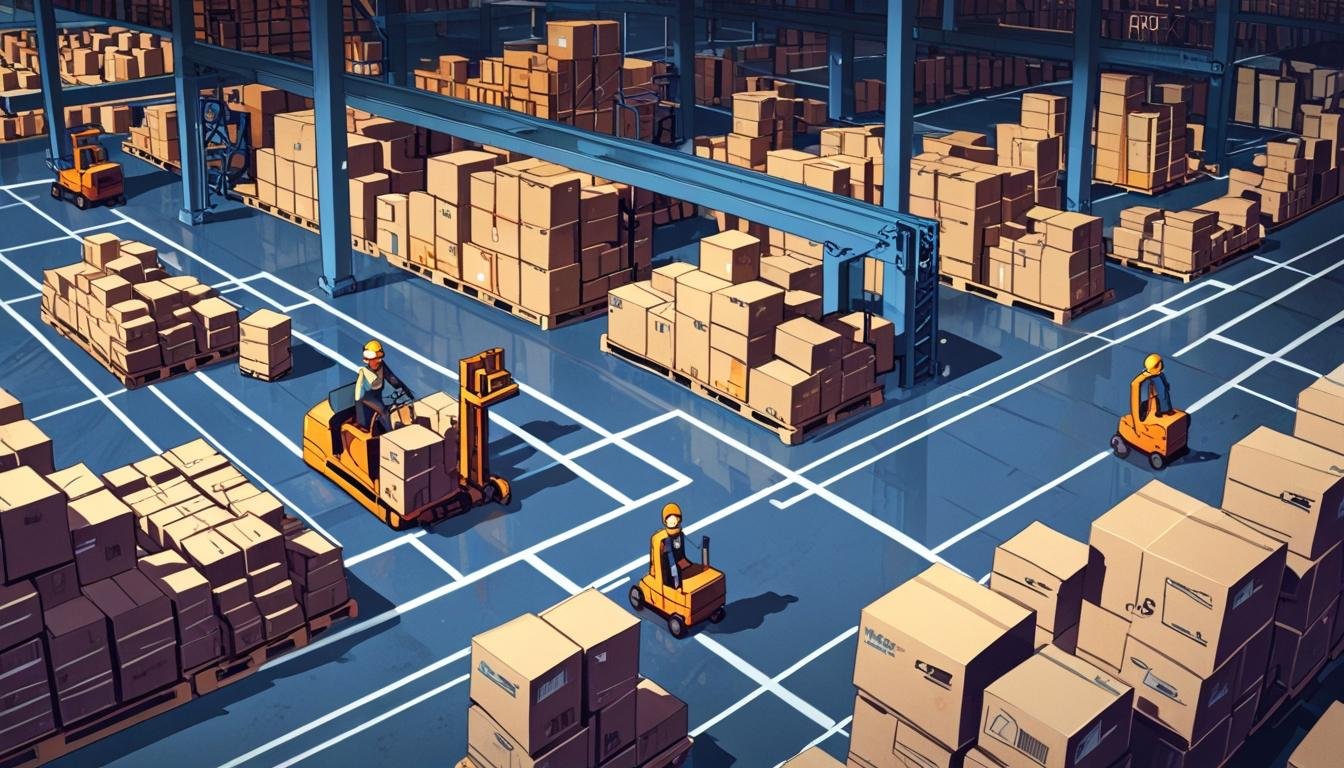
**Global**: A recent survey highlights a shift in companies’ perceptions of supply chain risks, with Mexico surpassing China as a primary concern. Businesses are increasingly stockpiling goods and sourcing domestically to navigate uncertainty, reflecting a need for adaptability amid evolving economic conditions.
Unstable trade policies are increasingly driving transformations within global supply chains, as businesses adapt to new economic conditions in real time. A recent survey conducted by Qlik indicates a significant shift in how companies perceive their supply chain risks, with 49% identifying Mexico as their top concern related to tariffs, surpassing the 45% of companies that cited China. This shift reflects broader trends in international trade, where companies are continually adjusting their strategies to maintain competitiveness.
To counter these evolving challenges, more than half of the companies surveyed—54%—are stockpiling goods, moving away from traditionally lean supply chain models in favour of domestic sourcing and various trade adjustments. These proactive measures aim to limit the impact of tariffs and ensure a more robust operational framework in the face of potential disruptions.

Mike Capone, CEO of Qlik, emphasised the need for adaptability in supply chain management, stating, “The days of static supply chains and gut-driven decisions are over—trade policies now shift in real time.” He elaborated that firms can no longer depend solely on historical data or instinct, asserting that “agility and data-driven foresight must become core business capabilities.” Capone underscored that companies capable of dynamically adjusting their strategies will be the ones that thrive, while those that remain passive risk falling behind competitors.
According to the survey, a substantial 64% of companies commenced preparations for potential trade shifts well ahead of the 2024 U.S. election, indicating a proactive stance towards uncertainty. In contrast, 36% of respondents are currently in a race to adjust their operations.
Particularly notable is the impact on key industries such as automotive, manufacturing, and aerospace, which are significantly influencing these changes. Approximately half of the companies are now sourcing more from domestic suppliers, and 43% are taking advantage of free trade zones to mitigate their tariff exposure.
Executives involved in the survey expressed heightened concern over tariffs, with 75% citing significant anxiety regarding how these economic policies will affect their companies and daily operations. This growing unease reflects a broader recognition within the business community of the need for strategic flexibility amidst ongoing trade volatility.
Source: Noah Wire Services

