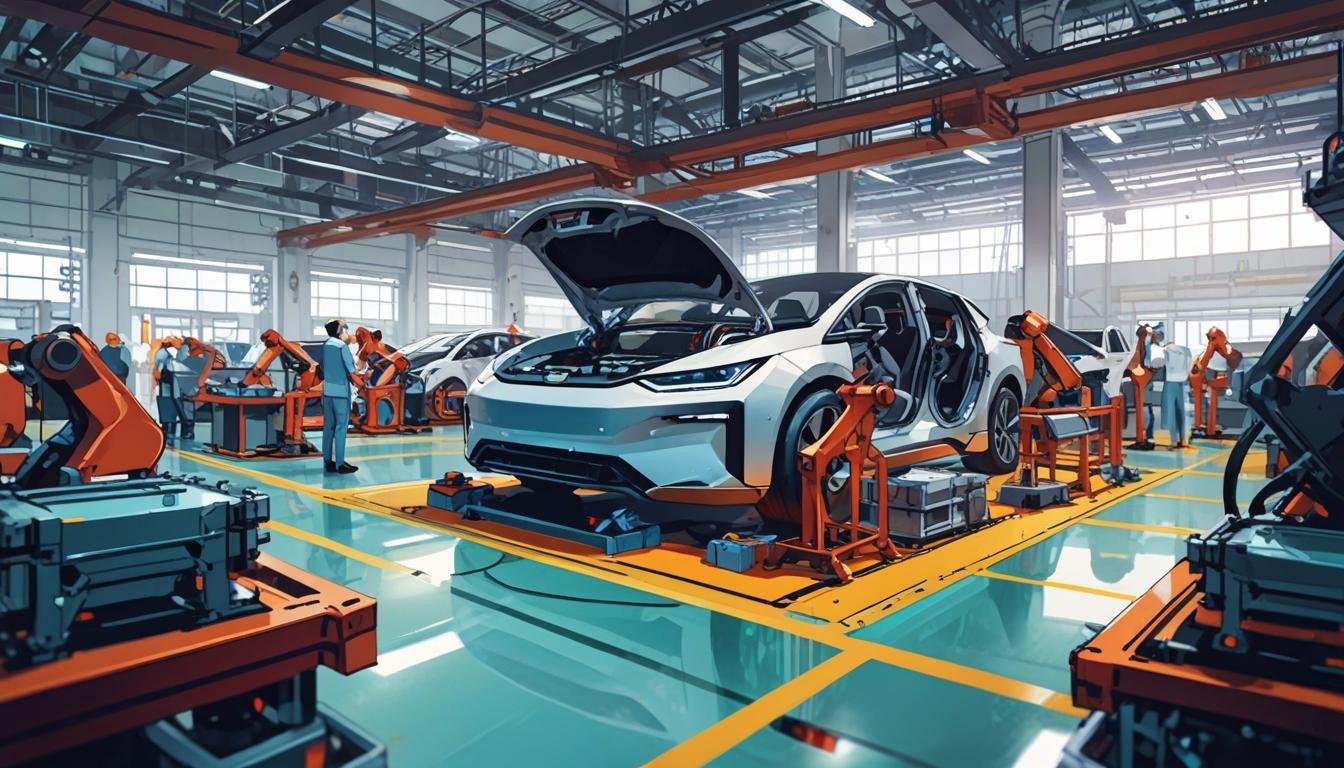
The BMW Group is making significant strides in the digitalisation of its component production at the Landshut plant, its largest manufacturing site in Bavaria. This initiative is positioned at the heart of the company’s strategy to enhance efficiency and quality in an increasingly competitive automotive sector. As noted by Plant Manager Thomas Thym, “Behind every digital car there must also be a digital factory,” reflecting the vital link between advanced manufacturing processes and the vehicles they produce.
At the Landshut facility, the integration of AI-driven technologies and smart logistics is transforming production operations. For instance, the use of AI-supported data analysis allows for early detection of anomalies in data traffic, crucial for safeguarding against cyberattacks. Simultaneously, digital process controls are enhancing productivity and product quality, signifying a dual focus on innovation and security in manufacturing.

The “Shopfloor.Digital” transformation programme is a cornerstone of this digital strategy, aiming to standardise and harmonise manufacturing processes across BMW’s 30 global production sites. This involves the construction of a modern cloud-based IT architecture that leverages process automation and artificial intelligence to streamline operations. Franz Heigl, Head of Digitalisation of Component Manufacturing, remarks, “We view complexity as an opportunity and use the data we gain to continuously improve our processes,” underscoring the proactive approach that the BMW Group takes towards operational challenges.
In tandem with these technological advancements, BMW is redefining its approach to lean management through digital tools. This includes the implementation of a digital process map and value stream management, aimed at optimising every phase of production. Such tools not only facilitate effective leadership and strategic alignment but also encourage a focus on value-creating activities, as leaders strive to break down complex goals into actionable tasks.
The company’s commitment to enhancing its logistics capabilities is also noteworthy, as it strives to create seamless connections between supply chains and production processes. Real-time data and AI-driven operations at the Landshut plant are set to bolster the efficiency and flexibility of these systems, critical for managing the complexities associated with contemporary automotive manufacturing. A prime example is the BMW Energy Master, a high-voltage battery control unit for the new class of vehicles, which ensures maximised quality through comprehensive inline monitoring and automated quality checks.
Moreover, the plant’s light metal foundry is spearheading the production of components for electric vehicles, employing pioneering techniques such as inline computed tomography (CT). This technology allows for an extraordinary level of quality assurance, with each electric motor housing being scanned and reconstructed into a 3D model within just 42 seconds. Such advancements not only affirm BMW’s commitment to maintaining high-quality standards but also highlight the application of cutting-edge technology in mass production settings.
To bolster its supply chain integrity, the BMW Group is also investing in the training of its suppliers through the Zero Defect Supply Chain Campus. This initiative aims to embed a culture of zero defects among partners, ensuring quality in every step of production and enhancing the overall reliability of the supply chain.
Further expanding its capabilities, BMW has committed an additional €200 million to the Landshut plant, raising total investments to approximately €1 billion since 2020. This capital is earmarked for new production facilities aimed at supporting the electric mobility transition, notably through an innovative injector casting process. This development enhances mechanical properties while reducing cycle times and emissions, reflecting BMW’s broader sustainability objectives.
Recognition of the Landshut plant’s achievements includes the Automotive Lean Production Award 2023, highlighting its exemplary integration of lean management with advanced digital technologies. The plant’s collaborative culture between various teams ensures continuous improvement and innovation, reinforcing its role as a critical player in the future of automotive manufacturing.
In summary, the BMW Group’s Landshut plant serves as a vital example of how digitalisation is reshaping the automotive landscape. With initiatives that encompass everything from AI-driven logistics to advanced quality assurance systems, BMW is positioning itself to meet the demands of the electric mobility era while underscoring the importance of a connected and intelligent production environment.
Reference Map
- Paragraphs 1, 2, 3, 4, 5
- Paragraph 4
- Paragraphs 3, 5, 6
- Paragraph 5
- Paragraph 6
- Paragraph 4
Source: Noah Wire Services