


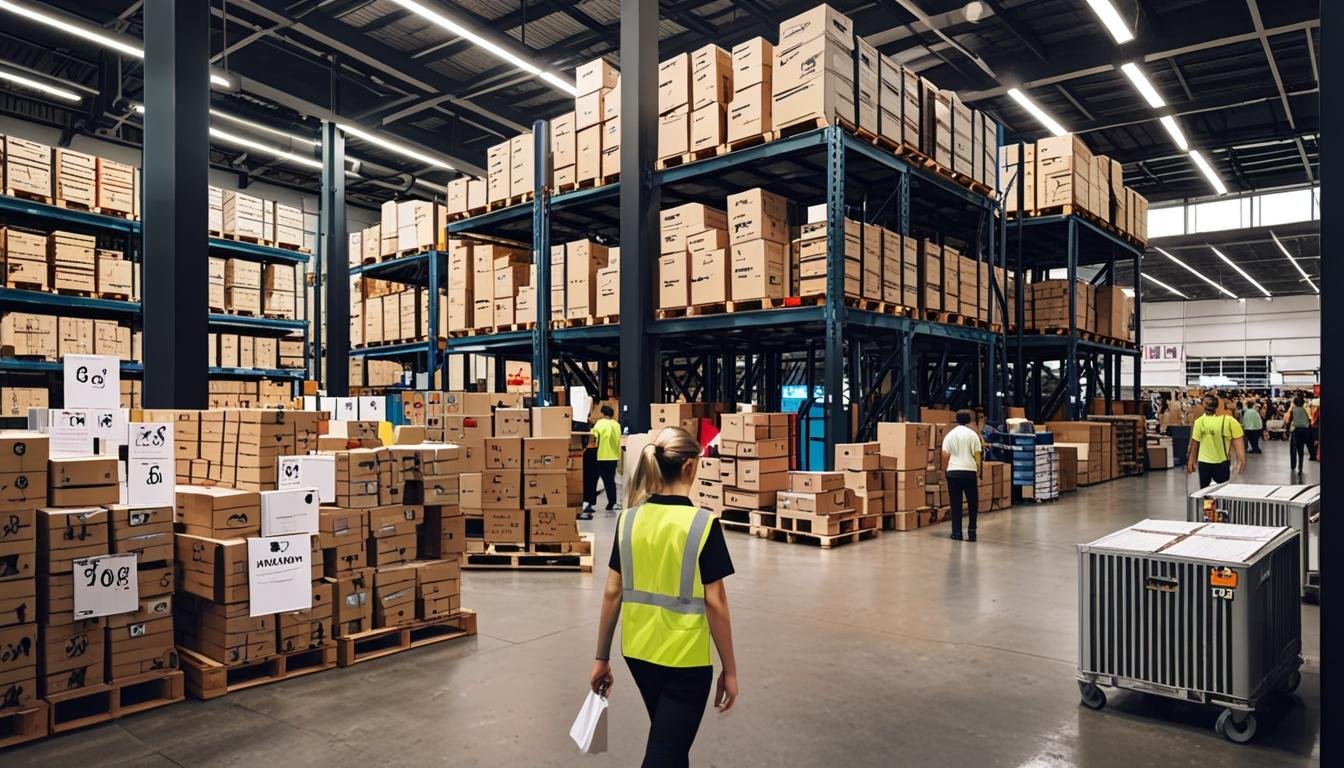
**Australia**: As Covid-19 effects recede, retailers face new supply chain challenges from geopolitical tensions. Insights from prominent companies reveal strategies to enhance efficiency, streamline operations, and maintain customer experience amidst rising costs and shifting market dynamics in 2024 and beyond.
As the effects of the Covid-19 pandemic diminish, Australian retailers are facing new challenges in their supply chains, stemming from geopolitical tensions in 2024. Issues such as heightened military activity in the Middle East are affecting the stability and costs of global supply chains, prompting retailers to reassess their strategies.
According to a report from Inside Retail, many Australian retailers have developed complex and lengthy supply chains that limit their flexibility in responding to disruptions. Retail margins are under pressure as consumer spending tightens, leading retailers to seek efficiency improvements in their supply chains.

Key players in the retail sector, including Amazon, Showpo, Tinyme, Snuggle Hunny, and Shona Joy, have shared insights on how they are navigating these challenges. Amazon Australia, for example, continues to prioritise three core drivers: product, price, and convenience. “Over the past 12 months, we have been building up our selection of products, investing in our operations network, and opening new fulfilment centres,” stated Anthony Perizzolo, general manager of delivery and supply chain for Amazon Australia, adding that the company is enhancing its convenience aspect by offering value through subscribe-and-save models.
In contrast, Tinyme, a retailer focused on personalised children’s products, operates with a made-to-order model that eliminates the need to hold finished goods in inventory. COO Ben Hare noted that the company is working to broaden its product range and optimise its delivery processes on a domestic and international level.
For apparel retailer Shona Joy, the past year has involved efforts to enhance the traceability and transparency of its supply chain while refining the customer journey. CEO Danielle Millar mentioned that the company is focusing on a streamlined product range to remain agile and responsive to market trends.
Though cost-cutting is often a focus, it can be a double-edged sword. Perizzolo cautioned against merely concentrating on reducing expenses, emphasising the importance of customer-centricity. “We frame the narrative internally as focusing on reducing the ‘cost to serve’ to provide competitive prices,” he explained. Millar echoed this sentiment, asserting that cost reductions must not compromise customer experience.
David Ibanez, operations manager for Showpo, pointed out the necessity of driving efficiency in supply chain management to retain customers, stating that cost reductions may require future investments once a high efficiency is achieved.
Last-mile delivery has become a significant area of concern for many retailers, as it is vital to customer experience. Perizzolo highlighted Amazon’s investment of half a billion dollars in developing its last-mile delivery business, Amazon Logistics. Meanwhile, Shona Joy is improving its delivery and returns speed through localised options.
The pandemic has forced retailers to reassess their inventory management, with Amazon refining its distribution processes to deploy machine learning for accurate forecasting. As Perizzolo explained, the company collaborates with seller-partner teams to enhance inventory placement across its fulfilment centres.
Tinyme’s Hare remarked on the importance of increasing local sourcing amid rising geopolitical tensions, aiming to bolster supply chain resilience. Similarly, Snuggle Hunny’s COO Tom Abraham shared that the company is providing factories with more visibility on volumes to secure raw materials and reduce lead times effectively.
Automation has gained traction in the retail space, which is underscored by Amazon’s longstanding commitment to adopting robotic technology in its supply chain operations. Hare noted that for businesses like Tinyme, automation is becoming more accessible, allowing for incremental investments that enhance production efficiency.
Millar emphasised the value of automation in reporting systems to identify customer pain points and refine service offerings. She stated, “The data gives us an understanding of what is going right or wrong with the customer, how frequently, and where the pain points are.”
Despite the potential benefits of automation, caution is advised against over-ambitious implementations. Millar recounted past experiences of facing challenges with costly projects and highlighted the importance of getting basic processes right before introducing complex technologies.
Ultimately, there is no universal solution to the challenges retailers face as they navigate evolving customer expectations and supply chain dynamics. As the industry gears up for 2025, retailers are tasked with closely examining their operations to deliver the customer experience that drives loyalty and profitability.
Source: Noah Wire Services

