


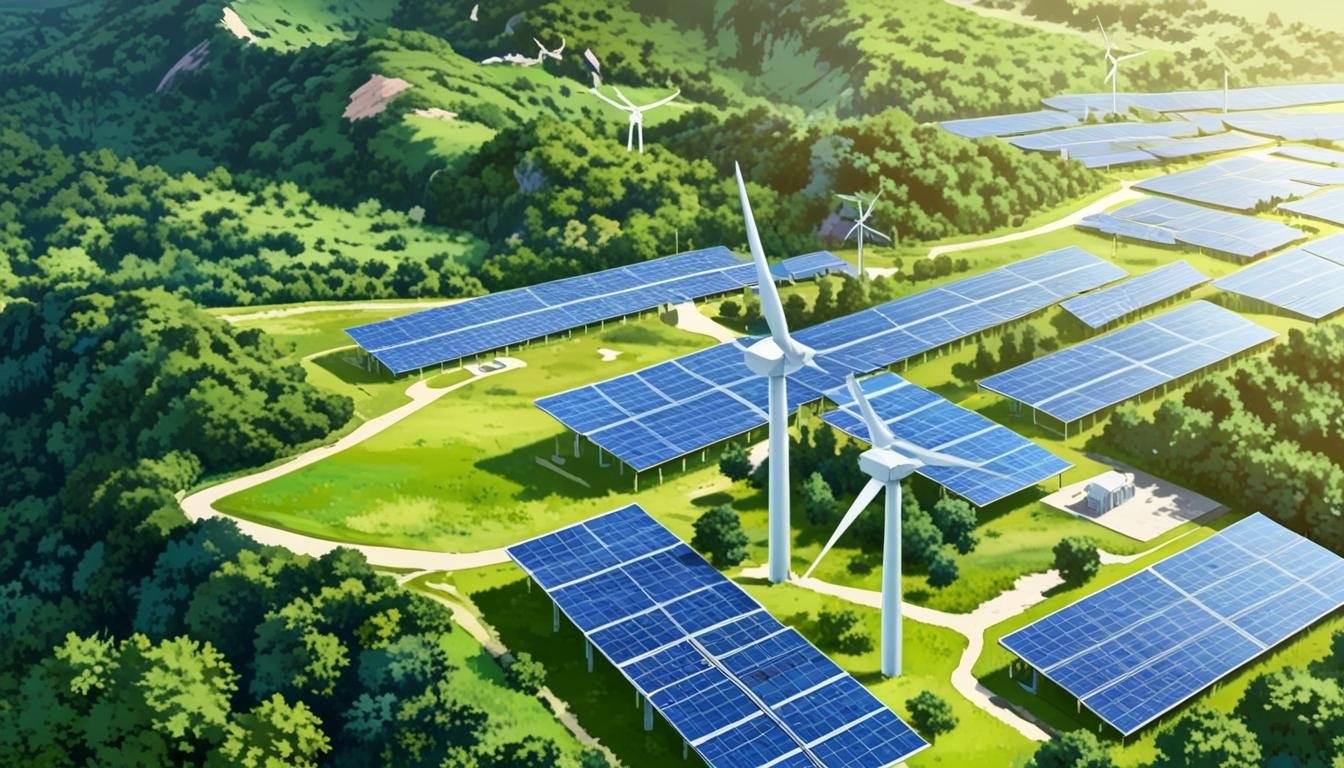
**London**: Apple Inc. invests $99.3 million in a new China Clean Energy Fund, bolstering renewable energy projects while committing to carbon neutrality by 2030. Amidst trade tensions, Apple aims to reduce emissions by 75% and enhance supply chain sustainability through various eco-friendly initiatives.
Apple Inc. is making significant strides in its environmental and sustainability initiatives, with a clear commitment to achieving carbon neutrality across its entire business by the year 2030. The tech giant’s efforts include manufacturing, supply chain operations, and product life cycles, marking a substantial investment in clean energy solutions.
On March 24, 2025, Apple unveiled its second China Clean Energy Fund, announcing a financial commitment of $99.3 million (approximately RMB 720 million). This fund, which is managed by Schroders, aims to bolster renewable energy projects across China and builds on the success of Apple’s first clean energy fund initiated in 2018. The initial fund facilitated the development of over 1 gigawatt of renewable energy, impacting 14 provinces across the country. Notable projects financed by the first fund include the Concord Jing Tang and Concord Shen Zhang Tang wind farms in Hunan Province and a wind facility developed by Fenghua Energy Investment in Hubei Province. Collectively, these projects supplied 134 megawatts of renewable energy, contributing to China’s ambitious goal that aims for renewables to account for 33% of its electricity by 2025.

The new fund is projected to add approximately 550,000 megawatt-hours of wind and solar energy to the Chinese power grid each year, with expectations for this figure to increase as more investors join the initiative. Apple’s strategy prioritises the early-stage support of renewable energy projects, thereby facilitating the transition for its suppliers to adopt clean energy solutions. Currently, around two-thirds of Apple’s production in China is powered by renewable energy, and more than 100 suppliers are working towards achieving 100% renewable energy for Apple products.
Apple’s CEO, Tim Cook, highlighted the importance of the company’s environmental initiatives, stating, “The business community has a big role to play in the development of China-U.S. relations. Apple is willing to contribute to the stable, healthy, and sustainable development of bilateral relations.” This announcement emerges amid an ongoing trade conflict between the United States and China, where tensions are rising due to issues surrounding technology, tariffs, and economic policies.
In terms of reducing greenhouse gas emissions, Apple has reported a significant progress, having achieved a reduction of over 55% in emissions since 2015, as noted in its 2024 Environmental Progress Report. The company has set a target to decrease emissions by 75% from 2015 levels before reaching full carbon neutrality by 2030. Lisa Jackson, Apple’s Vice President of Environment, Policy, and Social Initiatives, mentioned, “We’ve slashed emissions by more than half, all while serving more users than ever before.” Steps taken towards this goal include a transition to low-carbon electricity, utilisation of recycled and renewable materials, and enhancements in shipping methods, particularly moving from air freight to ocean transport, which has a lower carbon footprint.
Apple’s commitment extends to facilitating clean energy adoption among its suppliers. By April 2024, over 320 suppliers, representing 95% of Apple’s direct manufacturing expenditure, committed to utilising 100% renewable energy by 2030. This represents a significant increase, with more than 50 new suppliers joining in the past year. The Supplier Clean Energy Program aims to decarbonise Apple’s global supply chain, and in 2021 alone, the company’s suppliers generated 18.1 million megawatt-hours of clean energy, avoiding an estimated 13.9 million metric tons of carbon emissions.
In terms of product design, Apple introduced its first carbon-neutral products in the September 2023 launch of the new Apple Watch lineup. Improvements in design and clean energy contributions led to a significant reduction in product emissions for each carbon-neutral Apple Watch by over 75%. Additionally, Apple has eliminated leather from all product lines in favour of a new material called FineWoven, which has a lower carbon footprint, and has shifted to entirely fibre-based packaging for its Apple Watch models. The company also reported a 30% reduction in lifecycle greenhouse gas emissions for its iPhone 16 Pro and iPhone 16 Pro Max models as of 2024, achieved through the use of clean electricity, increased recycled materials, and improved shipping methods.
Despite Apple’s proactive measures, the company has faced scrutiny regarding its environmental claims. A class-action lawsuit was filed in February 2025, alleging that Apple misled consumers by labelling certain Apple Watch models as “carbon neutral.” Plaintiffs contend that the company’s reliance on carbon offset projects in Kenya and China does not yield genuine emissions reductions. The lawsuit seeks damages and an injunction against Apple’s marketing of these products as carbon neutral.
Through these various initiatives, Apple continues to position itself as a leader in corporate sustainability. The recent investment in the China Clean Energy Fund is a pivotal part of Apple’s strategy to further advance renewable energy and assist suppliers in transitioning to sustainable practices. The company’s multi-faceted approach underscores its commitment to environmental responsibility within the technology sector.
Source: Noah Wire Services

