


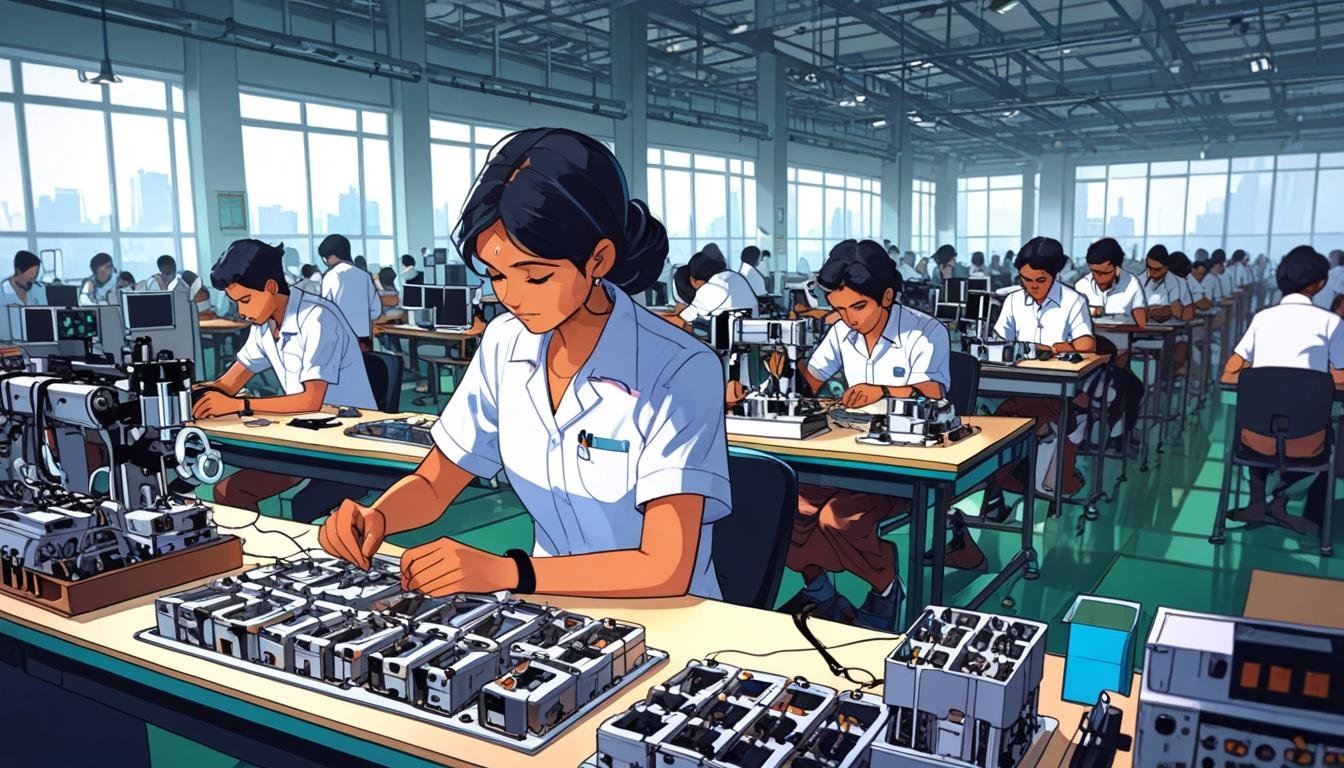
Apple’s strategic pivot towards India for iPhone production is accelerating, with CEO Tim Cook announcing that half of the devices destined for the U.S. market will now be sourced from Indian plants. This announcement, made during the company’s quarterly earnings call, underscores a significant shift in Apple’s manufacturing strategy, driven largely by the imposition of exorbitant tariffs on Chinese goods—currently at 145%—compared to a mere 10% on imports from India and Vietnam.
As part of a long-term vision, Apple aims to transition all iPhone assembly for the U.S. market to India by 2026, a move that follows a staggering $700 billion decline in market value attributable to escalating tariff tensions. Analysts from JPMorgan have indicated that iPhones manufactured in India will incur a price increase of only about 2% relative to those produced in China, making this shift financially advantageous for the company. Notably, the stark comparison becomes clear; manufacturing in the U.S. would entail a price hike of nearly 30%.

Despite this expansion in India, China remains Apple’s largest production base, where the company has cultivated an extensive manufacturing ecosystem over the past two decades. However, the ongoing trade disputes, exacerbated by tariffs under the former Trump administration, have compelled Apple to diversify its supply chain in a bid to mitigate risks associated with dependence on Chinese production.
India’s burgeoning role in Apple’s supply chain is notable. The country currently accounts for 14% of Apple’s global iPhone production, a substantial increase from just 1% two years ago. Industry projections suggest that India’s production capacity could rise to match China’s in volume within the next five years, although revenue contributions may lag behind for over a decade. As it stands, Apple’s revenue generated from India was approximately $8 billion in FY24—just over 2% of its global total, compared to $66.95 billion from Greater China.
In support of this expansion, the Indian government has implemented measures to bolster local manufacturing, including recent cuts to import duties on mobile phones and components, which will save Apple between $35 million and $50 million annually. These financial incentives exemplify India’s commitment to becoming a significant player in the global electronics manufacturing arena. Partnerships with local manufacturers like Tata and Foxconn further emphasise a collaborative effort to scale operations in response to surging demand across both domestic and international markets.
Additionally, Apple’s recent retail initiatives in India, demonstrated by the opening of flagship stores in Mumbai and New Delhi, signify a strategic foray into the Indian consumer market, which has been dominated by cost-effective Chinese brands. This direct retail presence will facilitate deeper engagement with Indian customers, positioning Apple to capture a greater share of this vital market.
As Apple continues its shift from China to India, it illustrates a broader trend of global supply chain restructuring amid geopolitics and fluctuating market dynamics. The successful execution of this strategy will depend not only on operational scalability but also on the Indian government’s support and the ability to navigate the complexities of local market demands. Overall, Apple’s pivot towards India is not merely a reaction to external pressures but a calculated move to harness emerging opportunities within a rapidly evolving global landscape.
Each step forward in Apple’s long-term vision highlights the importance of innovation in manufacturing and retail, echoing Cook’s sentiments about India’s potential as a significant contributor to Apple’s future growth trajectory.
Source: Noah Wire Services

