


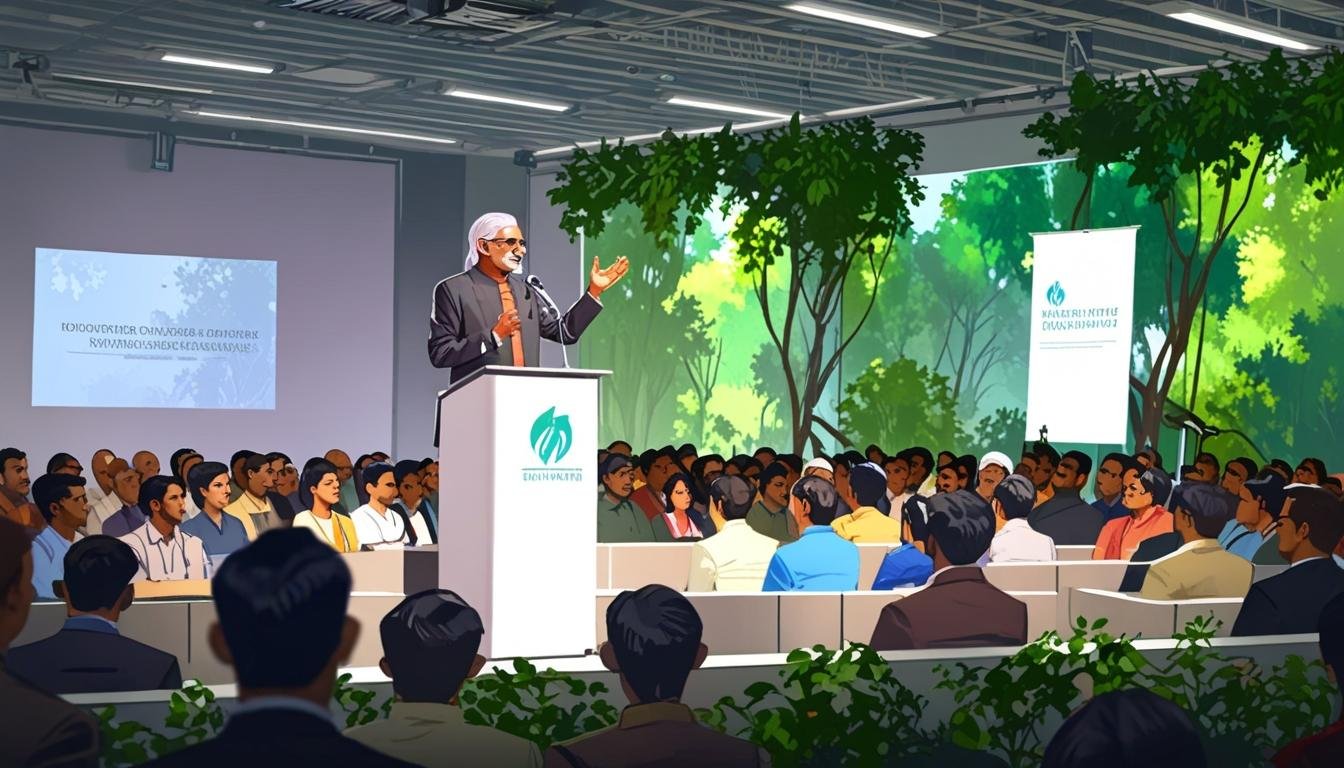
**New Delhi**: Amitabh Kant discussed the impact of geopolitical instability on global trade during the Anil Agarwal Dialogue, underscoring India’s opportunity in clean technology. He also highlighted serious concerns about municipal governance contributing to pollution and suggested reforms for water and electricity pricing to address these issues.
Amitabh Kant, the former CEO of Niti Aayog and India’s G20 Sherpa, spoke on 4 October 2023, at the Centre for Science and Environment’s annual Anil Agarwal Dialogue. In his address, he highlighted the implications of ongoing geopolitical instability for global trade and underscored the strategic opportunities it presents for India, particularly in clean technology manufacturing.
Kant articulated that the persistent conflict in Europe, now exceeding 1,000 days, marks a significant shift from the stability that followed World War Two. “You have a war going on for over 1,000 days in the heart of Europe. So, the period of stability which was created after World War Two has come to an end. And you have a breakdown of global supply chains across the world,” Kant said. He proposed that this tumultuous period has created a “vacuum” that India should aim to fill by advancing in sectors such as battery production and electric vehicle manufacturing, especially for two- and three-wheelers.

Kant pointed out that when former U.S. President Donald Trump withdrew from the Paris Agreement in 2016, China swiftly filled the gap in the market and now dominates the global supply of critical minerals, controlling 80 per cent of these resources. He emphasised that India has a comparable chance to step into this emerging vacuum in clean-tech manufacturing, warning that failure to do so could lead to significant reliance on imports, particularly from China. “If you do not do this, we will become a colony importing goods from China,” he cautioned, adding that the potential scale of imports in clean-tech could surpass India’s current oil import levels.
In addition to addressing opportunities in clean technology, Kant also expressed serious concerns about municipal governance in Indian cities, which he claimed has contributed to severe pollution. “If 42 of the cities in India are amongst the 50 worst polluting cities in the world, then there is a huge failure of municipal governance. It has nothing to do with finance. It has nothing to do with the central government,” he stated.
Kant proposed reforms regarding water and electricity pricing in India as a critical step toward addressing these environmental challenges. He highlighted India’s disproportionate water consumption, noting that although the country constitutes 17 per cent of the world’s population, it possesses only 4 per cent of the global freshwater resources. He said, “90 per cent of water is being consumed by agriculture. That means rice and sugar cane is consuming all your water. And we are actually exporting virtual water in the name of basmati rice.”
He advocated for a pricing model where water and electricity are priced according to consumption patterns, arguing that those who consume less should be incentivised with lower rates, whereas high consumers should face significantly increased costs. He drew parallels with Singapore, referencing its transformation from a per capita income of USD 600 in 1965 to USD 90,000 today, attributing this success to good governance and economic reforms.
Kant’s remarks highlight the dual challenge of leveraging geopolitical shifts for economic growth while simultaneously addressing pressing issues of environmental governance in India.
Source: Noah Wire Services

