


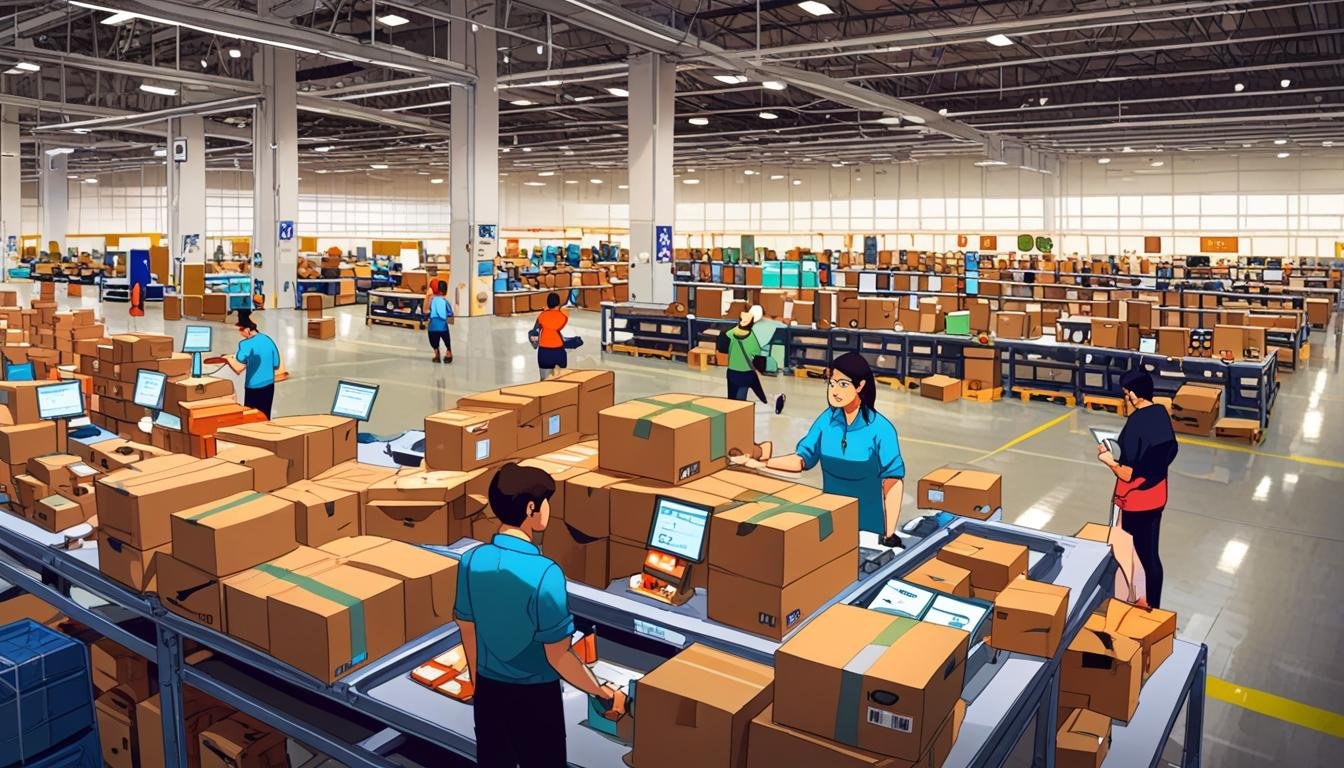
**London**: A recent survey reveals that many manufacturers still see rapid growth on Amazon, despite increasing pressures for cost reductions and a complex negotiation landscape for the 2025 Annual Vendor Negotiations, highlighting a critical balancing act for suppliers managing profitability and strategic investments.
Amazon continues to demonstrate its dominance as a significant growth channel for manufacturer brands, particularly in the lead-up to the Annual Vendor Negotiations (AVNs) for 2025. While pressures for cost reductions and more stringent trade terms are prevalent, a recent survey highlights the complexities and strategic planning that vendors must undertake when dealing with the online retail giant.
The survey, conducted between January and February 2025 by consulting firms Stratably and others, garnered responses from 203 representatives of first-party Amazon suppliers. It reveals that a remarkable 77% of respondents regard their growth on Amazon as faster than the category average, contradicting narratives suggesting a decline in Amazon’s retail performance due to competition from Asian brands such as Temu and Shein. Consumption product categories, particularly Grocery, Beauty, and Personal Care, show particularly strong growth, with 55% of Consumer Packaged Goods (CPG) brands indicating performance exceeding category averages.

In terms of profitability, Amazon remains a vital sales outlet for many of these vendors. The survey indicates that 73% of vendors find their net margins satisfactory, meeting or exceeding their internal targets. However, 21% reported struggling with margins, highlighting the mixed financial landscape vendors navigate.
Annual Vendor Negotiations with Amazon are expected to be more time-consuming in 2025, with 69% of vendors anticipating durations between one to three months, and 18% foreseeing negotiations stretching to four months. Only 20% of those surveyed feel the process will be less complex than in previous years, suggesting a challenging environment for negotiation outcomes.
A significant factor in the complexity of these negotiations is Amazon’s ongoing demand for cost price reductions. The research found that 64% of vendors received requests to lower their pricing, averaging a reduction of approximately 6.25% year on year. Certain vendors, particularly in the CPG and Hardlines categories, reported receiving requests for even higher reductions, adding to the strain on their profit margins.
Despite these pressures, a majority of respondents, 51%, plan to increase trade investments in 2025. This reflects a strategic pivot among vendors as they adapt to Amazon’s negotiation landscape, with 59% prioritising revenue growth over profit margin improvements. Additionally, many vendors are exploring ways to enhance their advertising performance and optimise product portfolios as part of their negotiating strategy.
Amidst these challenges, Amazon has been utilising punitive measures to enforce compliance during negotiations, with 40% of vendors experiencing such determinations. This has prompted suppliers, especially in the consumables sector, to adapt quickly to Amazon’s expectations to avoid disruptions in their sales channels.
Importantly, while the trajectory appears challenging, many vendors continue to view their relationship with Amazon as essential. The findings underscore the critical balancing act that manufacturers must perform — navigating pressures for lower prices while seeking enhancements in marketing and portfolio strategies to thrive within Amazon’s vast marketplace.
As negotiations progress, the focus will remain on crafting effective strategies that accommodate Amazon’s demands while maintaining favourable trading terms for suppliers. With 39% of vendors aiming to keep trade terms flat and only 10% anticipating a decrease, the upcoming negotiations will likely reflect a complex interplay of growth aspirations and cost management.
Source: Noah Wire Services

