


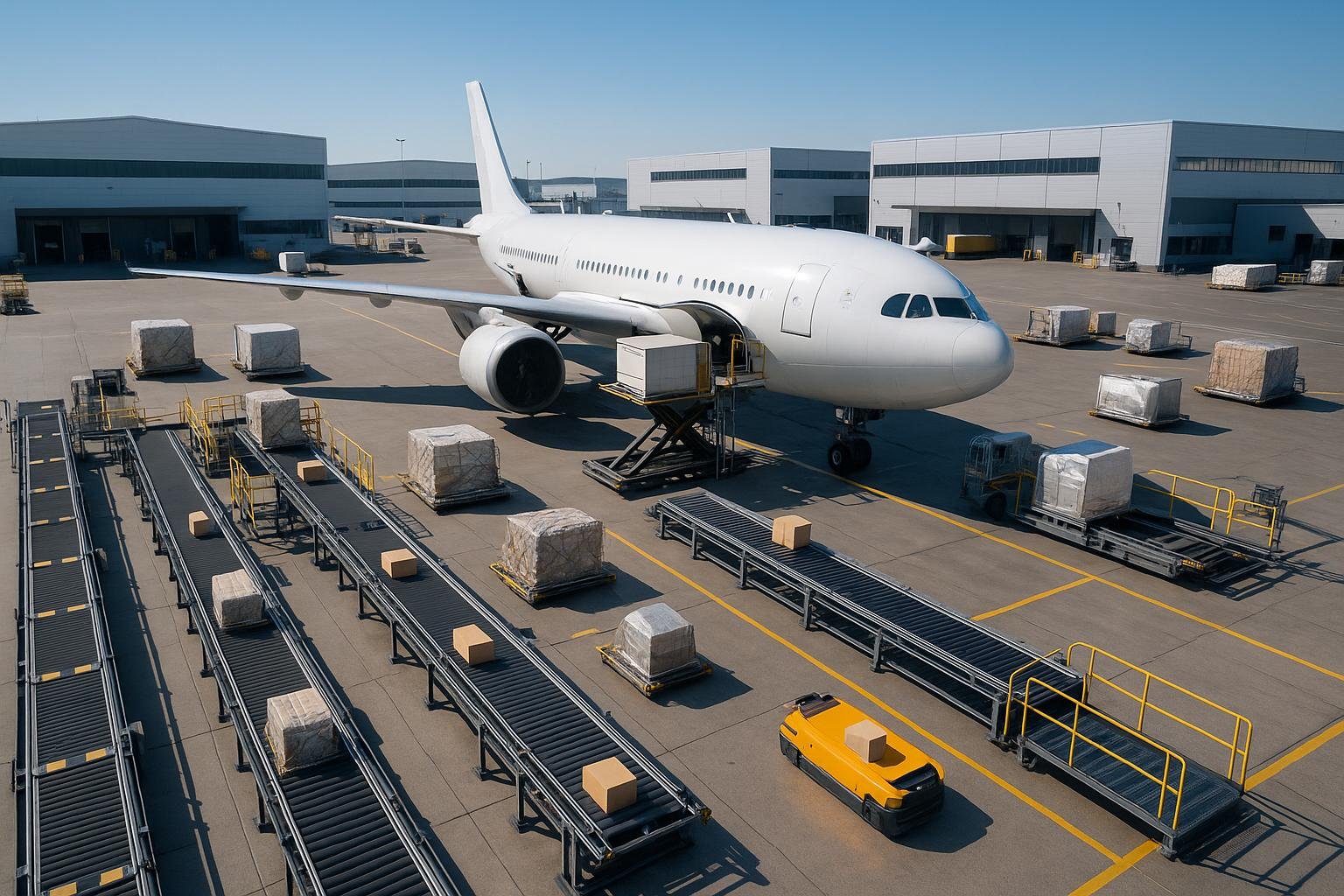
As the airfreight industry stabilises post-2025 disruptions, carriers focus on network optimisation, high-value cargo, and tailored services to capitalise on shifting global trade patterns and sustain profitability in 2026.

The airfreight industry has entered a steadier phase in 2026 in which precision in network design and service offering matters more than sheer tonnage. After a turbulent 2025 shaped by geopolitical disruption and erratic demand, carriers and forwarde...
Continue Reading This Article
Enjoy this article as well as all of our content, including reports, news, tips and more.
By registering or signing into your SRM Today account, you agree to SRM Today's Terms of Use and consent to the processing of your personal information as described in our Privacy Policy.
Regional demand patterns underline the shift. According to the International Air Transport Association, Asia‑Pacific led global growth in 2025 with an 8.4% year‑on‑year rise in cargo demand, matched by a 7.4% capacity increase, while North America recorded a modest decline in demand. IATA also noted a reorientation of flows, with the Asia–Europe corridor expanding strongly and Asia–North America easing back. These developments are mirrored in commercial market reporting: DHL says global air cargo tonnage rose about 4% through December 2025, with a December surge of 7%, and that Asia–Europe volumes outpaced those bound for the United States. Industry commentary from Air Cargo Week similarly frames 2026 as a period when “precision over scale” will pay dividends for operators that can align capacity with emerging route opportunities rather than simply pursuing volume.
Manufacturing diversification and trade reorganisation are reshaping lane economics. The so‑called China+1 and nearshoring trends are pushing production and sourcing into Southeast Asia, Latin America and parts of Africa, creating fresh cargo flows and elevating the value of agile route planning. Stat Trade Times highlights sustained strength in Asia‑Pacific demand into 2026, driven by technology exports, semiconductors, servers and high‑performance computing equipment, and by e‑commerce, all of which favour air freight’s speed and reliability despite pockets of softening in broader manufacturing.
Capacity dynamics present both relief and competition. New dedicated freighters and expanded schedules from Middle Eastern carriers have increased uplift, helping ease bottlenecks, yet forwarders face stiffer rivalry and pressure on rates on popular lanes. DHL and IATA data show capacity rising after a period of constraint, but Astute Analytica projects the air‑freight‑forwarding market will continue to grow, estimating it could reach US$14.1 billion by 2035 and noting improved cargo load factors late in 2024 as evidence that network optimisation is producing gains. The practical implication for operators is clear: efficient lane management and yield‑focused capacity deployment are now central to margin preservation.
That focus on value is evident in cargo composition. With ocean shipping regaining reliability for many commodity flows, airfreight’s sweet spot is shifting toward high‑value and time‑sensitive consignments, electronics, pharmaceuticals and parts for advanced computing. FedEx’s regional analysis emphasises that Asia accounts for roughly 40% of global air freight volume and projects continued tonnage growth toward 2035, driven by e‑commerce and express demand, reinforcing why carriers are prioritising bespoke services for customers with premium needs.
Service differentiation is becoming a competitive necessity. The lead analysis from industry reporting points to providers that combine customised handling, end‑to‑end visibility and sustainability options as likeliest to succeed. Rhenus Logistics, for example, positions a multi‑tiered air offering, ranging from same‑day solutions to cost‑focused slower services, alongside charters and onboard courier options for irregular or urgent consignments. The company says add‑ons such as customs clearance, insurance, repacking, palletising and airport‑adjacent warehousing smooth transits, while digital tools like real‑time tracking and EDI/API integrations reduce friction across complex supply chains. Rhenus also promotes its RHEGREEN platform to quantify CO₂ and recommend lower‑emission aircraft and sustainable aviation fuel choices, underscoring how environmental credentials are increasingly part of commercial value propositions.
For shippers and logistics managers the takeaway is practical: build networks that can be flexed rapidly, match uplift to route‑specific demand, and invest in visibility and premium handling where the cargo earns a margin premium. Market commentators note that lanes with tight capacity will continue to command higher rates, while commoditised routes will face squeeze from excess capacity and new entrants.
Looking ahead, the sector’s trajectory appears less about recovering a pre‑set peak in volumes and more about extracting higher yield from evolving flows. As carriers and forwarders refine capacity planning, route optimisation and service segmentation, those that marry operational discipline with digital transparency and credible sustainability measures will be best placed to convert 2026’s stabilisation into durable, profitable growth.
Source: Noah Wire Services
Subscribe to Industry Updates

