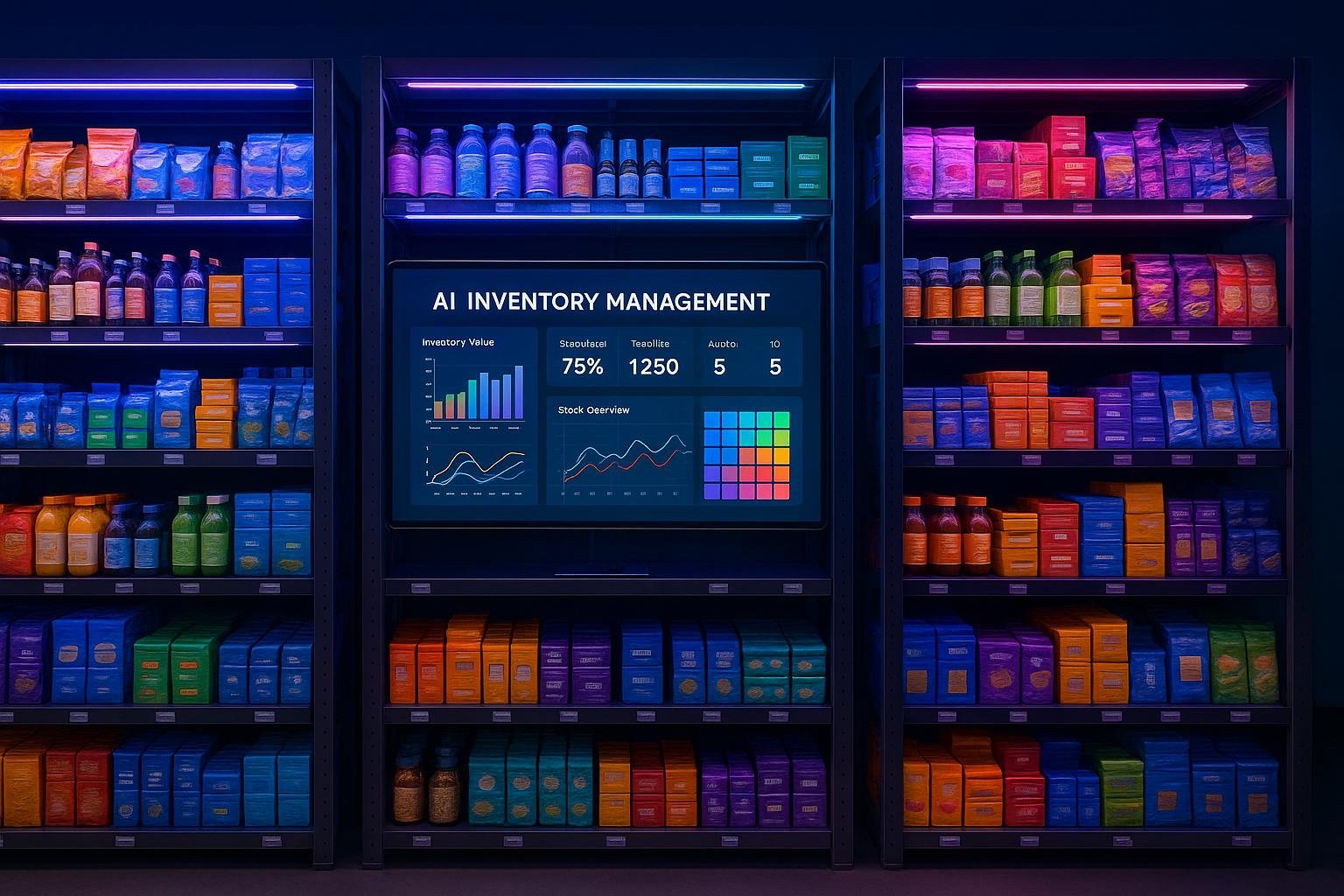
Businesses embracing AI and automation are revolutionising inventory allocation strategies, reducing costs, and enhancing customer satisfaction amid rising omnichannel demands in 2026.

Inventory allocation, the strategic distribution of products across various storage locations and sales channels, is a critical component of modern supply chain management. Businesses from retailers to wholesalers rely on effective inventory allocation to ensure the right products reach t...
Continue Reading This Article
Enjoy this article as well as all of our content, including reports, news, tips and more.
By registering or signing into your SRM Today account, you agree to SRM Today's Terms of Use and consent to the processing of your personal information as described in our Privacy Policy.
A well-executed inventory allocation strategy can prevent lost sales and avoid tying up cash in excess stock. Without it, businesses risk stockouts, where popular items are unavailable, and overstocking, both of which can hurt revenue and increase costs. Industry data shows that retailers lose nearly $1 trillion globally each year due to stockouts and inefficient inventory distribution. Thus, balancing stock availability with demand forecasts is essential.
Automation and artificial intelligence (AI) have emerged as transformative tools in inventory allocation. According to McKinsey, retailers leveraging AI can reduce inventory levels by 20% to 30%, benefiting from advanced demand forecasting that incorporates historical sales data, supplier performance, and even external factors like weather. This predictive power enables more accurate replenishment schedules and helps businesses maintain optimal stock levels across locations.
However, retailers face challenges such as omnichannel complexity, managing inventory across both physical stores and online platforms, and seasonality, where temporary spikes in demand during holidays or sales events complicate planning. Limited visibility in supply chains can further hinder timely restocking and lead to misallocation, highlighting the importance of unified inventory management systems.
Shopify, for example, offers an integrated inventory management platform that consolidates data from multiple sales channels into one system. This unified approach reduces manual reconciliation, saving time and improving accuracy. Independent research has found that Shopify users save an average of 10 hours per month on inventory management and achieve roughly a 1% increase in annual gross merchandise value due to better inventory practices.
Inventory allocation strategies vary based on product characteristics and market needs. Common approaches include:
- Push strategy, which distributes stock based on forecasted demand for products with predictable sales patterns, such as seasonal items.
- Pull strategy, where inventory replenishment is triggered by actual customer demand, suitable for items with variable or unpredictable sales.
- Just-in-time (JIT) allocation focuses on receiving stock exactly when needed, reducing carrying costs but depending on stable supply chains.
- First in, first out (FIFO) ensures older inventory moves first, essential for perishable or time-sensitive goods.
- Rules-based allocation uses predefined criteria like sales volume or store performance to allocate stock proportionally.
- Store and warehouse grading, a subset of rules-based methods, assigns inventory based on location performance, ensuring high-demand outlets receive more products.
Successful allocation depends heavily on accurate demand forecasting. Businesses must understand when and where products sell best, adjusting stock levels accordingly. AI-driven forecasting tools that integrate internal sales data with external trends like weather and market dynamics improve accuracy and reduce inventory costs.
Safety stock, the buffer inventory held to prevent stockouts during demand spikes or supply disruptions, is another critical consideration. Calculating safety stock involves balancing the costs of holding extra inventory against the risk of lost sales from stockouts.
Operational factors such as storage capacity, costs, and lead times also influence allocation decisions. Products prone to rapid sales need prioritised placement in easily accessible locations, while less popular items can be stored in less costly or less accessible facilities. Moreover, closer proximity to customers often enables faster delivery but may increase storage expenses.
Product lifecycle stages and work-in-progress inventories must be managed to maintain production flow and avoid bottlenecks, affecting how finished goods are allocated among warehouses.
To enhance efficiency further, businesses should deploy automated inventory management software that provides real-time visibility and analytics. Shopify’s Stocky app, integrated with its POS system, exemplifies this by facilitating easy stock tracking, transfer management, and demand forecasting. Automated systems reduce errors and labour intensity, freeing resources for other operational improvements.
Prioritisation methods like ABC analysis help businesses focus resources on high-value products that drive the majority of revenue while adopting lean inventory levels for lower-value items. Aligning allocation with regional demand, and employing tools like Shopify’s fulfillable inventory feature, ensures customers see and receive products relevant to their location, minimising overselling and logistical challenges.
Outsourcing to third-party logistics providers (3PLs) is another effective strategy. 3PLs offer extensive warehousing and distribution networks, enabling faster and more cost-effective shipping. Shopify’s integration with logistics companies such as Flexport allows businesses to scale distribution without heavy upfront investments and fosters real-time inventory visibility across channels.
The benefits of efficient inventory allocation extend beyond cost savings. They improve customer satisfaction by reducing stockouts and delivery times, enhance cash flow by avoiding excess capital tied in inventory, and drive increased sales through better stock availability. According to research, unified inventory management solutions like Shopify can deliver a 22% improvement in total cost of ownership and nearly 9% uplift in gross merchandise value.
Industry experts underscore the importance of integrating inventory management with broader enterprise resource planning (ERP) systems, enabling coordinated operations across locations and giving businesses the insights needed to navigate the complexities of modern supply chains.
In summary, effective inventory allocation combines strategic forecasting, operational discipline, and technological integration to optimise stock distribution. As consumer expectations for rapid delivery and seamless omnichannel experiences rise, businesses that master inventory allocation stand to gain a decisive competitive advantage in 2026 and beyond.
Source: Noah Wire Services
Subscribe to Industry Updates