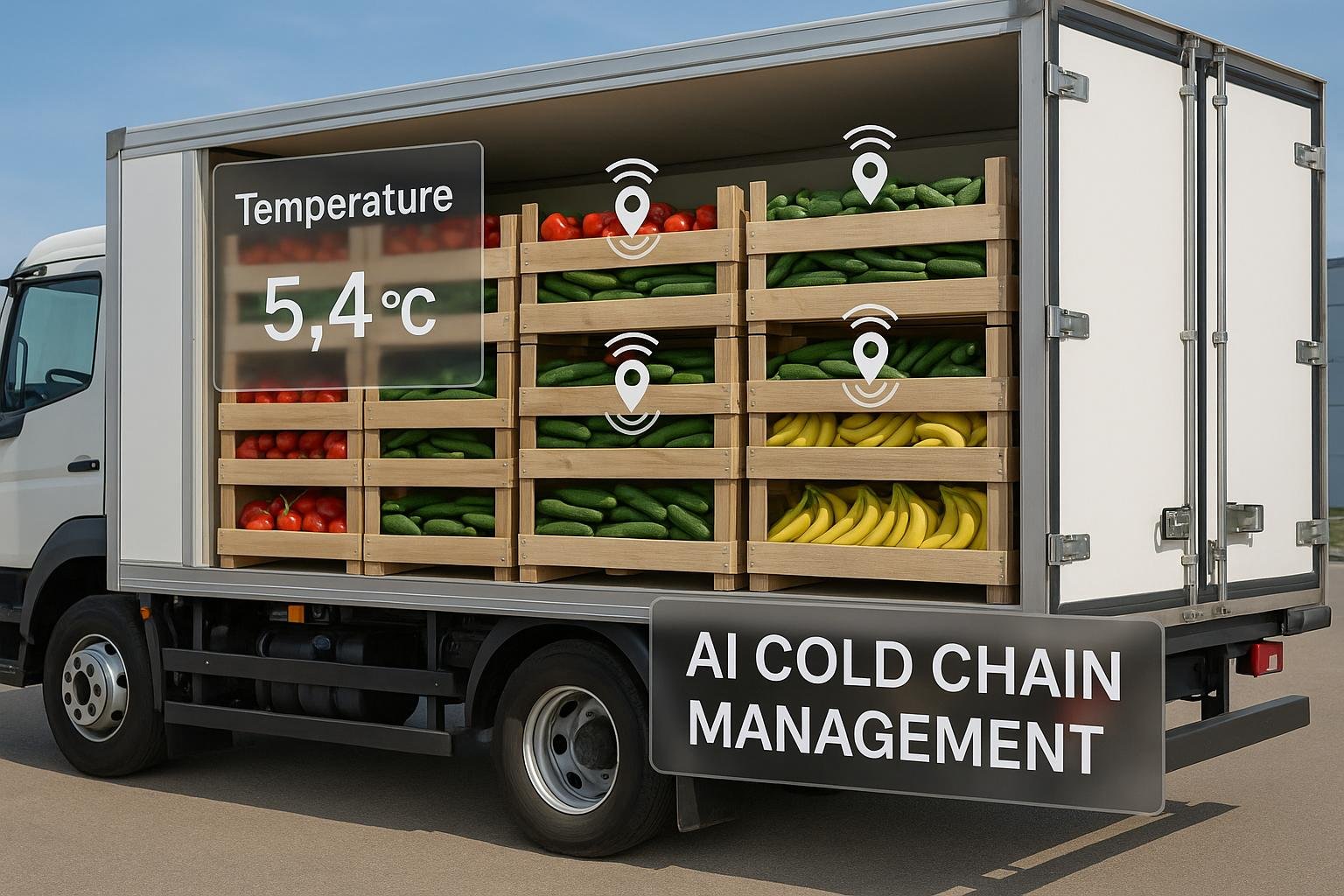
Advancements in AI are shifting perishables logistics from reactive responses to proactive prevention, improving freshness, reducing waste, and boosting efficiency through real-time monitoring, predictive maintenance, and collaborative ecosystems.

AI is revolutionising the handling of perishable supply chains by shifting the paradigm from reactive crisis management to proactive asset protection and optimisation. A vivid example from DP World underscores this transformat...
Continue Reading This Article
Enjoy this article as well as all of our content, including reports, news, tips and more.
By registering or signing into your SRM Today account, you agree to SRM Today's Terms of Use and consent to the processing of your personal information as described in our Privacy Policy.
Perishable supply chains are notoriously vulnerable due to their dependency on stringent temperature control, complex logistics choreography, and exposure to external variables such as weather, port congestion, labour shortages, and paperwork fragmentation. AI brings much-needed clarity and control by analysing vast and varied data sources, ranging from weather forecasts and booking flows to real-time sensor data, and delivering actionable insights that enable operators to anticipate and circumvent bottlenecks.
Central to preserving perishable goods is maintaining the integrity of the cold chain. Even minor temperature breaches risk food safety and substantial commercial loss. Traditionally, such failures might go unnoticed until it was too late, but AI technologies are changing that dynamic. Predictive models monitor subtle indicators like vibration, energy draw, or compressor performance to forecast faults before they escalate into breakdowns. Real-time sensors can detect anomalies, prompting immediate interventions such as notifying drivers or switching power supplies. This proactive approach transitions cold chain management from retrospective alarm-based responses to foresight-driven prevention.
Speed of delivery is another critical factor. Perishable cargo must continuously move to minimise ‘cold minutes’ lost during delays, which risk spoilage and increase waste. Conventional methods rely heavily on insulation, a costly and carbon-intensive solution. AI acts as a sophisticated traffic controller, optimising logistical flows dynamically. By deploying techniques like dynamic estimated time of arrival (ETA) models, reinforcement learning to reduce yard dwell times, and adaptive routing based on traffic and weather, AI extends product freshness while simultaneously reducing costs and environmental impact.
Traceability, crucial for regulatory compliance and retailer confidence, is also being transformed by AI. Collecting and validating a comprehensive chain-of-custody record from scattered documents is typically laborious. Document AI platforms expedite this by quickly validating and highlighting exceptions in health certificates, invoices, and phytosanitary records. Moreover, integrating millions of sensor data points creates transparent narratives that demonstrate how products were handled and stored, reassuring customers and reducing the risk of unnecessary recalls.
While many organisations currently operate with varying degrees of informed oversight, monitoring assets and risks in real-time but often relying on static decision rules, the next evolution is fostering interconnected ecosystems. These networks allow shippers, carriers, terminals, and regulators to share freshness risk signals and collaboratively respond, thus enhancing supply chain resilience.
Beyond DP World’s example and the broader industry adoption, strategic partnerships illustrate how AI is further advancing perishable supply chains. For instance, ThroughPut Inc. and Inteligistics have joined forces to integrate AI-powered supply chain analytics with digital visibility solutions. Their collaboration aims to tackle chronic challenges such as volatile pricing, poor demand forecasting, and excessive spoilage, focusing on optimising inventory management, enhancing safety, and enabling timely sales, thus maximising profitability across food and agricultural sectors.
Broader research confirms AI’s transformative potential beyond perishables. Studies highlight AI’s efficacy in optimising logistics operations across the USA by reducing environmental impact and costs through predictive analytics and route optimisation. Reinforcement learning algorithms specifically demonstrate promise in managing multi-product inventory while balancing sales maximisation and perishables waste reduction. Meanwhile, innovative traceability systems utilise affordable smartphone-based RFID technology combined with environmental sensors to ensure real-time monitoring and transparency, exemplified by successful implementations in Korea’s kimchi supply chain.
Further, emerging generative AI frameworks enhance supply chain visibility by capturing complex semantic relationships within knowledge graphs, which improves risk management and decision-making precision. These advancements underscore a vast and growing toolkit enabling supply chains not only to be faster and leaner but significantly smarter and more adaptive.
In summary, AI is at the forefront of redefining perishables logistics, from real-time condition monitoring and predictive maintenance to advanced scheduling and comprehensive traceability. These technological strides, complemented by collaborative ecosystems and supportive strategic partnerships, promise to deliver fresher products, reduce waste, lower carbon footprints, and enhance cost efficiencies. For operators and consumers alike, this is not merely an incremental improvement but a fundamental rewriting of the rules governing how perishable goods are transported and preserved worldwide.
Source: Noah Wire Services
Subscribe to Industry Updates