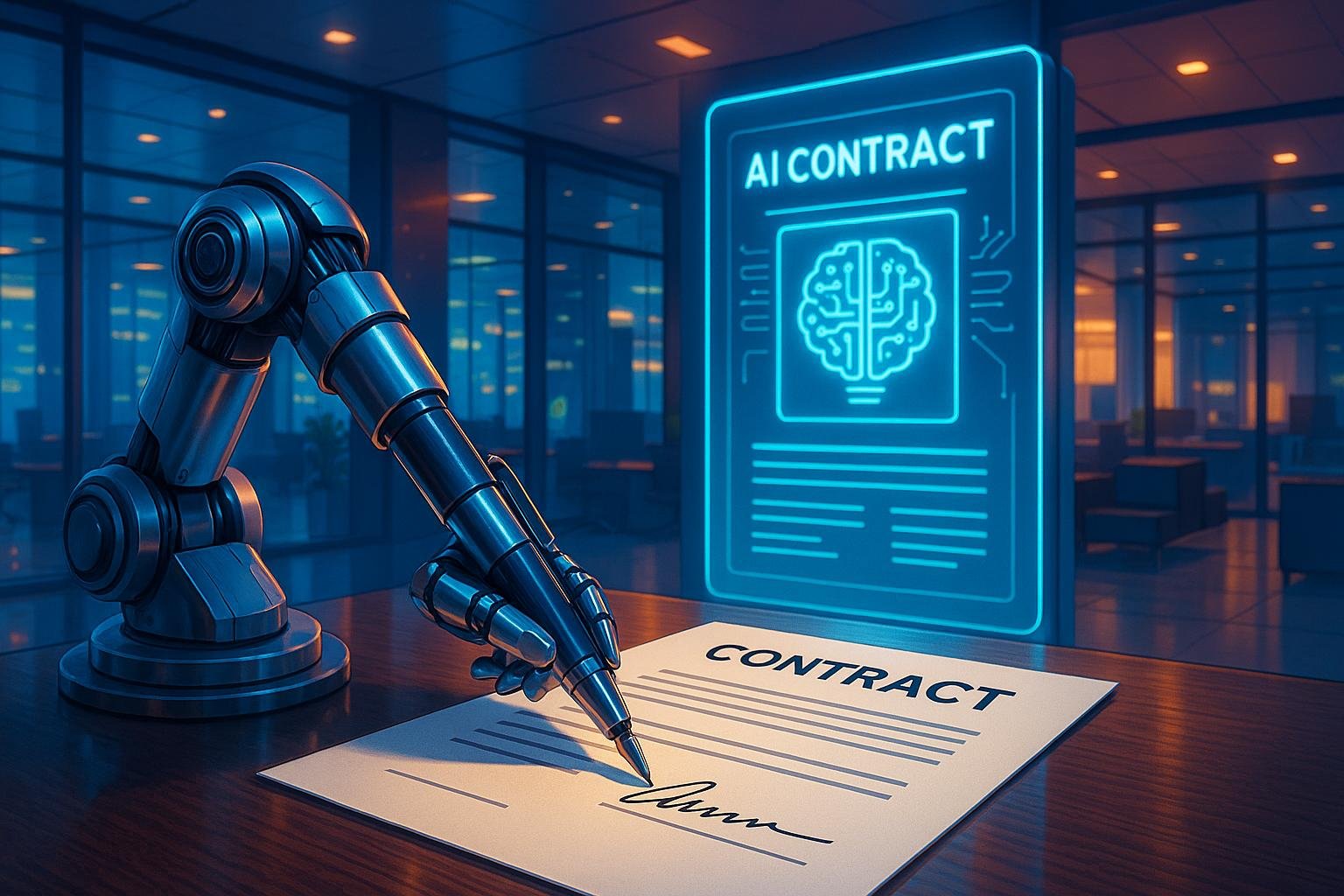
Practical AI tools are revolutionising contract lifecycle processes across industries by automating key tasks, reducing risks, and enhancing compliance, ushering in a new era of efficiency for legal and operational teams.

AI is fundamentally transforming contract management by addressing longstanding inefficiencies that have plagued legal, finance, sales, procurement, and operations teams for years. Despite the hype surrounding AI, the reality is that practical, focused...
Continue Reading This Article
Enjoy this article as well as all of our content, including reports, news, tips and more.
By registering or signing into your SRM Today account, you agree to SRM Today's Terms of Use and consent to the processing of your personal information as described in our Privacy Policy.
The heart of this transformation lies in eight essential AI capabilities that significantly boost efficiency and accuracy throughout the contract lifecycle. These include clause detection and data extraction, deviation and risk flagging, AI-powered natural language search, summarization and insight generation, compliance mapping, AI-driven redlining and suggestions, portfolio-level risk analytics, and AI-enabled reminders and workflow automation. Together, they tackle challenges such as contract document chaos, growing contract volumes, rapid regulatory changes, and critical deadline management that traditional manual methods and legacy tools simply cannot cope with.
Clause detection and data extraction automates the identification of key contract elements, like renewals, liabilities, obligations, and payment terms, saving hours otherwise spent on manual scanning. Deviation detection further enhances oversight by flagging non-standard or risky clauses against company templates and legal playbooks, essentially turning these often-overlooked documents into enforceable guardrails that improve compliance and reduce exposure. These features combined reduce the risk of costly oversights, such as missing critical auto-renewal terms that could lead to unexpected expenses.
AI-powered search tools make it possible for multiple departments to retrieve contract information quickly via natural language queries, for instance, finding all contracts with a specific liability cap or upcoming renewal dates. Enhanced summarization tools decode lengthy legalese into digestible insights, empowering business teams to self-serve and make faster decisions without always needing direct legal intervention.
Compliance is an especially fast-moving area where AI proves indispensable. With regulations like GDPR, CCPA, HIPAA, and others constantly evolving, manual reviews lag behind, risking non-compliance. AI tools can scan contracts for relevant clauses, flag lapses, and generate audit-ready reports, keeping contract portfolios aligned with the latest legal requirements. The ability to track compliance across multiple industries and regions is crucial, especially for organisations operating across jurisdictions with diverse regulatory landscapes.
Negotiation processes also benefit from AI through smart redlining, auto-suggestions for preferred language, and automatic clause comparison, which accelerate deal-making by reducing confusion and bottlenecks. Furthermore, portfolio-level analytics and predictive modelling move contract management from reactive to proactive, surfacing patterns of risk related to vendors, contract types, and negotiation stalls that might otherwise remain invisible.
Workflow automation tools, incorporating AI-powered reminders and alerts, prevent missed renewal deadlines, overlooked approval steps, and unmet contractual obligations. These functions are particularly valuable because the financial and operational damage caused by such misses can be significant.
Importantly, AI in contract management is not a one-size-fits-all solution. Smaller teams or startups often gain the most from lightweight AI integrations like Word or PDF plug-ins, while mid-sized companies benefit from AI features embedded within Contract Lifecycle Management (CLM) systems. Larger enterprises, particularly those in highly regulated industries, typically require comprehensive AI-driven CLMs with robust compliance and audit functionalities.
The integration of AI is also producing notable cost efficiencies. For example, legal operations scanning for silent auto-renewals across vendor agreements has saved companies hundreds of thousands of dollars in avoidable recurring costs. Moreover, AI reduces manual errors and accelerates contract cycle times, improving collaboration among departments and allowing legal teams to focus more on strategic advisement rather than repetitive review tasks.
Despite these advances, successful AI adoption depends on proper data governance, clean, structured contract repositories, and up-to-date playbooks to avoid false positives or missed risks. Human oversight remains critical; AI assists rather than replaces legal expertise, providing supporting insights while keeping teams in control. The best AI solutions prioritize simplicity and usability, ensuring high adoption rates over feature-heavy but complicated systems.
Looking ahead, contract AI is poised to become even more sophisticated with developments like predictive negotiation modelling, multi-document reasoning, AI-generated playbooks, role-specific contract copilots, voice-activated contract queries, and cross-platform visibility that overlays existing tools like Dropbox or Salesforce. These innovations promise to further streamline operations, reduce legal bottlenecks, and enhance compliance management.
Companies like ContractSafe underscore a human-centred approach to AI, building tools that enhance but do not replace human decision-making, offering fast setup, transparent pricing, and enterprise-grade security without overwhelming complexity.
In sum, AI in contract management delivers clear, measurable benefits: faster reviews, fewer surprises, improved compliance, stronger negotiations, and happier teams. By focusing on the essential features that address the biggest pain points today, organisations can achieve significant operational improvements without the fear or disruption often associated with adopting new technology. The future of contract management is less about replacing human insight and more about augmenting it with intelligent, scalable, and practical AI-driven assistance.
Source: Noah Wire Services
Subscribe to Industry Updates