


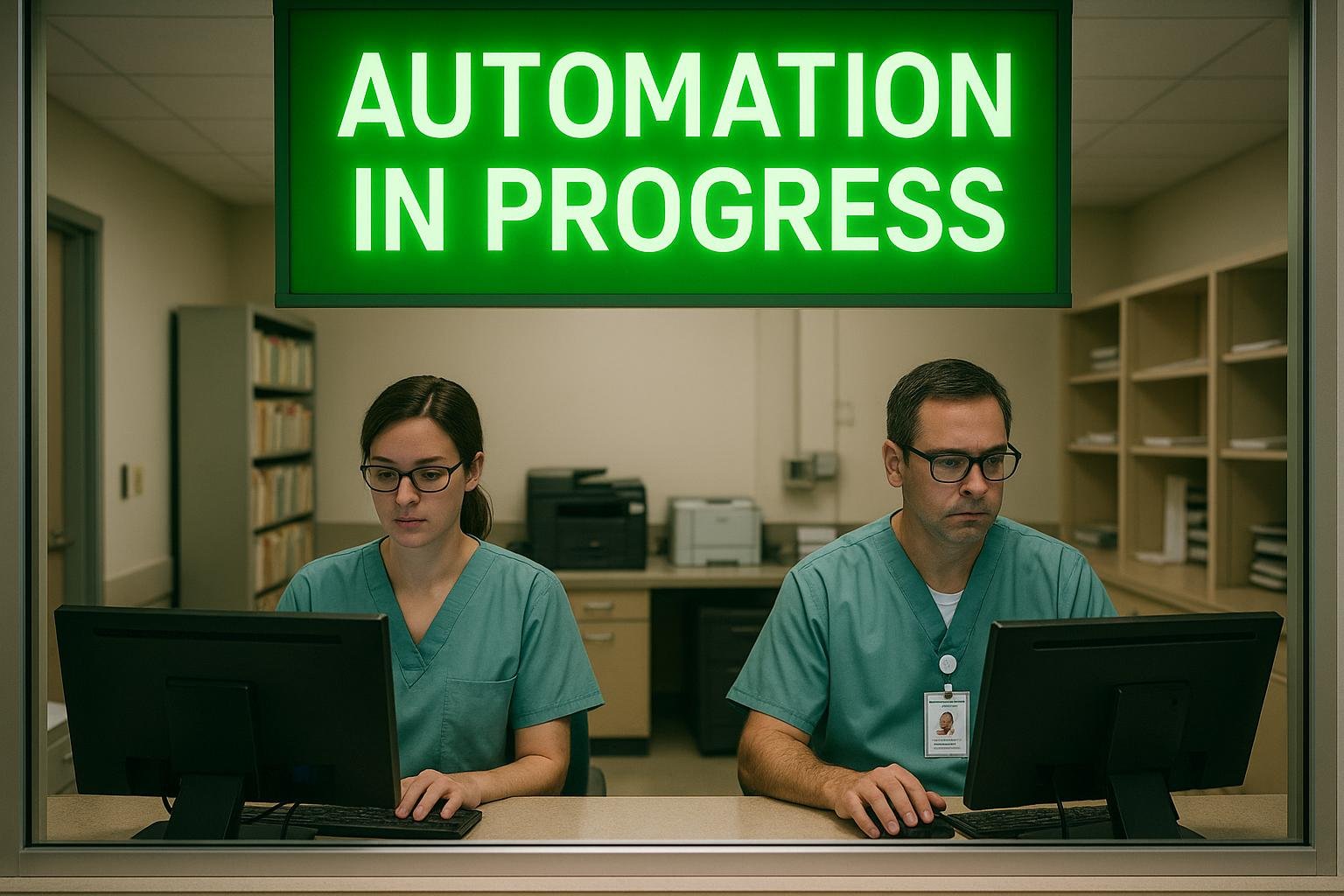
The adoption of artificial intelligence and automation in U.S. healthcare is significantly transforming administrative workflows, reducing errors, and boosting cost-effectiveness amid ongoing staffing challenges.

Administrative tasks in healthcare have long been a source of inefficiency, marked by repetitive, time-consuming activities such as data entry, billing, coding, scheduling, insurance eligibility checks, and claims processing. These processes, when handled manua...
Continue Reading This Article
Enjoy this article as well as all of our content, including reports, news, tips and more.
By registering or signing into your SRM Today account, you agree to SRM Today's Terms of Use and consent to the processing of your personal information as described in our Privacy Policy.
Research indicates that nearly half of U.S. hospitals employ AI for financial management tasks, with around three-quarters utilising automation for administrative duties. For example, Auburn Community Hospital in New York experienced a 50% reduction in billing problems at discharge, a 40% increase in coder productivity, and a 4.6% rise in case mix index following the integration of AI-driven automation. Such improvements not only enhance hospital financial performance but also contribute to operational robustness.
AI’s impact on billing and coding is particularly significant. Robotic process automation (RPA) can efficiently manage rule-based tasks including prior authorisations, eligibility verification, denial appeals, and the review of incomplete medical records. This reduces the administrative burden on staff and expedites claims processing, as seen with Banner Health’s AI deployment across California, Arizona, and Colorado, which led to faster insurance coverage identification and appeals handling. A healthcare network in Fresno, California, reported a 22% decline in authorisation denials and an 18% decrease in uncovered service denials due to similar AI applications, underscoring AI’s role in back-office efficiency without additional headcount.
Beyond financial and administrative accuracy, AI systems also mitigate human errors, thereby improving clinical documentation quality and ensuring compliance with regulations such as HIPAA. Reliable automation helps maintain process standards, facilitating audit readiness and reducing the risk of penalties. Automation also extends to call centres, where generative AI has improved efficiency by 15% to 30%, further easing operational pressures.
Scheduling remains a critical challenge in healthcare, with inefficient appointment management causing long patient wait times, staff fatigue, and costly overtime. AI-powered scheduling tools analyse historical admission trends, staff availability, and seasonal fluctuations to create balanced, conflict-free schedules. They can predict patient no-shows and adjust bookings accordingly, improving resource utilisation and patient flow. This capability directly contributes to enhancing patient satisfaction and care quality, as timelier access to services is indispensable to health outcomes. AI also plays a key role in managing hospital bed occupancy and emergency room flow by forecasting patient arrivals and discharges, allowing hospitals to optimise staff allocation dynamically.
Workflow management benefits extensively from AI integration. Healthcare delivery involves complex coordination across multiple roles, including physicians, nurses, administrative teams, and payers, and miscommunications can cause costly delays. Advanced AI platforms like Cflow support no-code workflow automation that connects electronic health records (EHRs), document management systems, and predictive analytics. Hospitals deploying such systems report shorter patient wait times, reduced staff burnout, and strengthened communication between clinical and office personnel. One major hospital group cited an average reduction in hospital stay of 0.67 days per patient, equating to annual savings upwards of $55 million. These efficiencies enhance organisational agility and readiness for fluctuating healthcare demands.
A new frontier in healthcare workflow automation involves AI-powered intelligent agents capable of independent task execution through natural language processing and machine learning. These agents automate prior authorisations, generate appeal letters, manage appointment reminders via virtual assistants, and streamline billing and accounts receivable processes. Microsoft 365 Copilot is a notable example, aiding staff by drafting communications, analysing data, and supporting workforce planning. AI virtual health assistants complement these improvements by offering patients 24/7 service for routine queries, appointment management, and medication reminders, reducing call centre volumes and improving patient engagement.
The expansion of AI in healthcare is reflected in market growth, with the global AI healthcare market soaring from $1.1 billion in 2016 to $22.4 billion in 2023 and projected to reach over $200 billion by 2030. Adoption rates among U.S. doctors are also rising rapidly; studies anticipate that by 2025, 66% of physicians will employ AI tools, up from 38% in 2023, with many recognising AI’s positive impact on patient care directly or indirectly.
Despite these promising developments, challenges persist. Legacy hospital systems often complicate integration, while security concerns and ethical considerations require careful management. Furthermore, healthcare staff need ongoing training to build trust and proficiency with new AI technologies. Successful AI implementation entails involving frontline workers in change management and closely monitoring performance metrics such as denial rates, billing cycle times, staff productivity, and patient satisfaction.
For medical practice administrators, owners, and IT managers, starting with AI automation of common tasks like eligibility checks and claims processing can yield immediate benefits by reducing staff workload. AI scheduling solutions tailored for smaller practices help lower missed appointments and optimise clinician time. Selecting AI vendors that ensure smooth interoperability with existing EHR and practice management systems is crucial for effective deployment. Additionally, front-office AI tools, such as automated phone systems, can handle routine patient communications, freeing staff to focus on complex tasks. Regular staff training is essential to maximise the value of these technologies.
In sum, AI and automation are transforming operational efficiency in U.S. healthcare organisations by automating administrative tasks, optimising scheduling, and streamlining workflows. These advances reduce errors, improve financial management, lower operating costs, and enhance patient and staff satisfaction. By coupling AI technologies with strategic data management and inclusive staff engagement, healthcare providers can not only rise to current workforce shortages but also improve compliance and resilience, ultimately delivering higher-quality patient care.
Source: Noah Wire Services
Subscribe to Industry Updates

