


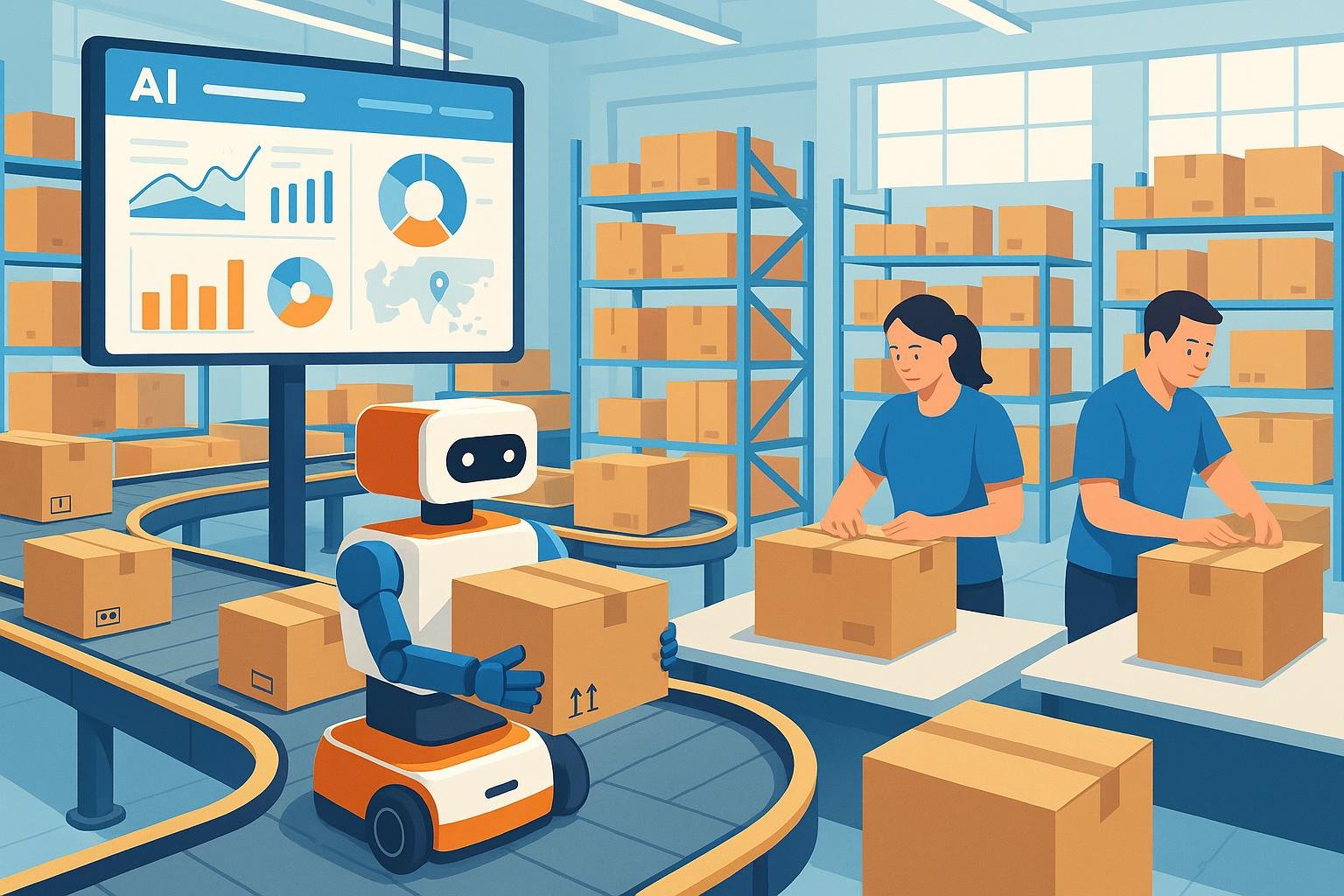
Advancements in software, robotics, and AI are transforming reverse logistics, enabling retailers to handle returns faster, more efficiently, and profitably, marking a strategic shift in ecommerce operations.

The economics of ecommerce returns are being rewritten by software, robotics and artificial intelligence, forcing sellers and fulfilment operators to treat reverse logistics as a strategic capability rather than a cost centre. According to a blog post by Rebecca Fo...
Continue Reading This Article
Enjoy this article as well as all of our content, including reports, news, tips and more.
By registering or signing into your SRM Today account, you agree to SRM Today's Terms of Use and consent to the processing of your personal information as described in our Privacy Policy.
Historically, returns were processed by hand: items were inspected, sorted and restocked through labour‑intensive routines that lengthened cycle times and eroded margins. Modern warehouse management systems now act as the spine of the reverse supply chain. JASCI’s platform, for example, offers an AI‑driven WMS with real‑time inventory visibility, directed workflows and rapid integration with carriers, ERPs and marketplaces, enabling operations to scale quickly with minimal downtime. Such systems centralise order and returns data, allowing operations teams to track return status in real time and reduce the friction that used to slow recovery of value.
Automation in the physical warehouse is also shifting the economics. Automated sortation lines, conveyors, scanners and robotic arms can channel returned items to the appropriate processing lane far faster than manual sorting. Industry analysis cited by Fulfillment IQ highlights gains for operators using robotics: McKinsey research shows companies that deploy robotics have improved processing speeds by about 40%, lowering handling errors and inventory holding costs. The result is shorter time-to-market for refurbished or resale stock and a smaller labour bill per unit processed.
Intelligence layered on top of automation is where margin recovery widens. Machine learning models assess item condition, resale demand, time since purchase and refurbishment cost to recommend disposition, resale, refurbishment, liquidation or donation, at the point of intake. GrowthHQ reports that AI‑driven forecasting and disposition engines have cut overstocking by around 21% and markdown losses by 12%, while end‑to‑end returns platforms can increase recovered value by up to 35% compared with manual approaches. Platforms now routinely include rules engines that can trigger refunds without return for low‑value items or route returns dynamically to the most economical node.
Returns management systems (RMS) are closing the loop between customer experience and back‑end recovery. Solutions such as the one Rebecca Fox represents provide self‑service portals, auto‑generated shipping labels, return analytics and policy enforcement tools that reduce handling errors and improve transparency for shoppers. According to a review of industry practice, centralised RMA platforms have also delivered operational gains in B2B networks: a McKinsey study referenced by ReverseLogix found that companies with centralised RMA systems cut refund delays by about 40% and improved return accuracy across complex supply chains.
Beyond processing and routing, recommerce and secondary markets are becoming a deliberate part of reverse‑logistics strategy. Fulfillment IQ notes that sellers using secondary channels can recoup substantially more value from returned goods, some operators report recovery rates approaching 60% of original value for items routed to recommerce platforms, turning what was once waste into a revenue stream and lowering the environmental footprint of returns.
Fraud and volume volatility remain material risks. JIT Transportation’s analysis estimates global ecommerce returns at roughly $890 billion, with fraudulent returns responsible for about $103 billion of losses. AI tools that detect anomalous return patterns, validate item condition through image recognition and cross‑check customer history are increasingly employed to curb abuse while preserving a frictionless experience for legitimate shoppers.
The emerging playbook for retailers and 3PLs is therefore multi‑pronged: deploy a robust WMS to centralise visibility; automate physical sortation to raise throughput; apply AI to disposition and forecasting to maximise yield; and integrate RMS and recommerce channels to convert returns into recoverable revenue. Providers differ on implementation speed and scope, JASCI advertises sub‑month deployments and high availability for mid‑market customers, while other vendors emphasise plug‑and‑play integrations with marketplaces, so operators must balance agility, capital intensity and the complexity of their assortments when choosing technology partners.
For businesses that adopt these tools, the benefits are measurable: faster processing, lower labour costs, better inventory accuracy and higher recovery rates. For those that do not, returns will remain a drag on margins as customer expectations for easy, tracked and speedy returns continue to rise. As the sector matures, technological sophistication will increasingly determine which retailers turn reverse logistics into a competitive advantage and which leave value on the warehouse floor.
Source: Noah Wire Services
Subscribe to Industry Updates

