


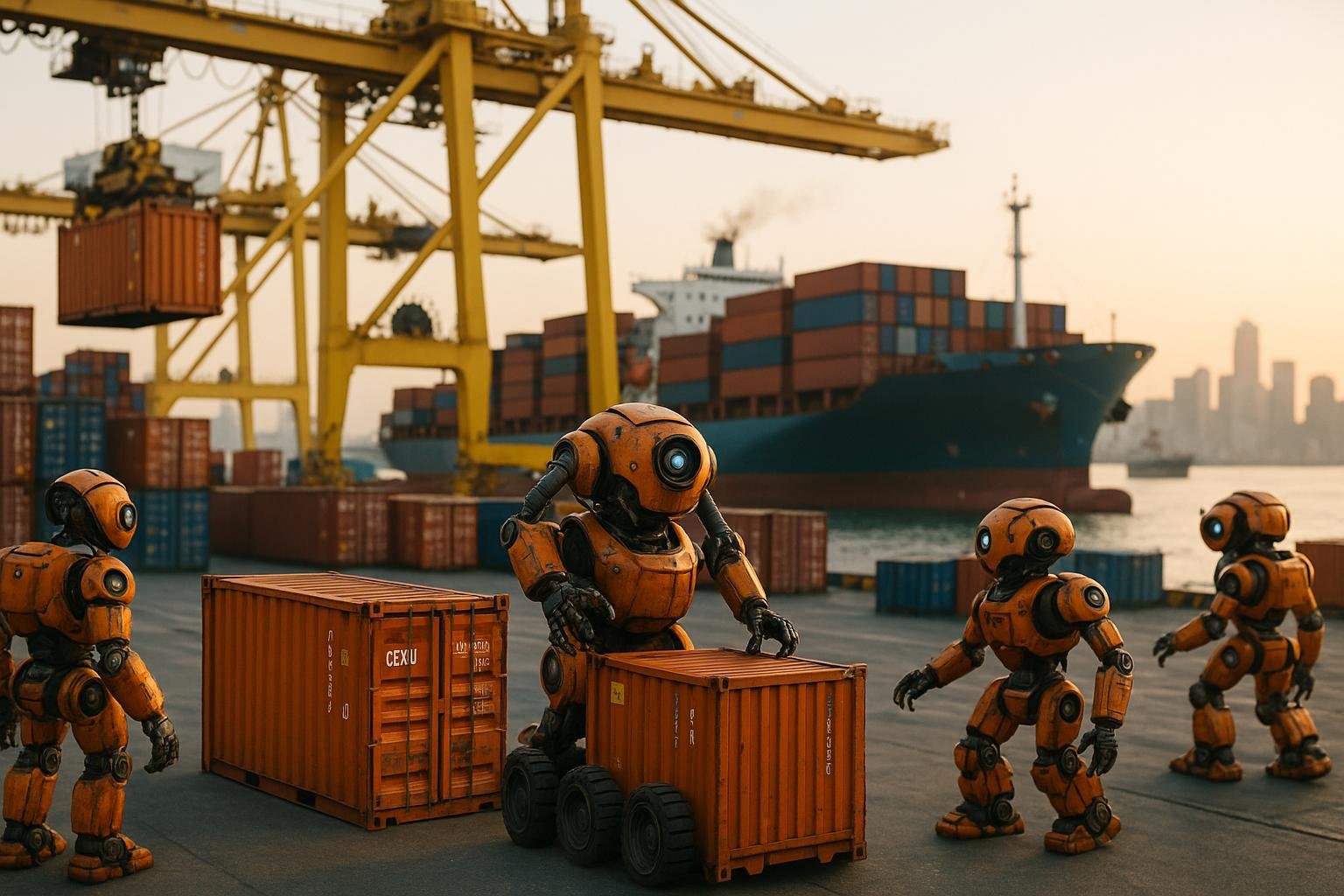
A transformative wave of machine intelligence and automation is reconfiguring the organisation, regulation, and financing of international commerce, reshaping trade volumes and investment patterns amidst emerging operational and geopolitical challenges.

Global commerce is being remade by a wave of machine intelligence and automation that is altering production, movement and financing of goods across borders. What began as incremental digitisation has accelerated into a ...
Continue Reading This Article
Enjoy this article as well as all of our content, including reports, news, tips and more.
By registering or signing into your SRM Today account, you agree to SRM Today's Terms of Use and consent to the processing of your personal information as described in our Privacy Policy.
The drivers are familiar , rising complexity, constrained labour pools and the need for faster, more reliable flows , but the tools are new and more powerful. Machine learning now digests far larger, more diverse data sets than traditional analytics, combining market signals, weather and geopolitical indicators to produce anticipatory insights. Those capabilities let companies reroute shipments before congestion materialises, rebalance inventories to avoid costly stockouts or overstocks, and run scenario analyses that quantify risk from natural disasters, political disruptions or abrupt demand swings.
These improvements are visible across logistics and manufacturing. Ports and distribution centres are adopting automated cranes, robotic sorters and automated guided vehicles to reduce handling times and human error. Factories fitted with robotic cells and Internet of Things sensors can sustain continuous operation while delivering tighter quality control. According to industry analysis from Thomson Reuters, AI is also streamlining previously laborious compliance tasks such as tariff classification, generating audit-ready documentation and reducing errors that can trigger duty underpayments or overpayments.
That technological uptake is already reshaping trade volumes and investment patterns. The World Trade Organization has adjusted its forecasts for 2025 upward, citing a surge in demand for AI-related goods such as semiconductors, servers and telecoms equipment; WTO Director-General Ngozi Okonjo-Iweala has pointed to an AI-driven investment cycle as a material contributor to growth. At the same time, shifts in trade policy are interacting with automation in complex ways. Reporting by Time notes that protective tariffs intended to revive domestic manufacturing can, in some circumstances, accelerate the shift toward automation as firms seek to offset higher labour costs with robotics and software. Economists warn this may blunt job gains even as it raises capital investment in advanced technologies.
Digitalisation is also changing the scaffolding of trade itself. Blockchain and AI-enabled trade platforms are creating far greater end-to-end visibility, recording shipments, documents and transactions in ways that reduce friction and fraud. Automated customs processing, built on AI-led document verification and risk assessment, is cutting clearance times while improving detection of non-compliant consignments. In finance, algorithms that analyse historical trade flows and transactional metadata are enabling faster credit assessments and fraud detection, helping banks and smaller exporters move from slow paper-based processes to near real-time decisioning.
New commercial models are emerging alongside these operational advances. Research into agentic commerce describes autonomous software agents that can transact on behalf of consumers or organisations, searching, selecting and completing purchases without continuous human intervention. The recent industry effort behind an open Universal Commerce Protocol aims to connect AI agents with retail systems across discovery, checkout and post-purchase services, signalling how machine-to-machine commerce could become a mainstream channel for procurement and replenishment.
Despite clear gains, adoption hurdles remain. Implementation costs and legacy-system integration are significant, and many organisations face a widening skills gap when integrating intelligent tools into trade operations. Deloitte’s global survey finds most firms have started automation projects, with a substantial minority already reporting measurable returns within a few years, but it also highlights the need for governance, secure data practices and workforce reskilling. The WTO and other bodies caution that interoperability and international standards will be essential if automated systems are to work seamlessly across jurisdictions.
There are strategic and geopolitical implications as well. Academic modelling of multi-agent economies suggests that where AI systems become productive in their own right they can materially accelerate output growth and reshape international competitiveness. That raises policy questions about investment, regulation and the distributional effects of automation across different economies and labour markets.
Policymakers and business leaders are responding in different ways: some governments are investing in digital customs infrastructure and skills programmes to broaden participation, while private initiatives are developing standardised classification and compliance tools. Public–private collaboration appears central to overcoming fragmentation and ensuring that gains in efficiency do not come at the cost of transparency or fair access.
The net effect is a trading environment that is faster, more instrumented and, in many cases, more resilient. But transition risks remain real: uneven access to technology, regulatory misalignment and unintended labour-market consequences could blunt benefits or create new vulnerabilities. For traders, financiers and regulators the task is to harness automation and AI to reduce friction and risk while shaping rules, training and investments so that the digital transformation of trade supports broad-based, sustainable growth.
Source: Noah Wire Services
Subscribe to Industry Updates

