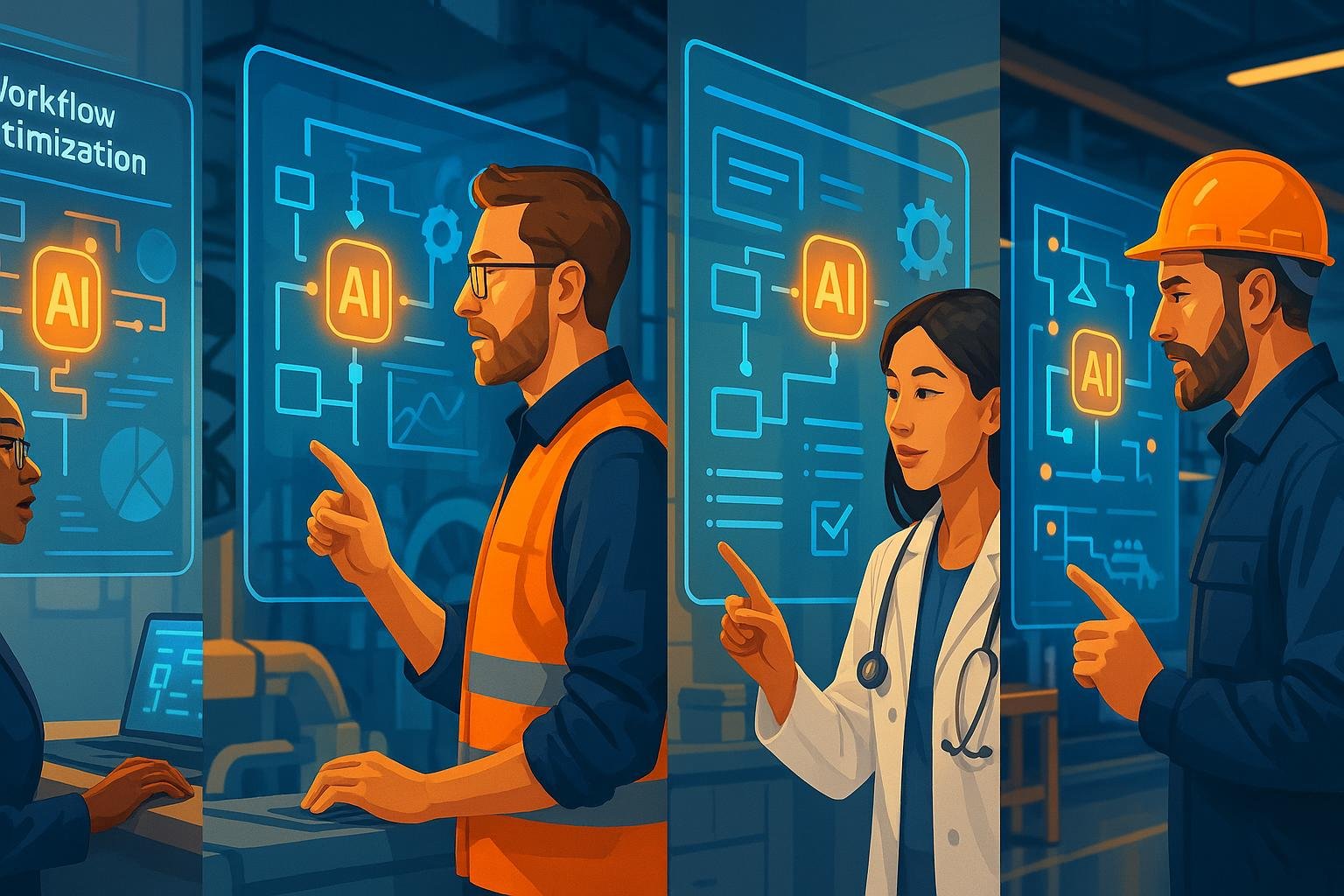
Enterprises that have spent the past decade layering robotic process automation, workflow engines and machine learning are now confronting a distinct inflection point: moving from rule-bound automation to agentic AI capable of planning, deciding and executing multi-step processes with minimal human hand-holding. According to the lead analysis provided, this next wave of automation seeks to shift responsibility for end-to-end business flows from human supervisors and discrete bots to a...
Continue Reading This Article
Enjoy this article as well as all of our content, including reports, news, tips and more.
By registering or signing into your SRM Today account, you agree to SRM Today's Terms of Use and consent to the processing of your personal information as described in our Privacy Policy.
utonomous AI agents that coordinate across applications and teams.
The promise is substantial. Industry estimates cited in the lead piece indicate AI-driven automation can lift operational efficiency by 40–60% and trim costs by as much as 30%. Such figures are echoed in specialist coverage noting how agentic systems can transform functions from IT service management to customer support and finance by automating ticket routing, powering intelligent virtual agents, surfacing proactive insights and orchestrating downstream workflows. According to TechRadar Pro, these capabilities reduce manual workloads while improving resolution speed and accuracy.
Realising those gains requires more than model performance; it demands integration with existing enterprise architecture. TechRadar Pro’s examination of operationalisation stresses that agentic AI must be embedded into current applications and human processes rather than run as isolated experiments. Low-code platforms are highlighted as an accelerant, enabling faster, repeatable deployment of agents through reusable components and visual orchestration, and allowing business teams to contribute without deep engineering effort.
Practical deployment also raises governance and transparency challenges. Sources emphasise that enterprises must retain control over compliance, auditability and data lineage as agents take on decision-making. Industry vendors describe intelligent workflow platforms that support dynamic routing, real-time adjustments and continuous learning from outcomes so decisions remain traceable. According to NICE, these platforms enable workflows that adapt to context and coordinate steps across systems and teams while providing mechanisms for oversight and improvement.
Sector use cases point to where agentic AI can create competitive advantage. TechRadar Pro and Informatica coverage illustrate applications across healthcare, retail, insurance and finance: optimising care plans, anticipating inventory needs, accelerating claims handling and detecting fraud. Informatica’s analysis further argues that robust data integration and governance are prerequisites for reliable agent behaviour, enabling faster, smarter decisions while limiting operational risk.
Organisational readiness therefore becomes as much about platforms and data as about models. Successful adopters will combine enterprise-grade integration, low-code orchestration, clear accountability frameworks and continuous monitoring to move from pilots into production. Forecasts suggest the pace of adoption will quicken: analysts expect embedded AI agents and democratised creation tools to make agentic capabilities mainstream in corporate workflows by the mid-2020s, particularly in finance, HR and supply chain operations, according to TechRadar Pro commentary.
For executives planning a transition, the evidence points to a phased approach: catalogue high-value, repeatable processes; secure reliable data pipelines and governance; adopt platforms that offer composable, observable agents; and build human-in-the-loop controls for edge cases and compliance. When these elements are combined, organisations can convert the theoretical efficiency gains cited in the lead report into measurable operational improvements while retaining necessary oversight.
Agentic AI promises to change how work is organised by moving beyond isolated task automation to orchestrated, outcome-focused processes. But the shift will only deliver sustainably if enterprises pair advanced agent capabilities with pragmatic integration, governance and a clear roadmap from pilot to production.
Source: Noah Wire Services