


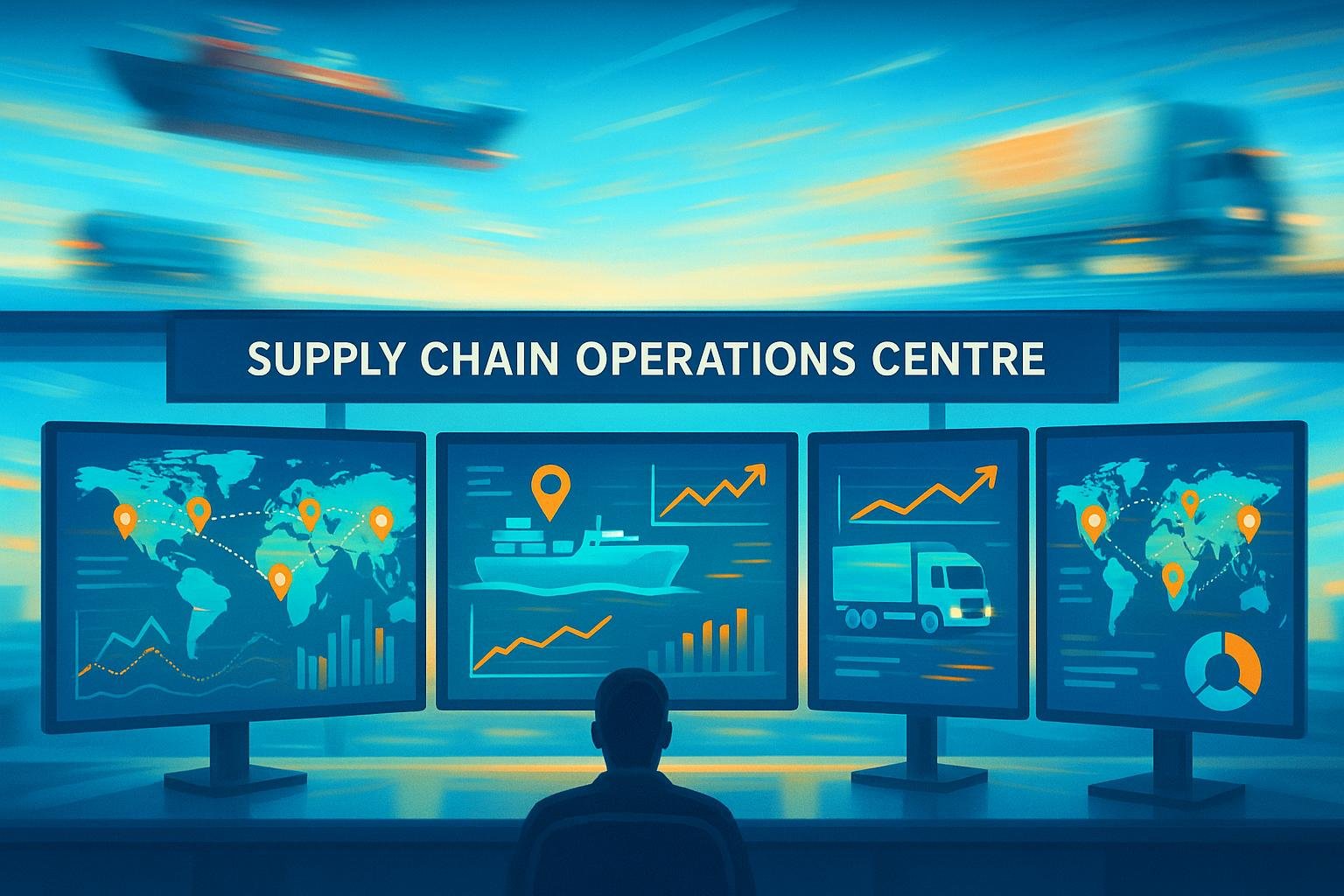
A new wave of agentic AI systems is revolutionising supply chain management by enabling continuous, autonomous oversight that can preempt disruptions, promising faster detection and stronger resilience for global networks.

Supplier oversight has migrated from back-office duty to a topic for senior executives as global networks lengthen, regulation tightens and buyers demand more than low cost. Procurement teams are now judged on speed, quality, reliability and the abili...
Continue Reading This Article
Enjoy this article as well as all of our content, including reports, news, tips and more.
By registering or signing into your SRM Today account, you agree to SRM Today's Terms of Use and consent to the processing of your personal information as described in our Privacy Policy.
A new class of systems, often described as agentic AI, aims to close that gap by moving from retrospective reporting to continuous, outcome-driven oversight. Unlike rule-bound automation that executes predefined tasks, agentic AI observes streams of operational, financial and external data, infers relationships among signals and pursues defined objectives such as reducing supplier risk or preserving service levels. According to a Gartner forecast, by 2030 half of cross‑functional supply chain management solutions will include such autonomous agents, reflecting industry expectations that these capabilities will act as a virtual workforce to augment human decision-making.
Practically, agentic approaches fuse internal sources, ERP records, procurement platforms, audit results, with outside inputs such as credit ratings, environmental, social and governance histories, news sentiment and geopolitical indicators. That breadth matters: isolated anomalies, like a minor rise in late shipments or a temporary dip in liquidity, are often survivable on their own, but when several indicators converge they can signal an escalating failure. Systems that link and contextualise those signals can surface actionable scenarios before a problem becomes a crisis.
The shift from automation to autonomy is not merely semantic. Robotic process automation and other script-driven tools reduce manual effort, but they require human interpretation and operate within fixed boundaries. Agentic AI is designed to reassess context continuously, prioritise responses and, within governance limits, execute mitigating actions or escalate recommendations. Industry analysis and vendor case studies suggest substantive benefits: the lead material cites potential detection speed-ups of 40–60% from persistent monitoring, while a Zycus case study reported a 40% drop in procurement cycle time and a 25% uplift in compliance audit outcomes following agentic AI deployment. Such figures underline where early intervention and automated validation can improve resilience and compliance.
Adopters will need to reconcile technological promise with governance and oversight. Ernst & Young highlights agentic AI’s role as a collaborative intermediary that can improve coordination, inventory accuracy, and predictive maintenance, including automated scheduling for repairs and spare parts procurement. Yet EY and other advisers stress that these systems must be deployed with clear controls, auditability and human-in-the-loop checkpoints so strategic choices and accountability remain with procurement leaders.
The limitations of legacy methods are well documented. Commentary from compliance specialists warns that static scorecards and manual vendor risk programmes are increasingly inadequate for layered, multi‑tier supply networks and can leave dangerous visibility gaps. That critique is echoed in guidance from education providers: the McCombs School of Business is offering a professional course on integrating agentic AI into sourcing and supplier management that emphasises responsible use, governance and preserving human oversight even as systems take on more complex tasks.
For procurement organisations considering change, the architecture typically includes a continuously learning agent that ingests diverse data, a decision layer that assesses risk and trade-offs, and an orchestration layer that triggers actions or alerts. The benefits offered, faster detection, lower disruption rates, automated compliance checks and improved sourcing returns, depend on data quality, integration breadth and disciplined governance. Vendors’ performance claims should therefore be evaluated against independent metrics and pilot results rather than accepted at face value.
As adoption accelerates, firms should also plan for cultural and capability shifts. Successful programmes combine technical deployment with process redesign, change management and upskilling so procurement professionals can focus on strategic supplier relationships and scenario planning instead of manual data aggregation. Third‑party risk commentators argue that without internal buy‑in and cross‑functional collaboration, even sophisticated systems will struggle to deliver promised outcomes.
Agentic AI will not supplant procurement expertise; it is positioned to amplify it by turning streams of signals into early, interpretable warnings and by automating routine validation and remediation steps. For organisations that move beyond periodic reporting cycles and embrace continuous, governed intelligence, the result can be a more anticipatory supply‑chain function able to identify exposure before it affects operations. As the pace and distribution of risk increase across global networks, the path to greater resilience increasingly runs through systems that can observe, reason and act at scale.
Source: Noah Wire Services
Subscribe to Industry Updates

