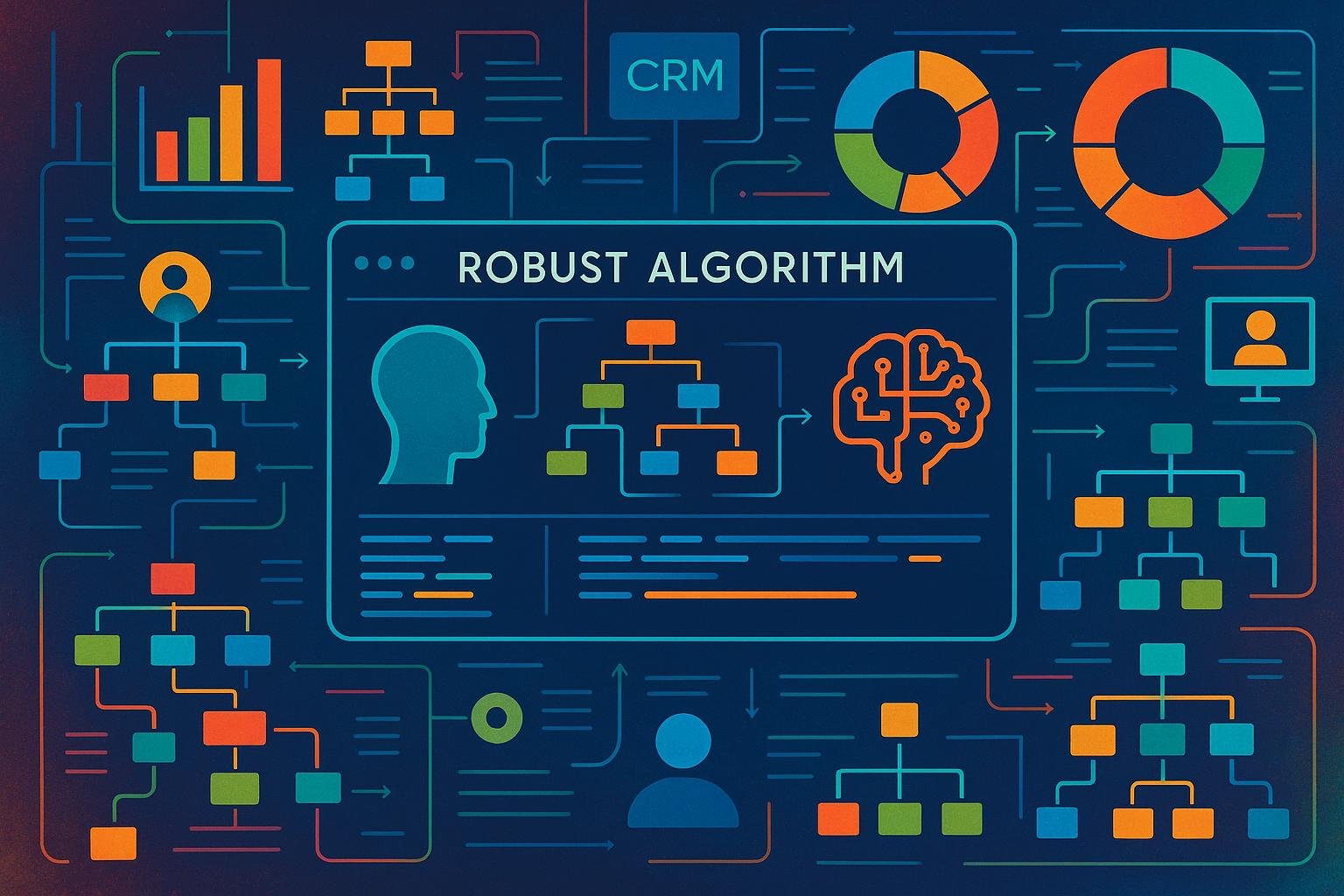
Innovative agentic AI systems are blending human judgment with automation in CRM, leading to significant efficiency gains and role evolution across industries, while maintaining a focus on human oversight and security.

Agentic artificial intelligence (AI) is redefining the landscape of Customer Relationship Management (CRM) by transcending traditional automation and moving towards collaborative workflows that blend human judgement with AI efficiency. This shift promises...
Continue Reading This Article
Enjoy this article as well as all of our content, including reports, news, tips and more.
By registering or signing into your SRM Today account, you agree to SRM Today's Terms of Use and consent to the processing of your personal information as described in our Privacy Policy.
Unlike early AI applications that focused on automating isolated tasks, agentic AI integrates human insight at critical points in workflows, ensuring a balanced division of labour. According to MelodyArc, a company pioneering this approach, their platform works seamlessly across existing CRM systems like Salesforce and HubSpot to empower frontline teams without requiring deep technical expertise. MelodyArc’s CEO James McHenry explained to CRM Buyer that their system applies a tiered decision-making model: established rules manage straightforward decisions, AI tackles pattern recognition with high confidence, and humans intervene in ambiguous or high-risk cases where nuanced judgement is essential. This “human-in-the-loop” methodology is especially vital for sensitive processes such as handling customer returns, where even minimal errors can impact profitability markedly.
MelodyArc’s co-founder and COO Ashley Moser emphasized the value of this hybrid approach in averting the costly mistakes that full automation can introduce, noting that human oversight acts as a crucial final checkpoint to maintain accuracy and security. The company claims users commonly experience efficiency gains of 30% to 60%, alongside stronger compliance outcomes through embedded security and regulatory measures. Moreover, MelodyArc innovates on revenue growth by mechanizing so-called “customer delights,” systematically embedding upsell and positive engagement opportunities within workflows to capitalise on timely contexts.
These developments align with broader research on AI’s impact on jobs and workflows. Goldman Sachs estimates that while AI adoption may temporarily displace around 6% to 7% of U.S. jobs, particularly among computer programmers, accountants, legal assistants, and customer service representatives, the prevailing trend is one of role transformation rather than permanent loss. The firm projects that AI will expand opportunities for human expertise to remain essential, especially when combined with agentic AI’s augmentative design. Indeed, Goldman Sachs’ own AI initiatives are restructuring various operations such as sales, regulatory reporting, and client onboarding to boost productivity, though some job cuts and hiring slowdowns are anticipated during the transition.
Supporting this perspective, a recent Federal Reserve Bank of New York report found that despite widespread AI adoption across sectors, job losses remain limited, with many firms focusing on retraining employees to enhance their roles rather than replace them. The report highlighted growing AI integration in services and manufacturing, signalling more changes ahead but not a wholesale displacement of workers.
Practical applications of AI-driven augmentation extend to major financial institutions as well. For example, JPMorgan Chase’s adoption of AI-powered tools during the stock market turmoil in 2025 facilitated faster, personalised client services, contributing to a 20% rise in asset and wealth management sales. The bank anticipates advisers using AI will expand their client bases considerably in coming years. Similarly, banks including Goldman Sachs and BNY Mellon report productivity gains, such as a 20-30% improvement in coding productivity, but acknowledge that translating AI advances into consistent profit remains a complex challenge requiring focused optimisation of workflows and customer interactions.
In sum, the unfolding paradigm of agentic AI in CRM and frontline workflows marks a nuanced evolution from pure automation to human-centred augmentation. Companies like MelodyArc are championing systems that democratise control over workflows, allowing team members to blend expert knowledge with AI’s processing power effectively. This synergy not only enhances efficiency and reduces risk but also fosters competitive differentiation through improved customer experience and revenue generation.
The sustained narrative emerging from industry leaders and research is clear: the future of work lies in empowering humans through AI, rather than replacing them. By integrating AI’s strengths with human judgement and contextual awareness, businesses can unlock greater value and resilience, setting a new standard for how technology and human expertise coalesce in the digital era.
Source: Noah Wire Services
Subscribe to Industry Updates