


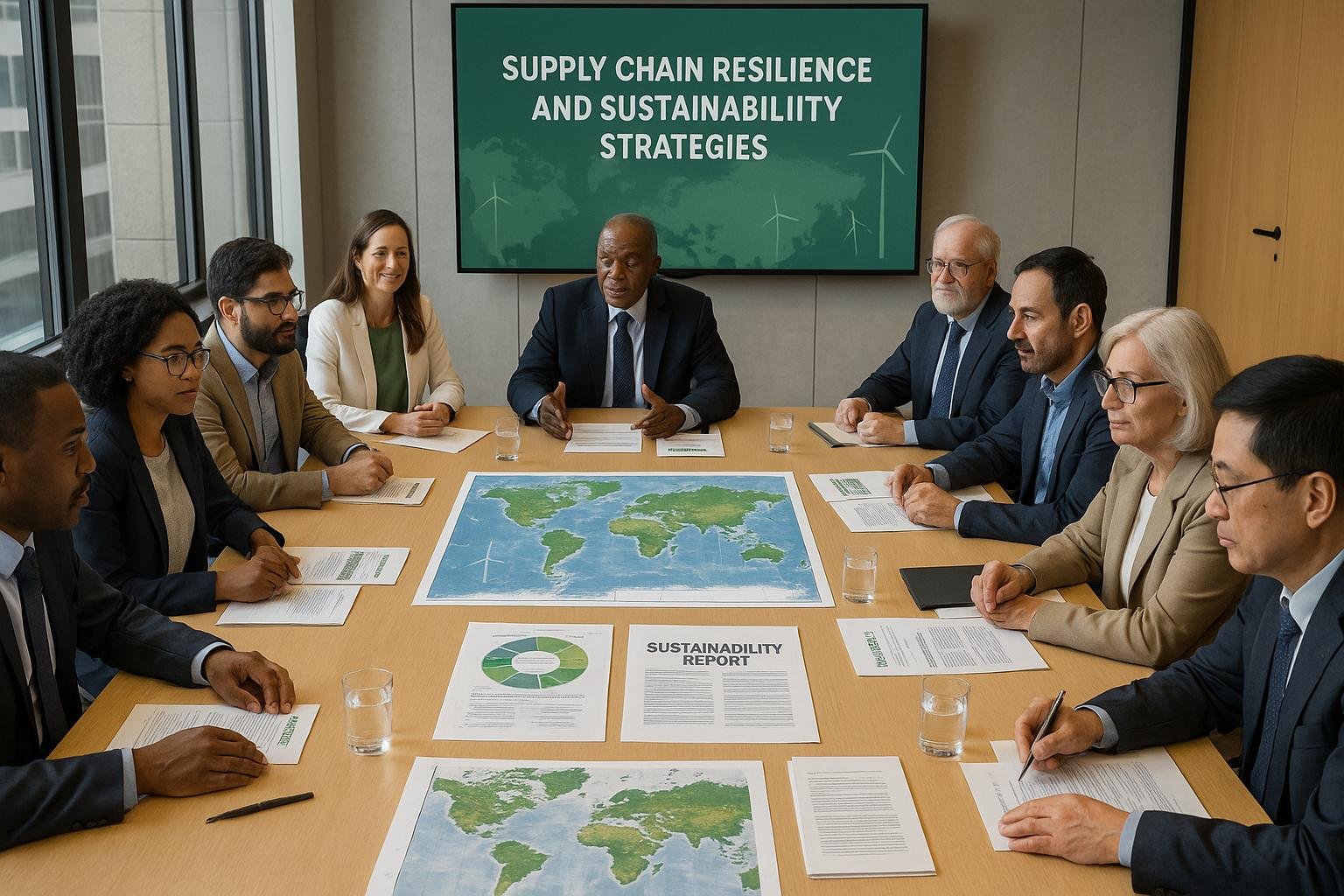
As geopolitical shocks and stakeholder demands reshape supply chains, academic centres are emerging as key partners, offering evidence-based insights that empower firms to embed resilience and sustainability into strategic decision-making at the board level.

Boardrooms are being forced to rethink the role of supply chains as firms confront a cascade of geopolitical shocks, regulatory demands and stakeholder expectations. What was once treated as an executional back-offi...
Continue Reading This Article
Enjoy this article as well as all of our content, including reports, news, tips and more.
By registering or signing into your SRM Today account, you agree to SRM Today's Terms of Use and consent to the processing of your personal information as described in our Privacy Policy.
Academic centres are stepping into that vacuum. According to Rajeev R. Tripathi, Associate Professor and Chairperson of the Supply Chain Management Centre at IIM Bangalore, scholarly hubs can offer independent, evidence-based perspectives that public companies and governments often lack. Tripathi argues that academic units are well placed to shift organisational focus from reactive problem-solving to anticipatory planning by translating rigorous research into board-level insights and by asking difficult, long-horizon questions that commercial pressures tend to suppress.
This academic engagement matters because the nature of risk has changed. Industry veterans and consulting firms note that resilience must be embedded in executive processes rather than siloed in procurement or operations. A recent piece from Willis Towers Watson highlights that durable supply-chain resilience requires visible commitment from senior leadership and governance structures that align resilience with business strategy, not just a set of technical fixes.
Sustainability is now central to that realignment. PwC’s survey of digital supply-chain trends shows that executives increasingly view supply-chain strategy as the principal vehicle for delivering environmental, social and governance goals, and that targeted digital investment can advance both operational performance and ESG objectives. Complementing that view, the OECD’s Supply Chain Resilience Review emphasises that resilient supply chains can accelerate greener production, spread environmentally beneficial technologies and help scale circular-economy practices, while warning that digitisation also introduces new vulnerabilities that must be managed.
Empirical research further links agility and sustainability. A study published in Sustainability finds that dynamic supply chains, those able to reconfigure and adapt rapidly, tend to weather disruptions more effectively and minimise waste and environmental harm during crises. That suggests that resilience and sustainability are mutually reinforcing when firms design networks and processes to be nimble, not merely redundant.
Bringing these ideas into ongoing corporate practice requires rethinking how industry and academia collaborate. Tripathi points to the limitations of episodic contact and calls for durable, co‑created partnerships in which companies share data and pursue joint research agendas. This view is echoed by sector guidance on procurement: ISO 20400 and other practitioners recommend embedding sustainable purchasing practices to reduce risk, spur innovation and align supply-chain choices with climate and social goals.
There are signs of progress in India and beyond. Some firms are already elevating supply-chain leadership to a strategic remit that shapes investments and internationalisation plans; others remain focused on local optimisation at the expense of resilience and compliance. Policymakers, investors and customers are intensifying scrutiny, creating an environment where firms that treat supply chains as strategic assets will have competitive advantage.
The upshot is clear: boards that ignore the strategic dimensions of supply networks risk being outflanked by competitors that integrate resilience and sustainability into core decision-making. Academic centres can help bridge the gap between intent and execution by supplying long-term evidence, facilitating data-rich partnerships and training leaders able to navigate an era defined by geopolitical fragmentation and environmental urgency.
Source: Noah Wire Services
Subscribe to Industry Updates

