


**Perth**: The mining industry faces significant inefficiencies due to fragmented data. ABB’s newly launched Operations Management System aims to address these issues through integration and real-time feedback, enhancing operational efficiency and supporting environmental targets at Gold Fields’ Granny Smith mine.
The mining industry is grappling with a significant challenge stemming from fragmented data across the mine-to-market value chain, which can lead to operational inefficiencies and impact financial performance. The issue is exacerbated by the continued reliance on paper-based administrative tasks and spreadsheet management, which siphons considerable time from mining workers.
In addressing these challenges, ABB has launched the latest version of its ABB Ability™ Operations Management System (OMS) specifically for the mining sector. The new system is designed to consolidate data throughout the entire mining operation, from the initial mining phase to the processing plant and enterprise-level reporting. This comprehensive integration is notably important as highlighted by McKinsey, which identified that better performance across the mine-to-market value chain presents a significant, albeit largely untapped, opportunity for value creation.

The inefficiencies resulting from data silos can manifest starkly in operational scenarios, such as end-of-month reporting. Many mining teams find themselves dedicating extensive hours to compile data from various sources, manually updating spreadsheets, and ensuring the accuracy of information amid tight reporting deadlines. This labour-intensive process raises questions about the final data’s reliability.
Additionally, operational disruptions can have immediate repercussions; for instance, in the situation where a loader breaks down deep underground, quick decision-making is crucial to mitigate production losses. However, with disparate and unintegrated data, operators often find themselves piecing together critical information from various sources, which can hinder effective responses and adversely affect production targets.
The latest version of ABB’s OMS aims to enhance this landscape by establishing an immediate feedback loop between planning and execution. The system features intelligent Short Interval Control (SIC), which actively analyses operational data during disruptions and provides resource allocation recommendations. ABB claims this capability has the potential to save significant decision-making time, equivalently yielding approximately four additional hours of production per week during a 12-hour shift.
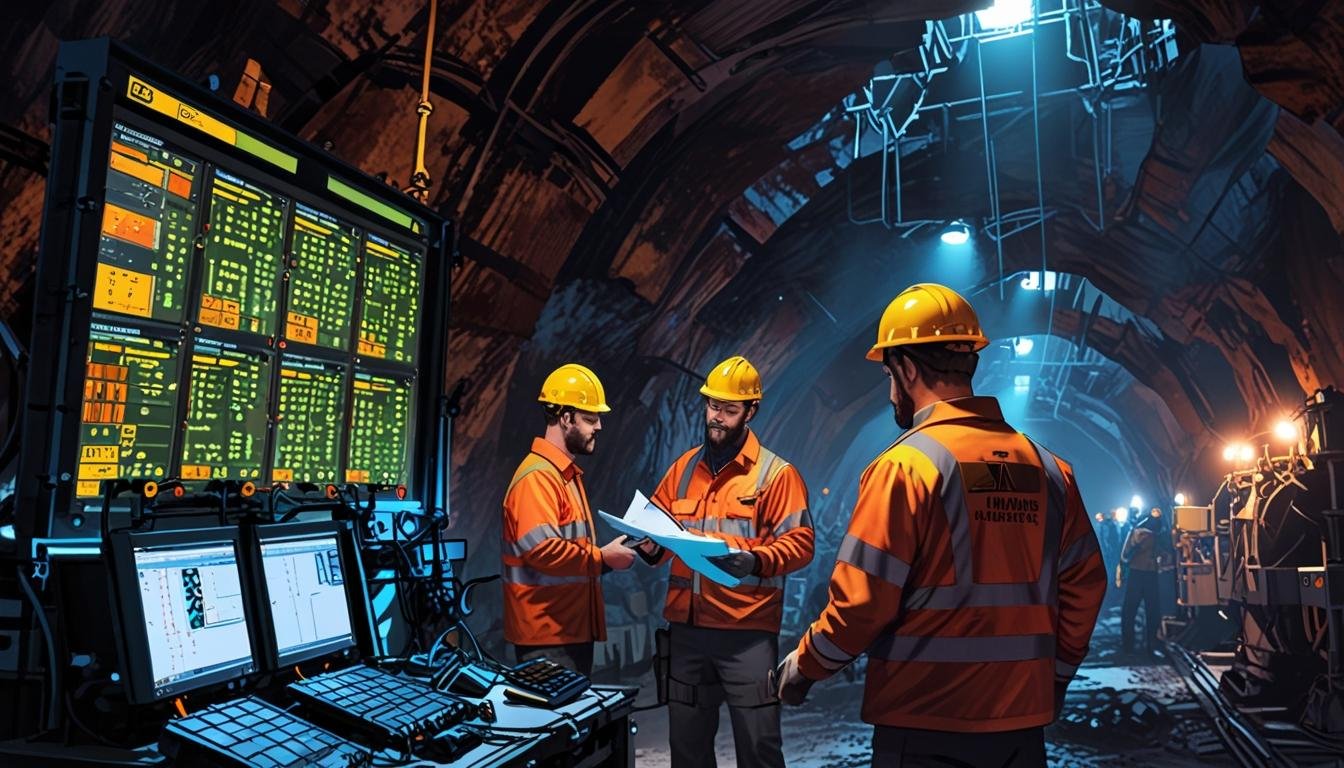
A practical demonstration of the system’s efficacy can be observed at Gold Fields’ Granny Smith mine, situated 740 kilometres northeast of Perth. This established mining complex has undergone a noteworthy digital transformation since its inception in 1989, particularly in its underground operations. Prior to implementing ABB’s OMS, the mine relied heavily on paper practices and radio communications, necessitating extensive time buffers for logistical contingencies. After transitioning to digitalised scheduling, the mine has realised substantial improvements in operational efficiency. The new system affords operators the ability to access work orders in real-time via rugged HMI devices, allowing them to report task completions and interruptions swiftly—an essential upgrade in the traditionally oversight-limited underground environment.
ABB’s user-centric design approach is critical in ensuring that the OMS meets the practical needs of users. Continuous engagement and feedback sessions held with mining professionals globally have shaped the user interface for the OMS. This naturally leads to quicker adoption and effectiveness among staff, bolstered further through self-service dashboards tailored to the requirements of various mining operations.
As mining companies increasingly prioritise Environmental, Social, and Governance (ESG) targets, the need for operational systems to evolve is becoming more apparent. ABB’s integrated planning capabilities within its OMS are poised to support electrification projects and monitor environmental impacts effectively. At the Granny Smith mine, the value derived from equipment movements and maintenance efforts is already assisting in reducing the mine’s carbon footprint.
ABB asserts that the era of disconnected mining operations—where disparate datasets complicate the coordination of efforts among planners, operators, and managers—is drawing to a close. The company emphasises that the integration of operations through intelligent systems transcends mere modernisation; it fosters the creation of mines that are not only safer and more productive but also environmentally accountable. In a sector historically challenged by the complexities associated with coordinating underground and surface operations, these advancements in operational management signify a transformative shift in how mines function and succeed in an increasingly challenging environment.
Source: Noah Wire Services

