


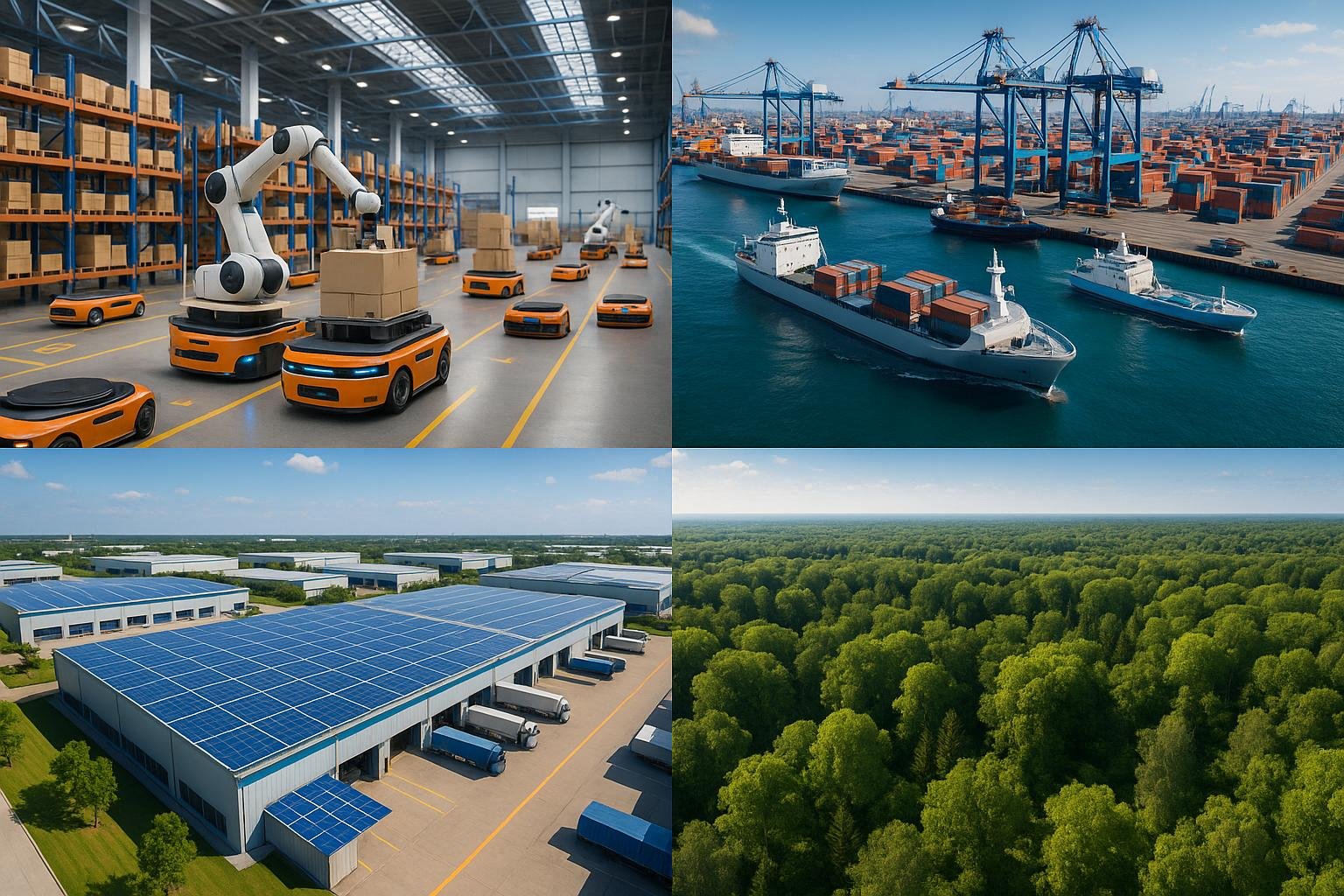
As global trade volatility intensifies, 2026 emerges as a pivotal year for supply chains, driven by advanced AI, automation, blockchain, and green initiatives that promise to revolutionise sourcing, logistics, and resilience strategies worldwide.

As organisations confront increasing volatility across global trade, 2026 looks set to be a year in which technology, sustainability and closer supplier collaboration reshape how goods move from source to customer. Executives a...
Continue Reading This Article
Enjoy this article as well as all of our content, including reports, news, tips and more.
By registering or signing into your SRM Today account, you agree to SRM Today's Terms of Use and consent to the processing of your personal information as described in our Privacy Policy.
Artificial intelligence is moving from experimental to operational. Companies are deploying predictive analytics to tighten demand forecasts, real‑time anomaly detection to surface logistics problems and automated decision engines to accelerate responses across planning and fulfilment. According to reporting from SupplyChainConnect on demonstrations at CES 2026, AI‑driven digital twins and other advanced modelling tools were among the most prominent innovations shown to optimise flows and test disruption scenarios in virtual environments. At the same time, a survey conducted by ORTEC found that although logistics leaders expect agentic AI to deliver efficiency gains and greater resilience, 42% of organisations are not yet exploring autonomous decision systems, underscoring a gap between promise and practice.
Automation in the physical network is also advancing rapidly. Next‑generation warehouse robots and autonomous mobile robots are being adopted to address persistent labour shortages and raise throughput, while pilots of self‑driving trucks and delivery drones are expanding last‑mile options. SupplyChainConnect’s coverage of CES flagged autonomous airport robots and cutting‑edge warehousing machines as examples of technologies poised to reduce manual handling and accelerate turnaround times. Firms report savings from robotic process automation in back‑office tasks as well, freeing human staff for exception management and higher‑value work.
Visibility and provenance remain central concerns, and distributed ledger technologies are being positioned as a tool for improved traceability. Blockchain implementations promise tamper‑resistant product records from origin to receipt, simplified compliance reporting and stronger anti‑counterfeit measures. Organisations with multi‑tier suppliers are increasingly experimenting with immutable ledgers to share verified data across partners, although integration with legacy systems and governance of shared data remain practical hurdles.
Sustainability has moved beyond compliance into strategic differentiation. Companies are publishing net‑zero roadmaps, deploying carbon tracking across transport and warehousing, and investing in circular approaches such as reverse logistics and extended producer responsibility programmes. Consumers and regulators are intensifying pressure, and industry data shows firms that embed lifecycle assessment and eco‑design early in product development are better placed to avoid costly rework and reputational risk.
Digital twins are emerging as a central tool for planning and crisis response. By modelling entire networks digitally, supply chain teams can run what‑if scenarios, reconfigure capacity and test contingency plans without the expense and disruption of physical trials. Coverage from CES 2026 highlighted AI‑enhanced digital twin demonstrations capable of suggesting corrective actions in near real time, a capability that complements predictive maintenance strategies driven by the Internet of Things. Sensor data, tied into maintenance planning systems, is reducing unplanned downtime by signalling component degradation before failures occur.
Fulfilment strategies are becoming more local and flexible. The proliferation of micro‑fulfilment centres close to urban demand nodes, dynamic route optimisation and store‑based e‑commerce fulfilment are shortening delivery windows and cutting transport miles. Retailers and carriers are combining these tactics with same‑day and on‑demand options to meet heightened consumer expectations while containing cost.
Cloud platforms are facilitating closer supplier collaboration by breaking down data silos. Unified systems provide shared dashboards, faster partner onboarding and smoother integration across ERP, planning and logistics functions. Those benefits support multi‑sourcing and flexible contracting approaches that form the backbone of more agile risk management, enabling firms to maintain service levels through regional shocks or supplier outages.
Despite the technology surge, workforce adaptation remains a critical constraint. Demand is rising for data analysts, digital planners and technicians skilled in robotics and automation. Organisations are responding with targeted upskilling and hybrid human‑machine operating models, recognising that technology adoption without parallel investment in people will limit the value delivered.
Finally, resilience is being treated as a measurable business objective rather than an ad hoc activity. Companies are formalising risk committees, maintaining scenario‑based inventory buffers and deploying real‑time risk dashboards to stay ahead of interruptions. Industry observers note that 2026 will likely be a pivotal year for testing agentic AI and autonomous orchestration tools at scale; how quickly firms move from pilots to production will determine which supply chains gain decisive advantage.
Taken together, these trends suggest a shift from isolated project investments to systemwide transformation. Organisations that combine intelligent automation, greener operations and closer partner integration while building the required skills and governance will be best positioned to navigate the complexity of global trade in the years ahead.
Source: Noah Wire Services
Subscribe to Industry Updates

