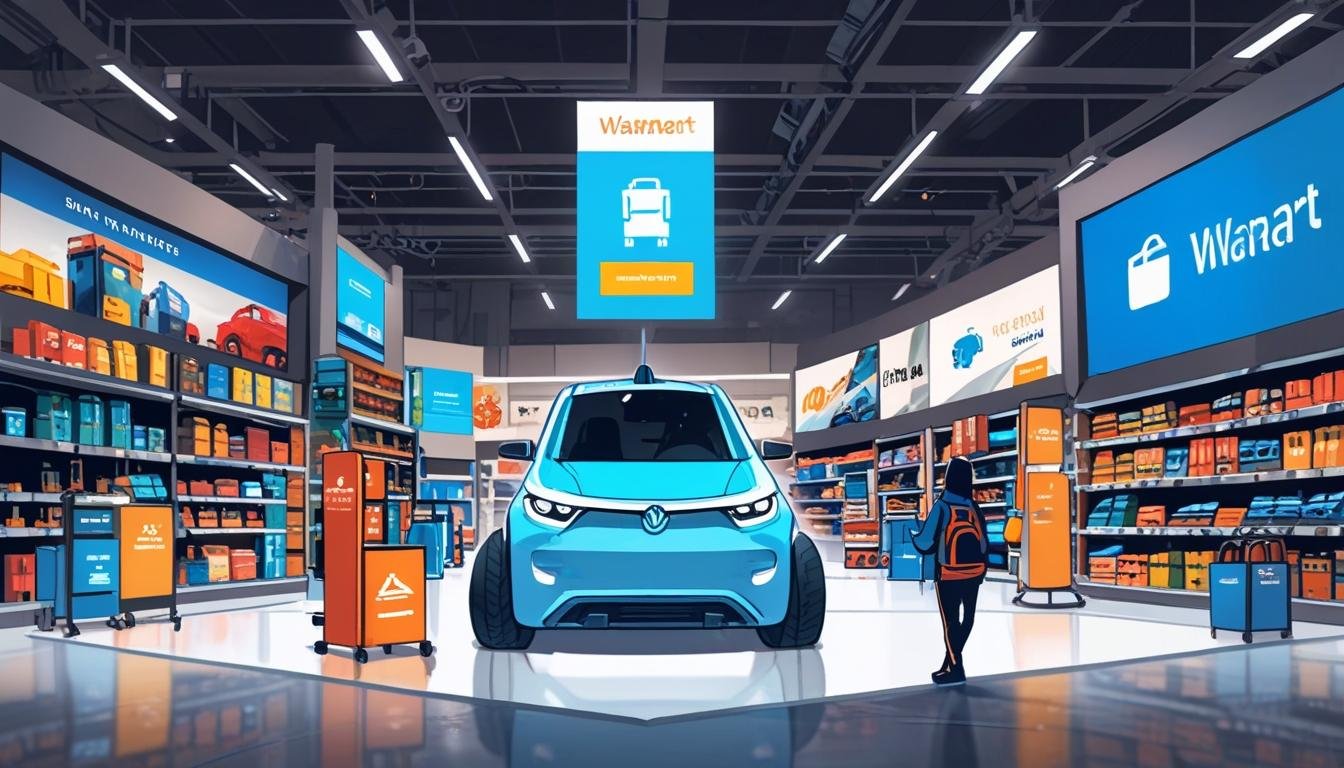
**London**: Walmart and Amazon are responding to tariff pressures by investing in technology and expanding into new markets. With AI initiatives and enhancements to their service offerings, both companies aim to improve operational efficiency and adapt to evolving consumer needs in a competitive landscape.
Tariff pressures are increasingly affecting the retail and eCommerce sectors, prompting industry leaders Walmart and Amazon to double down on technology initiatives aimed at improving operational efficiency and pursuing new markets amid ongoing uncertainty. Recent developments indicate that both companies are not only enhancing their existing infrastructures but are also strategically positioning themselves to capture evolving consumer needs.
Amazon is significantly investing in artificial intelligence (AI) as a key driver of customer engagement and automation. This focus comes as the company navigates complex discussions around consumer data rights in light of recent privacy changes affecting its smart device offerings. These adjustments reflect a broader industry conversation regarding how companies manage and protect consumer data in an AI-driven landscape.

In a related development, Walmart has been ramping up its technological investments, leveraging AI primarily to improve merchant efficiency and enhance product sourcing. The company recently launched “Wally,” a generative AI-powered assistant designed to assist merchants in sourcing products for both physical shelves and the online store. The assistant can sift through complex datasets, identify factors contributing to product performance variations, automate operational queries, and streamline issue resolution. According to Walmart, “Wally” marks a significant advancement in how the company uses AI to foster better operational outcomes.
Looking beyond operational enhancements, both retail giants are also entering new markets. Walmart has recently announced plans to expand into freight services with a new brokerage program. This initiative, reported on March 19, outlines requirements for carriers wishing to partner with Walmart, including operating between 10 and 1,000 trucks and holding significant insurance coverage. By utilising its extensive internal logistics and private trucking fleet, Walmart is positioning itself to create a compelling ecosystem for third-party sellers and logistical partners.
Meanwhile, Amazon is reportedly exploring the automotive sector, with intentions to support car dealers in selling both new and used vehicles. This potential expansion could significantly alter the dynamics of traditional car dealerships and online platforms such as Carvana. Harnessing its vast logistics network, Amazon aims to develop a seamless, digital-first car-buying experience that challenges existing market norms.
In another significant move related to its service offerings, Walmart announced on March 18 that it will either open or remodel over 45 fuel stations this year, bringing the total to more than 450 Walmart Fuel and Convenience stations across 34 states by the end of the year. This expansion is part of the company’s broader strategy to enhance customer convenience and improve its retail footprint.
The competitive landscape is further characterised by advances in generative AI technology, with both Amazon and Walmart utilising AI to refine customer service and internally streamline operations. Amazon announced the next evolution of its service, Amazon Connect, which is set to incorporate AI-driven interactions designed to bolster customer relationships and enhance overall business outcomes. Additionally, from March 28 onwards, Amazon’s voice assistant Alexa will process all voice interactions in the cloud, enabling newly developed generative AI functionalities while updating users on data transmission policies.
Further proceedings involved a legal victory for Amazon, with the dismissal of a class-action lawsuit alleging misleading practices regarding its pricing and logistics strategies. This development underscores the challenges both companies face in navigating not only market dynamics but also legal scrutiny in their expansive operations.
As Walmart and Amazon adapt to these pressures with a blend of technological innovation and strategic market expansion, the implications for competitors and consumers are significant, reshaping the traditional boundaries of retail and eCommerce.
Source: Noah Wire Services