


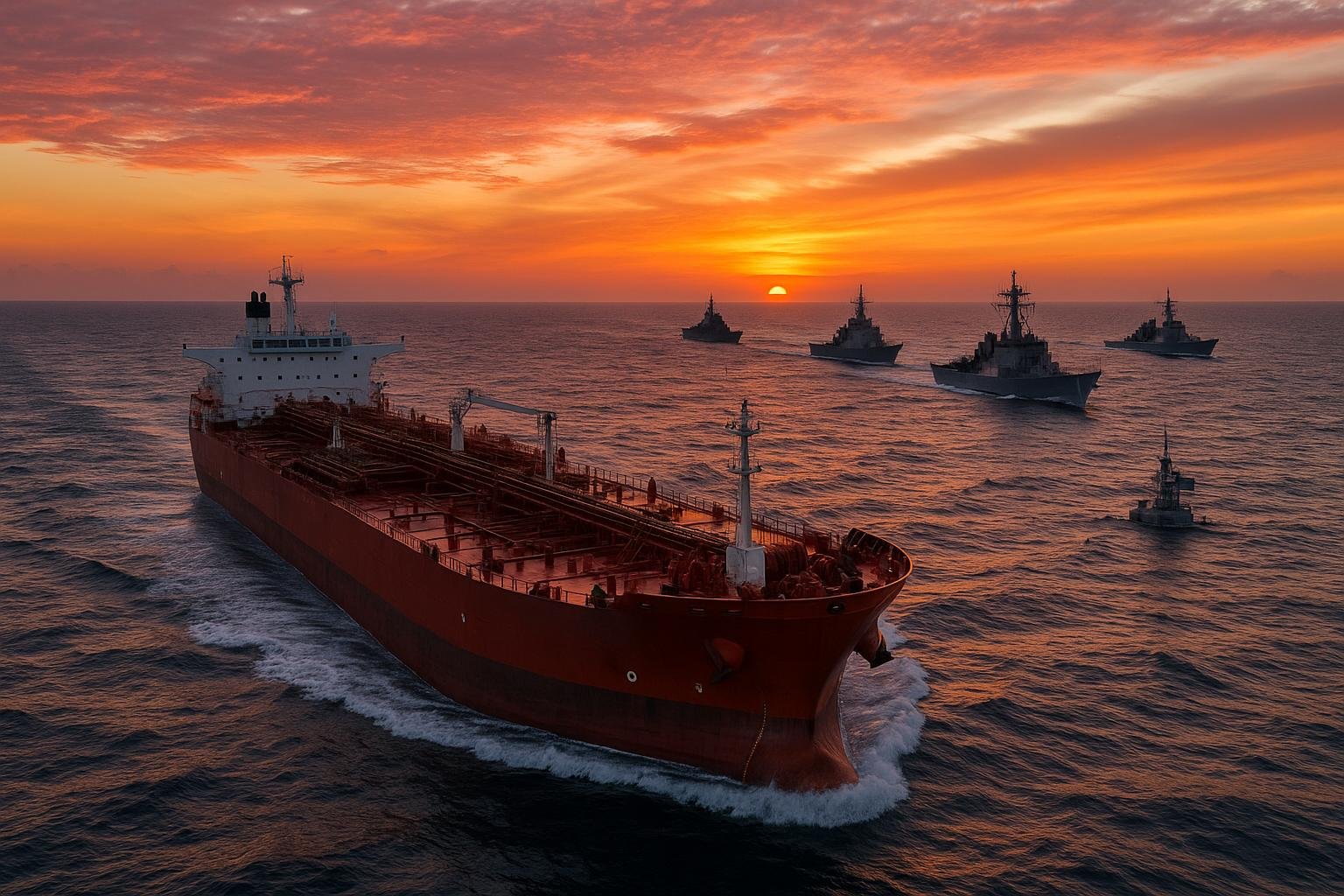
President Trump has ordered the US Development Finance Corporation to provide political risk insurance and guarantee support for maritime trade through the Gulf, while hinting at naval escorts for tankers amid escalating Iran-related threats, aiming to stabilise oil markets and ensure free navigation.

President Trump on Tuesday ordered the U.S. Development Finance Corporation to offer political risk insurance and guarantees for maritime trade transiting the Gulf and sai...
Continue Reading This Article
Enjoy this article as well as all of our content, including reports, news, tips and more.
By registering or signing into your SRM Today account, you agree to SRM Today's Terms of Use and consent to the processing of your personal information as described in our Privacy Policy.
“Effective IMMEDIATELY, I have ordered the United States Development Finance Corporation (DFC) to provide, at a very reasonable price, political risk insurance and guarantees for the Financial Security of ALL Maritime Trade, especially Energy, traveling through the Gulf. This will be available to all Shipping Lines. If necessary, the United States Navy will begin escorting tankers through the Strait of Hormuz, as soon as possible,” the president said in a post announcing the measures. The statement was followed by short, informal remarks: “And crude… And stonks…”
The announcement comes after insurers introduced or tightened “war” clauses that left some vessels effectively unable to secure cover for voyages through the Strait of Hormuz, prompting ships to sit idle and freight costs for supertankers to surge to record levels, industry sources and shipping data show. The immediate market reaction included a sharp fall in crude prices as traders priced in the prospect of government-backed risk support.
According to Al Jazeera and ICIS, the DFC move is designed to stabilise maritime commerce disrupted by recent strikes attributed to Iran and to reassure shipping companies and charterers facing sharply higher insurance premiums. The DFC itself said in a press release that its political risk insurance and guaranty products could be mobilised to support American and allied businesses operating in the Middle East, offering cover to shipowners, charterers and key maritime insurers to limit market turmoil.
U.S. naval assets are already positioned in the region, and military-focused reporting indicates the Navy has multiple guided‑missile warships and littoral combat ships forward deployed to provide a security presence if escorts are ordered. News from the U.S. Naval Institute noted additional European warships were also moving toward the eastern Mediterranean, reflecting allied concern over freedom of navigation.
The Iranian Revolutionary Guard Corps has publicly warned it would treat the Strait as closed and target ships attempting to transit, a stance that underpins Tehran’s leverage over a vital energy chokepoint. Analysts point out that Tehran’s influence depends in part on triggering market panic and insurance-driven disruptions; by substituting a financial backstop for immediate large‑scale military action, Washington aims to blunt that leverage while reserving naval force as a deterrent.
The proposal would, in effect, convert part of the U.S. response to maritime threats from a solely kinetic posture into one that combines balance‑sheet support and targeted force protection. Markets and shipping operators will watch closely for the practical terms of any DFC coverage, whether it will be Treasury‑backed, the pricing and eligibility conditions, and how private insurers and reinsurers respond.
Critics warn such an approach risks entangling a development finance agency in a high‑risk security environment and could expose U.S. taxpayers to claims arising from combat losses. Supporters argue that without government intervention, sustained closures or insurance blackouts at Hormuz could push oil prices sharply higher and disrupt global trade.
As officials roll out the details, the immediate effect has been to calm a jittery oil market and offer a pathway for tankers currently unable to obtain commercial war‑risk cover to resume voyages under U.S. guarantees, with naval escorts available as a last resort. The DFC said it stands ready to provide its products to help preserve the free flow of goods and capital in the region.
Source: Noah Wire Services
Subscribe to Industry Updates

