


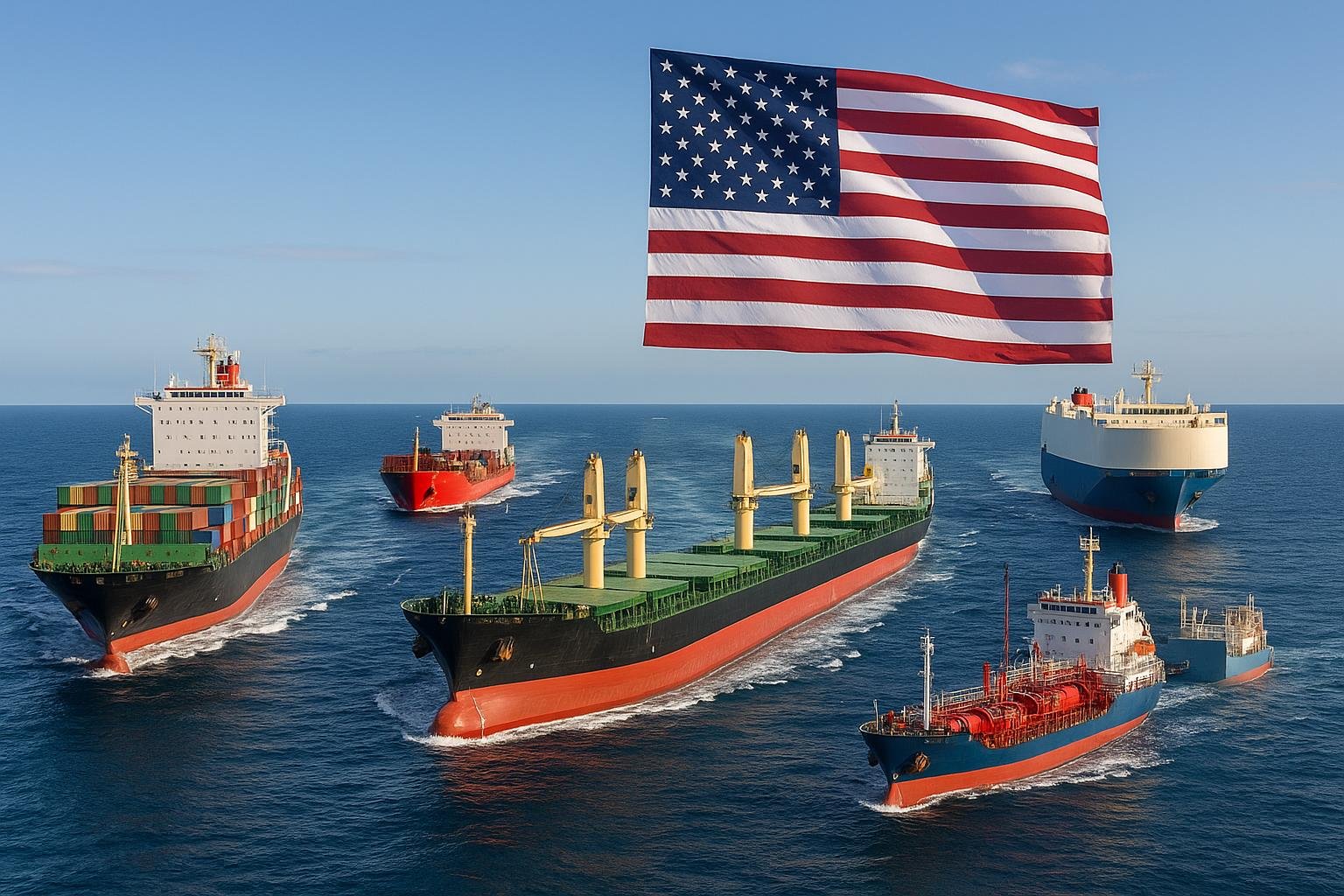
The Biden administration temporarily waives the Jones Act and relaxes Venezuela sanctions in a bid to mitigate rising energy prices caused by Middle East tensions and disruptions in global oil supply.

The Trump administration moved swiftly this week to blunt a surge in energy costs tied to the war in the Middle East, temporarily waiving a century-old US shipping restriction and loosening limits on trade with Venezuela’s state oil company in a bid to stabilise supply.<...
Continue Reading This Article
Enjoy this article as well as all of our content, including reports, news, tips and more.
By registering or signing into your SRM Today account, you agree to SRM Today's Terms of Use and consent to the processing of your personal information as described in our Privacy Policy.
On Wednesday the White House authorised a 60-day waiver of the Jones Act, the 1920 law that requires cargo moved between US ports to be carried on vessels that are US-built, US-owned and US-flagged. The administration said the temporary measure would allow “vital resources like oil, natural gas, fertilizer and coal to flow freely to US ports for 60 days,” White House Press Secretary Karoline Leavitt said in a statement, adding that the administration “remains committed to continuing to strengthen our critical supply chains.”
The waiver came after oil prices jumped following US‑Israeli strikes on Iran on 28 February and Tehran’s subsequent retaliation, which disrupted traffic through the Strait of Hormuz , a waterway that normally conveys about a fifth of global crude and liquefied natural gas in peacetime. Brent North Sea crude rose more than 5 percent earlier on Wednesday, and average US petrol prices have climbed more than 27 percent since the conflict began, according to AAA motor club data, straining household budgets ahead of key midterm elections.
Critics say the Jones Act has long raised costs by limiting the pool of ships available for domestic trade. “So this is a dramatic expansion in the number of ships that can be used,” Colin Grabow, associate director at the Cato Institute, told AFP, noting that building a medium‑range tanker in the United States can cost nearly five times as much as in Asia. Grabow said the waiver could ease some supply‑chain pressure but cautioned that if the war continues its effect on prices may be limited: “It can help mitigate some of the disruptions,” he said. “But moving forward, the situation could be less about reducing costs than slowing the rate of increase.”
Not all analysts expect a large impact. Josh Lipsky of the Atlantic Council told AFP the waiver “is unlikely to have a significant impact on global energy markets and gas prices,” arguing that the move is too small to offset the principal forces driving volatility in the Gulf. He added that the length of the waiver , 60 days rather than the 30 many anticipated , “may signal a longer conflict however.”
Alongside the shipping relief, the Treasury Department issued a licence authorising specified transactions between US entities and Venezuela’s state-owned oil company PDVSA. The Treasury said the licence will “benefit both the United States and Venezuela, while supporting the global energy market by increasing the supply of available oil.” The action builds on a series of earlier Department of the Treasury Office of Foreign Assets Control general licences and guidance issued this year that have broadened authorised activities in Venezuela’s energy sector, including General Licence No. 47 and No. 48 and related updates that permit certain exports of diluents and other transactions necessary for oil operations, legal advisers at firms including Hunton Andrews Kurth and Morgan Lewis have explained.
The easing of Venezuela sanctions follows a string of regulatory steps since late 2022 that have selectively permitted US firms to engage with PDVSA under narrow conditions. Treasury press releases from recent years show the department has periodically adjusted licences governing Chevron’s joint ventures and other activities to balance policy objectives with commercial realities.
Officials said Washington does not plan to restrict US oil and gas exports as part of its response. According to Axios, the White House confirmed on 19 March there were no plans to impose export limits and that other options, including further adjustments to sanctions, were being considered to address high energy prices.
Administration spokespeople framed the measures as short‑term fixes while US forces pursue objectives in the region. “This action will allow vital resources like oil, natural gas, fertilizer and coal to flow freely to US ports for 60 days,” Ms Leavitt said. Vice‑President JD Vance, speaking during a visit to a manufacturing plant in Michigan, offered a similar tone of containment: “We’ve got a rough road ahead of us for the next few weeks, but it’s temporary.”
Market analysts note that temporary policy steps can relieve near‑term bottlenecks but are unlikely on their own to counter a sustained supply shock while hostilities continue. S&P Global has estimated that complying with Jones Act requirements can add billions of dollars in delivery costs compared with using foreign vessels, underlining why the waiver could ease logistical strain even if it does not fully reverse price gains.
The administration has also tapped strategic reserves and examined other interventions intended to bolster crude availability, according to reporting by the Associated Press, reflecting a multi‑pronged effort to limit the domestic impact of disruptions in the Gulf. For consumers, however, relief may be gradual: with significant shares of global energy transiting chokepoints and complex sanction regimes still shaping flows, experts warn that volatility could persist beyond the 60‑day window unless the conflict abates or larger market responses emerge.
Source: Noah Wire Services
Subscribe to Industry Updates

