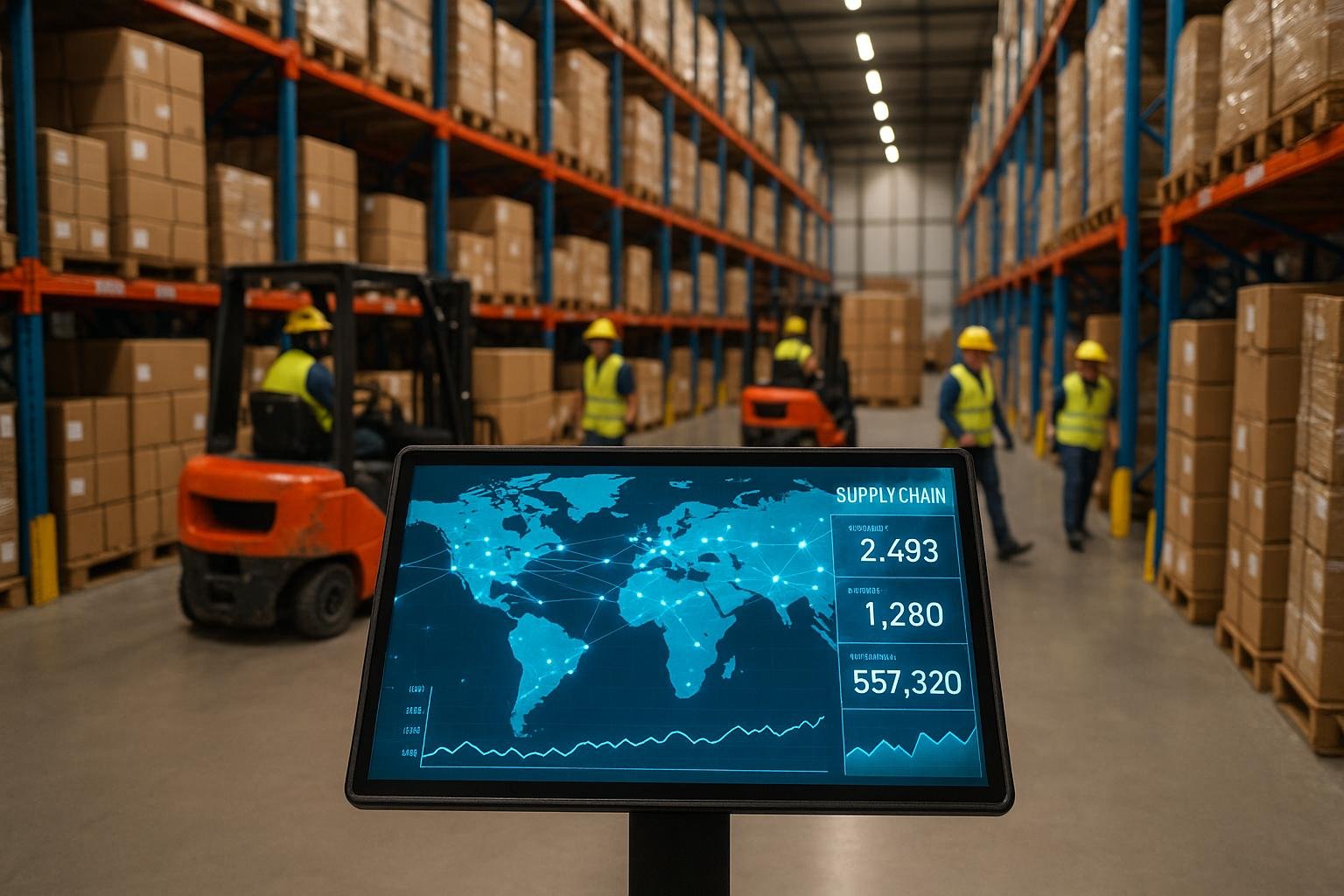
Supply chain and logistics software has evolved from a collection of specialised tools into the technology that now shapes how goods move from suppliers to customers. Where once planning, procurement, warehousing and transport were managed in separate systems, modern solutions aim to knit those functions together so businesses can make faster, more informed operational choices.
At the planning end, platforms concentrate on forecasting, sourcing and inventory decisions. These sy...
Continue Reading This Article
Enjoy this article as well as all of our content, including reports, news, tips and more.
By registering or signing into your SRM Today account, you agree to SRM Today's Terms of Use and consent to the processing of your personal information as described in our Privacy Policy.
stems use historical sales, supplier performance and increasingly granular real‑time inputs to align production and purchasing with expected demand. According to ToolsGroup’s report on inventory optimisation, advanced models that adapt to intermittent and slow‑moving demand can cut inventory while sustaining service levels across complex, multi‑echelon networks. Procurement and production teams rely on these capabilities to reduce stockouts and lower working capital without sacrificing responsiveness.
On the execution side, logistics software controls the physical movement of goods. Transportation management, route and fleet optimisation, dispatching and live shipment visibility are core functions. Industry coverage of supply chain visibility stresses that timely, shared data is essential for firms operating in rapidly changing markets, enabling planners to react to delays, capacity shifts or spikes in demand without costly manual coordination. Vendors such as LogiNext emphasise end‑to‑end delivery automation and real‑time field tracking to improve last‑mile reliability and transparency for retailers and carriers.
Bringing the two layers together is the defining trend. Platforms that unify planning and execution reduce data silos, allowing an inventory shortfall or transport disruption to trigger automatic reallocation, alternate sourcing or rerouting. This real‑time feedback loop turns previously reactive processes into proactive operations that can scale across geographies and channels. SupplyChainBrief highlights that visibility and collaboration tools remain top priorities for companies seeking resilience and speed.
The market remains diverse. Aggregated vendor lists for 2024 identify a mix of legacy enterprise suites, Oracle NetSuite and SAP among them, alongside specialised players such as FreightPOP, Anvyl, Precoro and warehouse management systems like Logiwa. According to IQStreamTech’s compilation of leading solutions, organisations often combine best‑of‑breed modules for procurement, inventory and transport rather than relying on a single monolithic package, reflecting differing needs by size and industry.
Investment is flowing into efforts to simplify that fragmentation. According to Axios, Dave Clark, Amazon’s former logistics chief, launched Auger with $100 million of backing from Oak HC/FT to build a unified, data‑centric platform that consolidates disparate supply‑chain data and applies semantic analysis. Clark’s experience at Amazon underscores the commercial appetite for end‑to‑end systems that can serve both major merchants and smaller sellers by reducing integration friction and surfacing actionable insights.
For firms evaluating software in 2026, the practical choices hinge on three trade‑offs: depth versus breadth of functionality, the quality of real‑time data feeds and the ease of integrating with existing enterprise systems. Organisations that prioritise inventory efficiency should look for self‑adaptive forecasting and multi‑node optimisation; those focused on delivery performance need robust routing, fleet telematics and live customer communications. Across use cases, the value lies less in individual features than in how seamlessly the platform aligns planning decisions with on‑the‑ground execution to cut cost, improve fulfilment and accelerate recovery from disruptions.
Source: Noah Wire Services