


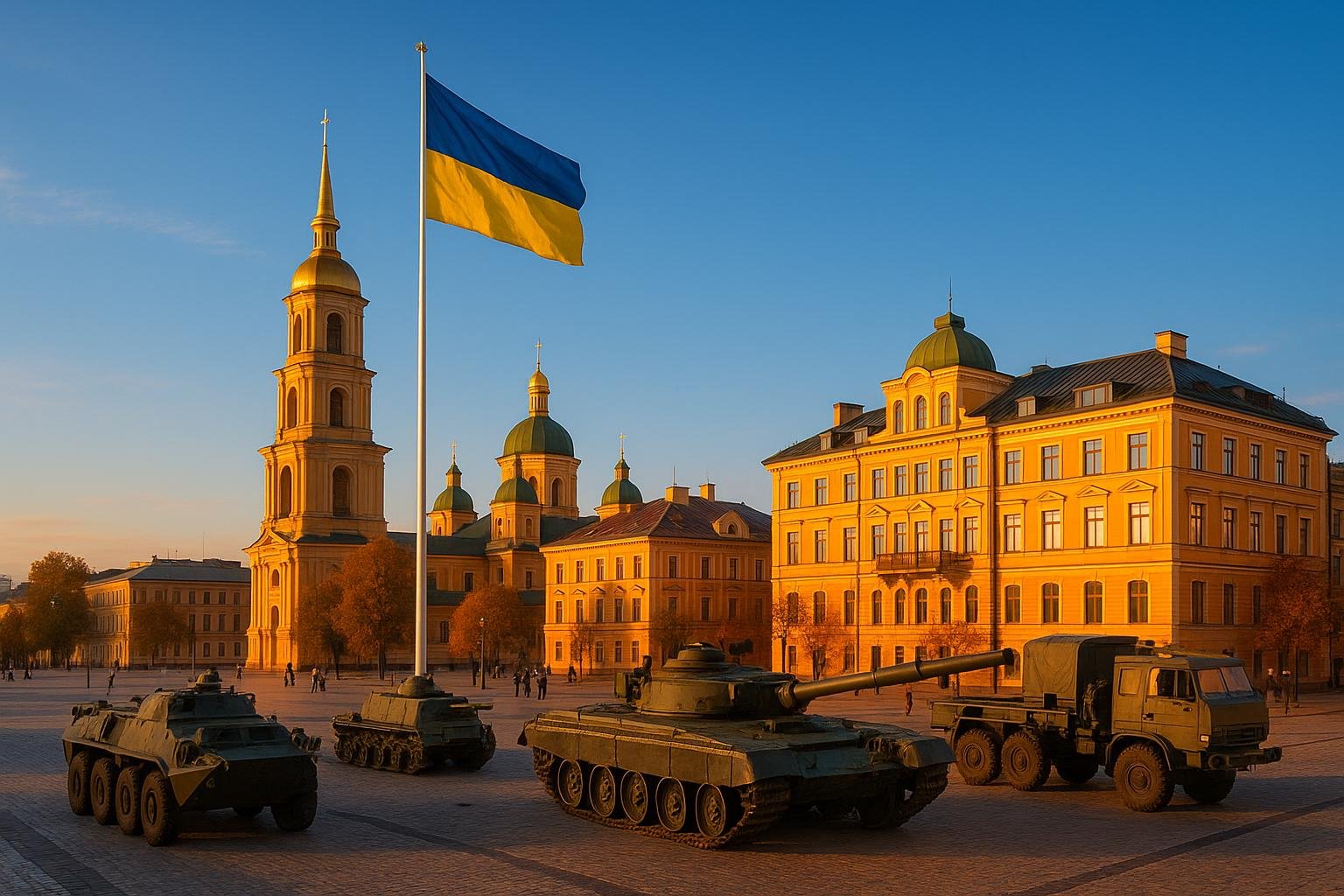
President Zelenskyy highlights renewed international support for Ukraine’s defence and energy resilience as diplomatic negotiations continue amid persistent Russian attacks on civilian infrastructure.

As Russian military pressure persists, President Volodymyr Zelenskyy said he secured fresh energy and military commitments during talks in Munich with leaders of the Berlin Format, with specific support packages expected by February 24. According to The Kenya Times, Zele...
Continue Reading This Article
Enjoy this article as well as all of our content, including reports, news, tips and more.
By registering or signing into your SRM Today account, you agree to SRM Today's Terms of Use and consent to the processing of your personal information as described in our Privacy Policy.
Zelenskyy underlined the urgent need for strengthened air defences and prompt delivery of pledged equipment to blunt continued Russian strikes. “I am grateful to our partners for their readiness to help, and we count on all deliveries arriving promptly. Ukraine needs air defence every day to deprive Russia of leverage through terror. Thank you to everyone who helps,” he said, thanking international backers for their readiness to assist.
The president described a sustained campaign by Russia targeting energy and civilian infrastructure. In his remarks he said that in one week of February Moscow launched roughly 1,300 attack drones, more than 1,200 guided aerial bombs and 50 missiles against Ukraine, with regions including Odesa, Donetsk, Zaporizhzhia and Sumy among those hit. Ukrainian officials acknowledge that air defences have intercepted many incoming weapons but stress gaps remain, leaving power plants, substations and the national grid vulnerable and prolonging the humanitarian toll.
Zelenskyy also recounted a discussion with U.S. Secretary of State Marco Rubio about frontline conditions, the impact of strikes on the energy system and measures to protect civilians during winter. “During the meeting with U.S. Secretary of State Marco Rubio @SecRubio, I briefed him on the situation at the front, Russian strikes, and the impact of attacks on Ukraine’s energy system. We discussed how to help Ukraine protect lives during the winter cold and strengthen our resilience,” he said, noting both sides reviewed diplomatic steps and sequencing for security guarantees and economic recovery.
Those diplomatic efforts sit alongside broader, sometimes tense, negotiations with Western partners. According to The Associated Press, at the Munich Security Conference Zelenskyy rejected a U.S. proposal that would have granted access to Ukraine’s rare earth minerals, describing the draft as serving U.S. commercial aims without firm security guarantees; Kyiv is preparing a counterproposal. Earlier bilateral accords have strengthened European backing: Reuters and AP reporting show Zelenskyy signed long-term security pacts with Germany and France in February 2024 that included multi‑billion euro military packages, and Germany has pledged further large-scale assistance in 2025, including air defence systems and munitions.
Washington’s posture has remained critical to Kyiv’s defences. A White House statement summarising a March 2025 call said Secretary Rubio and the National Security Advisor discussed Ukraine’s request for additional air‑defence systems, including Patriot batteries, and that technical teams were instructed to pursue measures to protect energy infrastructure. Those talks also set in motion technical meetings in Saudi Arabia to try to broaden limited ceasefire arrangements; Reuters and AP reporting indicate Moscow has agreed to halt strikes on energy facilities while Kyiv seeks wider protections covering ports and rail, producing divergent interpretations of the deal.
On the battlefield, despite diplomatic threads toward pauses or partial ceasefires, fighting continues. Both sides have accused the other of violations even as officials negotiate the practicalities of implementing any truce and of securing humanitarian outputs such as prisoner exchanges. Ukraine’s leadership says continued, timely deliveries of air‑defence systems and energy‑sector support are essential to reduce Russia’s capacity to use strikes as leverage in talks.
European contributors remain a significant part of Kyiv’s supply chain. Reporting shows Germany continues to be a leading military backer in Europe, with recent pledges including air‑defence systems, anti‑aircraft guns, tanks and ammunition drawn from several allied contributors, while plans to mobilise international finance from frozen Russian assets have also been floated to sustain Ukraine’s needs.
As Kyiv presses for guaranteed protection of critical infrastructure and faster deliveries of defensive hardware, the diplomatic picture remains fluid: talks in Munich, planned technical meetings in Saudi Arabia and bilateral engagements with key capitals reflect an effort to marry immediate military assistance with longer‑term security guarantees and economic recovery frameworks. For Ukraine, officials say, the speed and scale of Western support will be decisive in limiting further damage to civilians and infrastructure and in shaping any eventual negotiated settlement.
Source: Noah Wire Services
Subscribe to Industry Updates

