


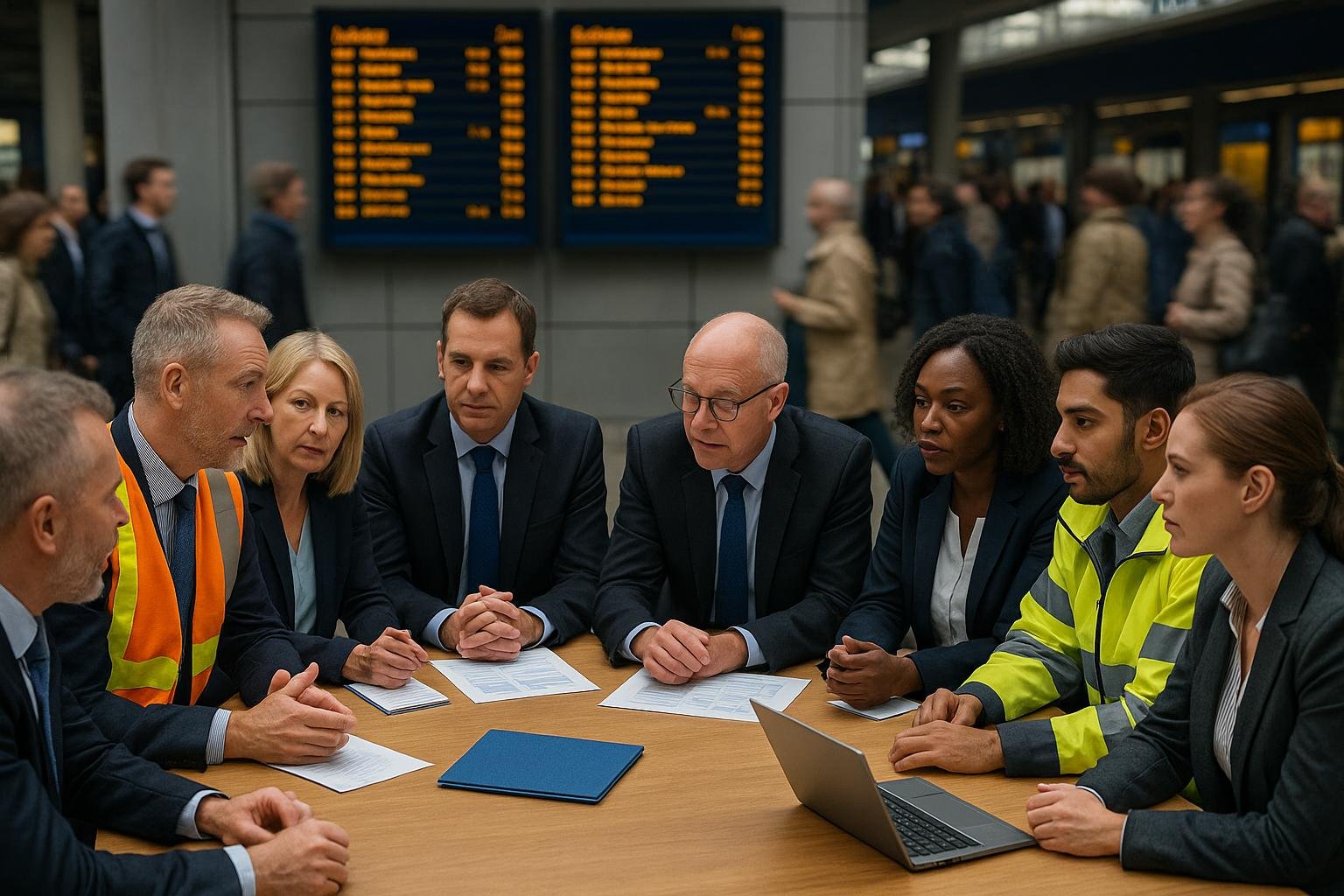
As financial constraints and shifting passenger needs challenge traditional procurement models, industry insiders advocate for more flexible, collaborative frameworks to ensure continued efficiency and value in UK rail projects.

Framework agreements have underpinned procurement in the UK rail sector for decades, promising stability, efficiency and closer working between clients and suppliers. Yet with public finances squeezed and demand patterns shifting since the pande...
Continue Reading This Article
Enjoy this article as well as all of our content, including reports, news, tips and more.
By registering or signing into your SRM Today account, you agree to SRM Today's Terms of Use and consent to the processing of your personal information as described in our Privacy Policy.
Long-term deals were introduced to reduce repeated tendering, secure access to specialist skills and allow suppliers to invest in understanding client needs. Practitioners argue those benefits endure: established relationships let suppliers anticipate priorities, align teams more quickly and deliver outcomes that reflect operational realities rather than narrow contract terms. For clients, frameworks offer a faster route to commission work through call-offs and a degree of certainty about capability and delivery approach.
But the economic and policy backdrop has altered the assumptions that once underpinned these arrangements. Post‑coronavirus fiscal pressures and tighter public spending have reduced the steady pipelines of work that many suppliers expected under earlier contracts, while shifting client priorities mean some frameworks are no longer delivering predictable volumes. According to Railway Gazette, this mismatch between expectation and reality is prompting calls for frameworks to evolve so they remain a source of value in a more volatile market.
That evolution, industry insiders say, begins with the conversations partners have with one another. A more inquisitive approach, asking how pressures on budgets, programme risk or innovation pipelines affect delivery, can reveal gaps that standard frameworks do not address. From the supplier perspective, cultivating that deeper understanding enables more targeted proposals and smarter resource planning. From the client side, it can unlock creative uses of existing agreements without breaching procurement rules.
Collaboration matters more where value for money is the primary metric. In a constrained environment, sharing insight and reframing success around end‑user outcomes rather than narrow outputs helps stretch scarce funding. Railway Gazette reporting suggests frameworks that tolerate greater flexibility on scope, incentivise continuous improvement and embed mechanisms for regular review perform better at delivering real value.
There are practical implications for how frameworks are designed and managed. Shorter, modular arrangements or hybrid models that combine a core long‑term relationship with more responsive, shorter-term call-offs could reconcile the need for stability with the reality of unpredictable demand. Equally, establishing clearer channels for information exchange, joint risk management and incentives for innovation can reward suppliers that invest in understanding client objectives.
Industry voices caution against abandoning long-term agreements entirely. The accrued institutional knowledge and trust that develop over time are hard to replicate through spot contracting. Instead, the argument advanced in trade coverage is for frameworks to be retooled: preserved where they add strategic value, but made more dynamic and conversation-driven so they can respond to shifting priorities and reduced certainty.
The debate is one of balance. As the rail sector navigates tighter budgets and changing passenger patterns, frameworks that combine the efficiencies of continuity with the agility to adapt will be most likely to deliver improved outcomes. According to Railway Gazette, achieving that will require both clients and suppliers to adopt a more curious, collaborative stance, using long-term relationships not as an administrative convenience but as a platform for shared problem-solving and better value for the public purse.
This piece is adapted from commentary first published on Rail Business Daily and reflects reporting in Railway Gazette on the need for frameworks in the UK rail industry to evolve to remain effective.
Source: Noah Wire Services
Subscribe to Industry Updates

