


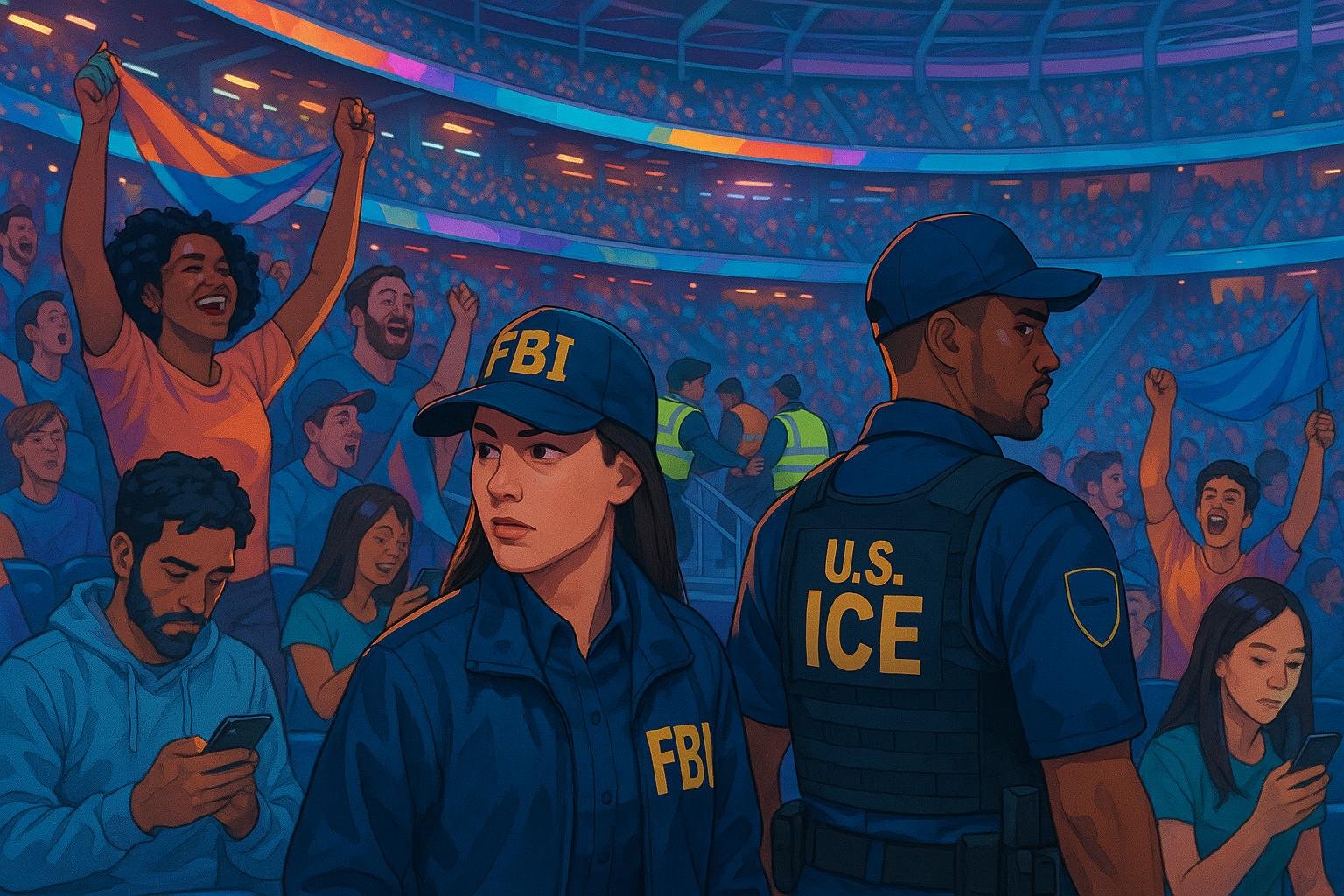
Acting ICE director Todd Lyons highlights a focus on investigation rather than enforcement during the 2026 FIFA World Cup, sparking debate over security measures and civil liberties at the international event.

Acting U.S. Immigration and Customs Enforcement director Todd Lyons has told Congress that Homeland Security Investigations will play a “key part” in security for the 2026 FIFA World Cup, remarks that have revived long-standing anxieties about federal immigrat...
Continue Reading This Article
Enjoy this article as well as all of our content, including reports, news, tips and more.
By registering or signing into your SRM Today account, you agree to SRM Today's Terms of Use and consent to the processing of your personal information as described in our Privacy Policy.
Lyons specified that Homeland Security Investigations, or HSI, rather than Enforcement and Removal Operations, would be the ICE component involved. HSI focuses on cross-border criminal investigations and intelligence, often operating away from public view; ERO carries out detentions and deportations and has been the source of much public controversy. That institutional separation, observers note, suggests HSI’s work around the tournament is likely to be investigative and intelligence-led rather than frontline immigration arrests. The Guardian and Forbes both summarised Lyons’s testimony and underscored that he did not commit to halting enforcement activity during FIFA-sanctioned events.
Still, civil‑liberties groups warn the distinction between ICE subunits will not fully allay fears. The American Civil Liberties Union has argued federal policies under the current administration heighten risks for immigrant communities and visitors, and Human Rights Watch pointed to a case last year in which an asylum seeker en route to a Club World Cup match in New Jersey was arrested by state police for a drone ordinance violation, then referred to ICE and later deported. Human Rights Watch described that episode as illustrative of how ordinary policing can funnel non‑citizens into federal immigration enforcement, a risk that could reverberate during an event expected to draw millions of international fans. The New York Times reported the Department of Homeland Security confirmed that referral.
Federal coordination for the tournament already runs at the highest levels. The White House established a dedicated task force in March 2025 to coordinate federal support for the FIFA Club World Cup 2025 and the FIFA World Cup 2026, housed within the Department of Homeland Security and chaired by the president, according to White House materials. That interagency architecture is intended to marshal resources and liaise with host cities, but it also means local policing agreements and federal immigration priorities will be operating within a single, tightly managed framework.
Local arrangements matter. Data compiled by ICE and reviewed in reporting show that some jurisdictions hosting matches use 287(g) partnerships or similar agreements that permit state or local officers to perform immigration‑related functions on behalf of the federal government. Goal reported that such cooperative arrangements, and last summer’s visible deployment of federal agents at the Club World Cup, have already raised questions about whether spectators might be detained for matters unrelated to immigration and then transferred to federal custody.
Officials from the Department of Homeland Security have sought to reassure travellers. A DHS spokeswoman told The New York Times and other outlets that international visitors who enter the United States legally “have nothing to worry about” and that immigration enforcement focuses on those in the country unlawfully. FIFA has declined to comment publicly on whether it has received specific guarantees from U.S. authorities about enforcement pauses during tournament events.
Lawmakers pressed Lyons on the political and reputational stakes. During the hearing Representative Nellie Pou, whose district includes MetLife Stadium in New Jersey, warned that fear of arbitrary detention could undermine community trust and discourage attendance; Lyons replied that ICE is “dedicated to ensuring everyone who visits the facilities will have a safe and secure event,” language reported verbatim by The New York Times.
Rights advocates and some local officials say the onus is on federal and municipal authorities to make concrete commitments that separate public‑safety roles from immigration enforcement at venues, fan zones and transit hubs. Absent explicit, enforceable safeguards, opponents contend that the mere presence of federal agents, however narrowly tasked, could chill attendance among immigrant communities and foreign guests, complicating an event that organisers and the White House present as an opportunity to showcase the country’s hospitality and boost tourism.
As planning accelerates, the debate centres on transparency, the scope of interagency cooperation and whether assurances offered in broad terms will translate into practice on the ground. The ICE director’s comments have crystallised those questions: officials insist a layered security posture is necessary for a tournament of this scale, while civil‑liberties groups and some local leaders say concrete limits and oversight are required to prevent unintended harms to fans and communities.
Source: Noah Wire Services
Subscribe to Industry Updates

