


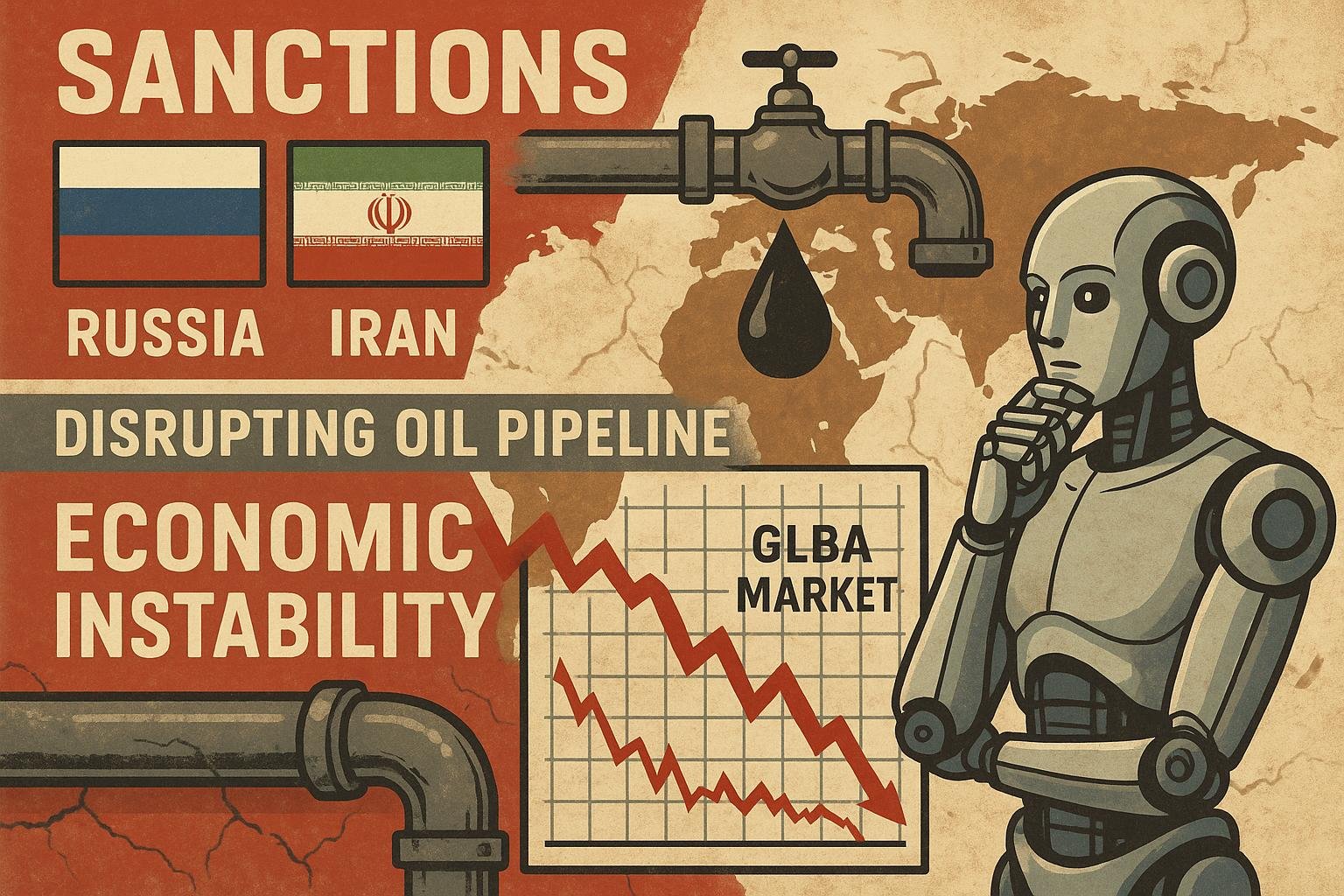
President Trump’s assertive energy strategy deploys sanctions and export controls aiming to cut off revenue streams for Russia and Iran, but critics warn of potential market disruptions and geopolitical tensions navigating this sensitive approach.

President Trump has linked his foreign-policy objectives tightly to an assertive energy strategy that, his allies say, aims to deprive adversaries of the revenues that sustain military campaigns and regional proxies. Tha...
Continue Reading This Article
Enjoy this article as well as all of our content, including reports, news, tips and more.
By registering or signing into your SRM Today account, you agree to SRM Today's Terms of Use and consent to the processing of your personal information as described in our Privacy Policy.
The Treasury Department’s directive requiring divestment of Lukoil’s overseas holdings , a move the administration says is aimed at preventing Moscow from using commercial proceeds to fund its war effort , presents immediate practical and geopolitical challenges. Industry observers warn that a disorderly transfer of assets to speculative buyers could damage production, reduce investment and tighten supply, with knock-on effects for global prices and energy security for U.S. partners in Europe. The Guardian reported that previous sanctions on Russia’s energy majors produced an immediate price reaction, pushing Brent crude toward $80 a barrel after Washington targeted Rosneft and Lukoil in October 2025.
Administration officials argue that placing Lukoil’s foreign operations under the control of experienced U.S. operators would safeguard output and deny revenue to Moscow while preserving market stability. Critics counter that such a course raises complex legal, commercial and diplomatic questions, including the risk that assets could be acquired indirectly by proxies or that secondary sanctions aimed at deterring buyers would further strain relations with major purchasers. Axios reported that the White House and Israeli leaders have also discussed stepping up pressure on Iran’s oil sales to China, which currently accounts for the bulk of Tehran’s crude exports, a manoeuvre that could complicate ties with Beijing ahead of planned high‑level talks.
Washington has not limited itself to Russian targets. The administration has repeatedly expanded penalties on entities linked to Iranian oil sales, arguing those revenues underwrite militant groups and a destabilising regional posture. AP coverage recalled a major round of U.S. sanctions on Iran’s oil sector announced on 24 February 2025 and subsequent designations in October 2025 that named dozens of vessels, companies and terminals alleged to facilitate the flow of Iranian petroleum. Treasury and State Department statements at the time framed the measures as part of a campaign to drive Iran’s exports toward zero and to choke off funds which, officials say, have sustained violent proxies.
The policy mix , sanctions, tighter export controls and diplomatic pressure on buyers , has reduced Moscow’s options and pushed Russian exporters to resort to a so‑called shadow tanker fleet and steep discounts to move cargoes. AP analysts note the Kremlin has moved to plug budget shortfalls through higher taxes and increased domestic borrowing, steps that carry the risk of curbing growth and, over time, eroding the state’s capacity to sustain prolonged military operations. Yet these economic strains do not guarantee a rapid end to hostilities, and Western officials acknowledge that sustained enforcement and international cooperation are essential if sanctions are to produce strategic effects without unintended market disruption.
How Washington manages the next phase of Lukoil’s divestment will be telling. Policymakers face a trade‑off between maximizing pressure on Russia and maintaining reliable supplies for allies and consumers; mishandled transfers or excessively punitive secondary measures could cut off revenue streams but also tighten global markets, with economic and political consequences at home and among partners. As the administration presses China, India and others to reduce purchases of sanctioned crude, diplomats and trade officials will be watching for signs that economic coercion is being balanced with mechanisms to preserve energy stability.
The outcome will hinge on enforcement detail: the rigor with which the U.S. and its partners block covert repurchases, the terms under which foreign‑based facilities are operated, and the readiness of buyers and insurers to comply with new restrictions. If effectively executed, proponents say, the strategy can undercut the fiscal base of adversarial governments and reduce their appetite for aggression; opponents caution that heavy‑handed implementation risks market shocks and deeper geopolitical friction, especially with major Asian purchasers.
Source: Noah Wire Services
Subscribe to Industry Updates

