


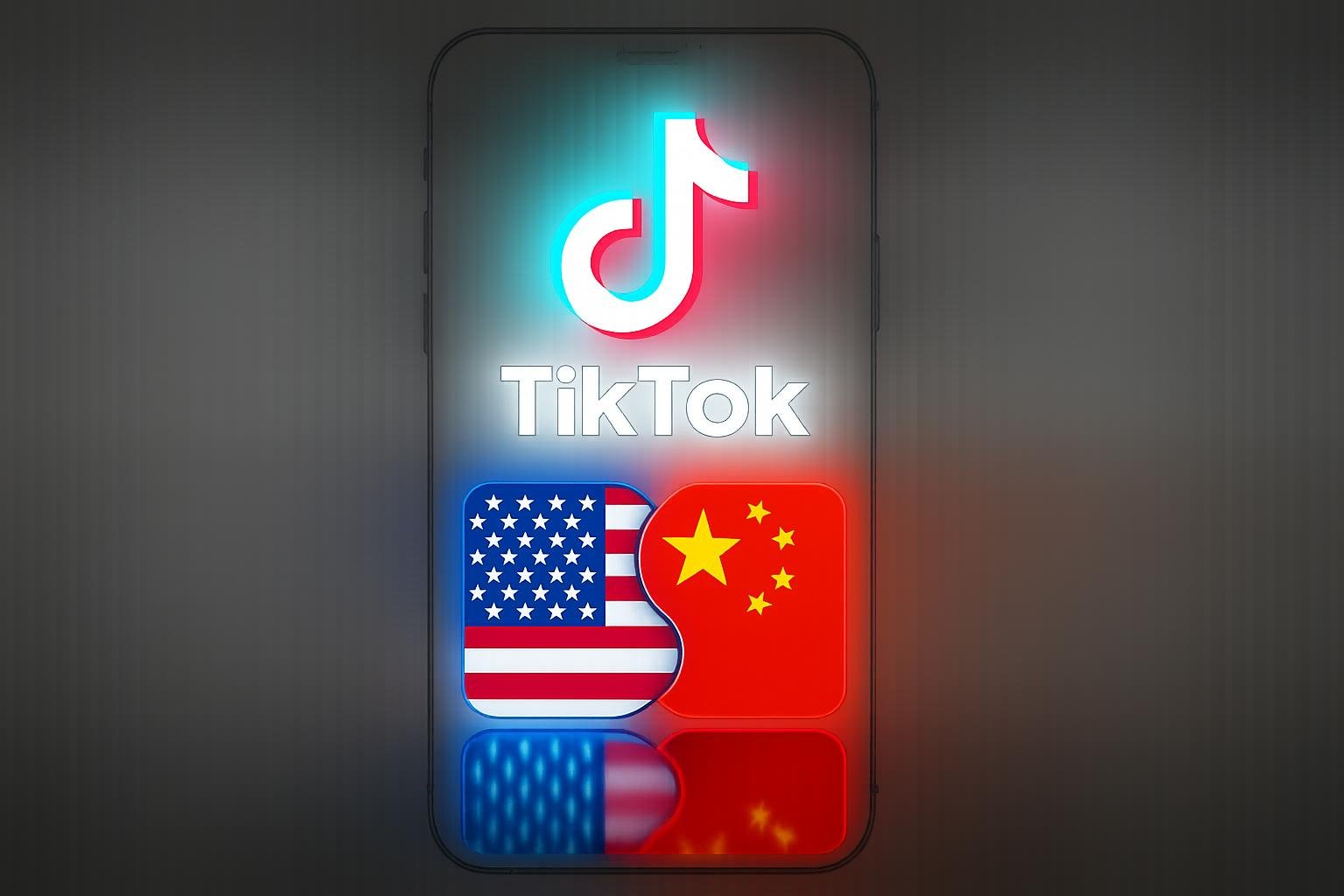
President Trump and Xi Jinping are nearing an agreement on TikTok’s future, signalling potential easing of U.S.-China tensions as negotiations focus on data security and ownership transfer amid ongoing geopolitical and trade disputes.

President Donald Trump and Chinese President Xi Jinping are poised to seek a crucial agreement aimed at keeping the popular video app TikTok operational in the United States while simultaneously attempting to ease tensions between the two economic superpowers. The discussions, expected to take place during their first known call in three months, are set against the backdrop of ongoing trade disputes, tariff conflicts, and geopolitical friction.
The negotiations focus primarily on transferring TikTok’s U.S. assets from its Chinese parent company, ByteDance, to American ownership, thereby addressing longstanding national security concerns raised by U.S. lawmakers. Congress had mandated a shutdown of the app in the U.S. by January 2025 unless a divestiture occurred. However, President Trump has deferred enforcing this shutdown multiple times, citing both political considerations—acknowledging TikTok’s significant user base and its impact during his 2024 election campaign—and ongoing attempts to secure a deal that satisfies both security and commercial interests.
According to official reports and statements, a framework agreement has been reached during recent trade talks in Madrid, involving the transition of TikTok operations to U.S.-controlled ownership. This framework aims to insulate American user data and content by entrusting a third-party partner with data security oversight while aiming to address concerns over the continued use of ByteDance’s algorithm, which remains a contentious element due to fears of potential Chinese government influence or espionage. China, for its part, has denied allegations of security threats posed by TikTok and characterised the deal as a “win-win” situation that includes a review process for technology exports and intellectual property licensing related to the app.
President Trump described the ongoing negotiation as being “pretty close to a deal” and hinted at the possibility of extending the deadline for the divestiture under the current favourable terms. Earlier in the week, he signed an executive order delaying the enforcement of the 2024 Congressional mandate until December 16, marking the fourth such extension beyond the original deadline. During a joint news conference with British Prime Minister Keir Starmer, Trump reiterated the value of TikTok, stating, “I like TikTok; it helped get me elected,” highlighting the app’s significant political and cultural influence in the U.S.
The TikTok deal is a pivotal element in the broader, complex U.S.-China relationship, marked by high tariffs, export restrictions, and strategic competition in sectors such as semiconductors and advanced technologies. Despite prior provisions like the significant hikes in tariffs on Chinese imports initiated by Trump earlier in 2025, both sides have sought to cool the escalating trade conflict through limited agreements and tentative economic cooperation. Yet many challenges remain unresolved, including disputes over Chinese purchases of U.S. agricultural products and Boeing airplanes, as well as demands for China to curb fentanyl precursor chemical exports, which the U.S. blames for the opioid crisis. Beijing has pushed back strongly against what it sees as distortions of these issues by Washington.
Beyond trade, strategic concerns simmer over Taiwan and the South China Sea, areas that continue to generate regional and global anxiety. These geopolitical flashpoints have largely taken a backseat in U.S. policy discourse relative to the immediate crises in places like Ukraine and Gaza but remain highly sensitive and potentially volatile.
The anticipated phone call between Trump and Xi is seen by diplomatic circles as a potential step toward an in-person summit at the Asia-Pacific Economic Cooperation (APEC) meeting scheduled in South Korea later this year. Such a summit could provide an opportunity to set new strategic guidelines for bilateral relations. As Liu Pengyu, spokesperson for the Chinese Embassy in Washington, said, “Heads-of-state diplomacy plays an irreplaceable role in providing strategic guidance for China-U.S. relations.”
In a gesture interpreted as goodwill ahead of the call, China allowed the return of Wells Fargo banker Chenyue Mao, who had been barred from leaving China for several months. This move signals Beijing’s willingness to foster better ties amid ongoing negotiations.
While experts like Scott Kennedy from the Center for Strategic and International Studies note that China’s “effective use of sticks (rare earths) and carrots (TikTok)” has shifted leverage in its favour, the Trump administration’s tariff policy remains backed by the belief that such measures will restore manufacturing jobs and correct trade imbalances despite economic slowdowns reported in both countries.
Whether the TikTok deal and parallel diplomatic efforts will usher in a broader easing of U.S.-China tensions remains uncertain. Critics highlight lingering concerns about data privacy, technological sovereignty, and the durability of any resulting agreement. Nonetheless, both governments appear motivated to break the current gridlock, balancing economic interests with national security with hopes that a resolution in TikTok’s status could serve as a symbolic and practical breakthrough.
Source: Noah Wire Services

