


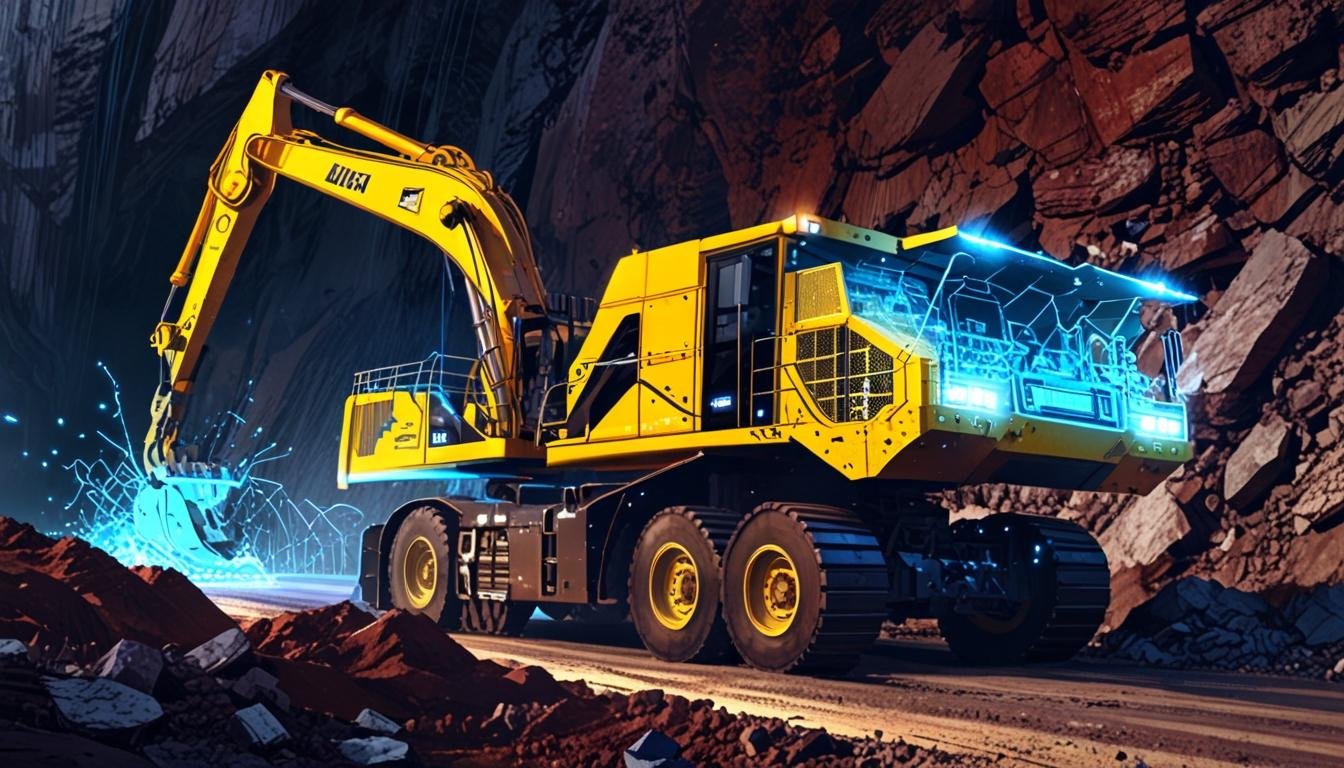
The collaboration between Delft University of Technology (TU Delft) and Hitachi Construction Machinery (Europe) NV (HCME) marks a significant advancement in the maintenance of mining equipment, a sector often characterised by its operational complexities and harsh environments. Over a two-year study, the two organisations aim to develop predictive maintenance strategies that will not only enhance the reliability and safety of machinery but also significantly reduce operational downtime and life-cycle costs.
Hitachi, a renowned manufacturer of ultra-large excavators and dump trucks, possesses a wealth of operational data collected from machines deployed in demanding conditions. This data, aggregated through sophisticated sensors embedded within key components, allows for an in-depth analysis of performance indicators, such as temperature and pressure fluctuations. The company’s digital solutions team is leveraging this data to inform the research, providing insights that are critical for maintaining optimal machine performance. Their existing IoT technology, known as ConSite®, already monitors over 184,000 machines globally, ensuring real-time insights into operational status which can be harnessed to predict equipment failures more effectively.

Leading the research is Malihe Goli, a Control and Automation Engineer and PhD candidate at TU Delft. Goli’s project aims to create a robust predictive model to understand the degradation trends in vital components like pumps, cylinders, and brakes. As she notes, the partnership with HCME is invaluable: “Access to large-scale, real-world datasets – including detailed failure records, maintenance logs, and sensor measurements – has enabled the development of accurate, data-driven models for component degradation.” This integration of practical data with academic research is intended to foster more effective maintenance strategies, ultimately allowing engineers to plan repairs proactively.
Daan van Berkel, Manager of Mining Projects and Sustainable Mining for HCME, emphasises the operational benefits of this research initiative. He states, “We will be able to plan when a truck needs to come into the workshop more precisely, and order any parts that may be required ahead of time.” This foresight not only optimises maintenance schedules but also minimises the risks of unexpected failures that could lead to prolonged machine downtime or damage to other components.
The importance of predictive maintenance in mining cannot be overstated. A case study at Colombia’s Carbones Del Cerrejón mine demonstrated that a Hitachi excavator achieved over 100,000 operational hours, far exceeding its expected lifecycle. This success resulted from a stringent preventative maintenance strategy that incorporated predictive maintenance techniques such as structural inspections and thermography, showcasing how data-driven approaches can prolong equipment life in challenging environments.
The collaboration between TU Delft and HCME is part of a broader shift within the mining industry towards more sustainable practices. The field is increasingly recognising the advantages of remanufacturing equipment, which can significantly reduce environmental impact compared to new production, aligning with the emerging principles of the circular economy. As companies strive for sustainability in mining operations, the development of advanced monitoring systems and predictive maintenance is becoming increasingly pivotal.
Furthermore, Hitachi’s ambitions extend beyond maintenance solutions; the company is also at the forefront of integrating autonomous operations and zero-emission technologies into mining practices. With the Automated Haulage System enabling uncrewed operations and ongoing development of semi-autonomous machinery, Hitachi aims to improve safety while reducing operational costs and environmental impact.
Through this partnership, TU Delft and HCME not only enhance the maintenance of mining equipment but also pave the way for innovations that could reshape the industry’s operational and environmental landscape, keeping safety and efficiency at the forefront of technological advancements. In an era where operational excellence and environmental responsibility are paramount, such collaborations are crucial in steering the future of mining toward a more sustainable and reliable framework.
Reference Map
- Paragraph 1: [1]
- Paragraph 2: [1], [2]
- Paragraph 3: [1], [2]
- Paragraph 4: [1]
- Paragraph 5: [1], [6]
- Paragraph 6: [1], [7]
- Paragraph 7: [3], [5]
Source: Noah Wire Services

