


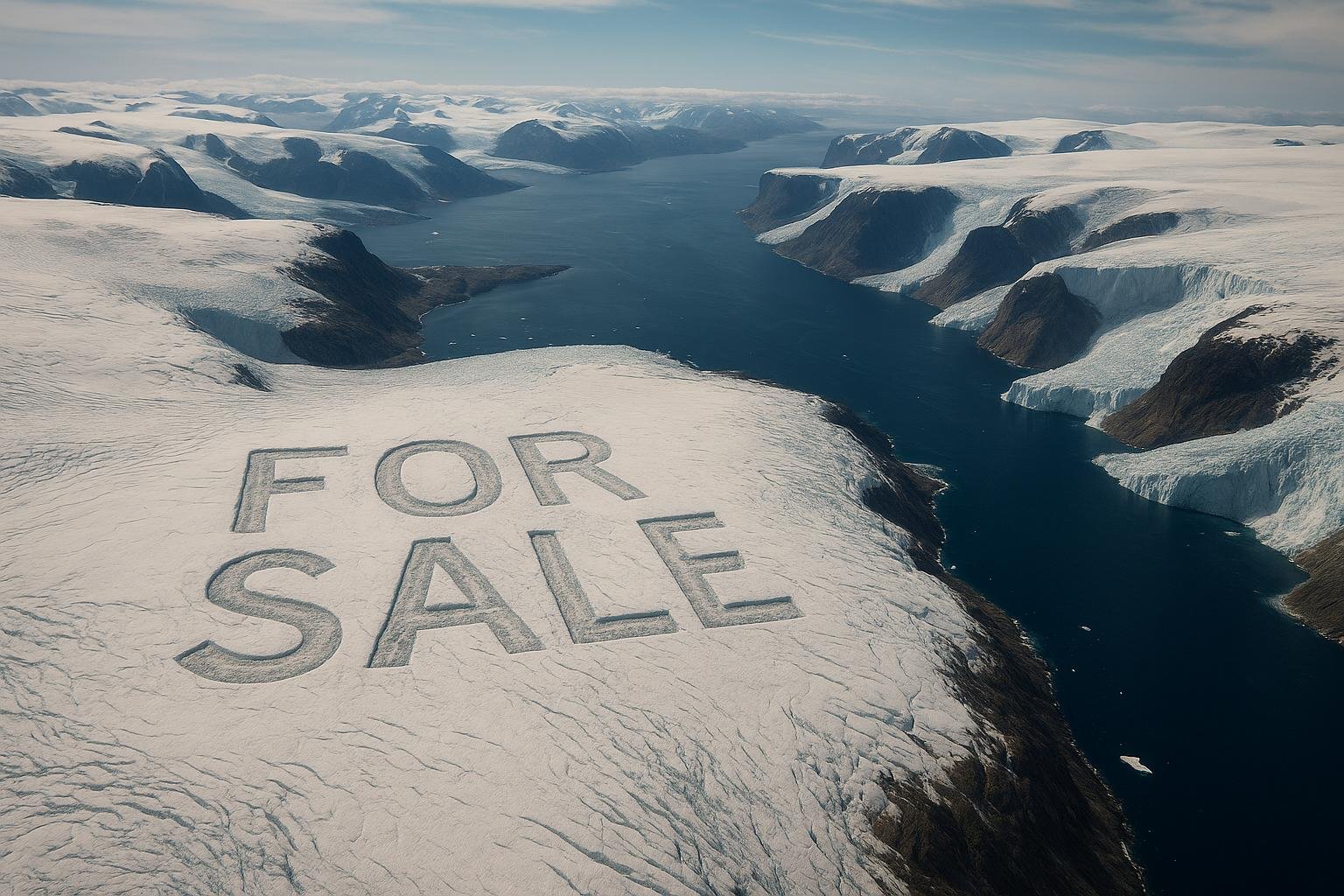
President Donald Trump’s new tariffs on European imports part of a controversial bid to acquire Greenland, sparking diplomatic outrage, economic concerns, and fears of a transatlantic rift.

President Donald Trump has announced new tariffs on imports from eight European countries , Denmark, Norway, Sweden, France, Germany, the United Kingdom, the Netherlands and Finland , linking the measures explicitly to his long-stated aim of acquiring Greenland. According to the As...
Continue Reading This Article
Enjoy this article as well as all of our content, including reports, news, tips and more.
By registering or signing into your SRM Today account, you agree to SRM Today's Terms of Use and consent to the processing of your personal information as described in our Privacy Policy.
At a White House event about rural health care Mr Trump framed the move as part of a wider negotiating posture, telling attendees, “I’m the tariff king and the tariff king has done a great job.” He reiterated the theme online, posting a black-and-white image labelled “Mister Tariff” and later “The Tariff King,” a detail first reported by HuffPost and cited in local commentary. The administration has said the measures are intended to press European governments that oppose U.S. control over Greenland to change tack; European capitals have called the action coercive and unacceptable.
European leaders responded swiftly and sharply. According to AP reporting, officials in Copenhagen, Oslo, Stockholm, Paris, Berlin, London, The Hague and Helsinki condemned the tariffs as an attempt to intimidate and a threat to transatlantic ties. French President Emmanuel Macron warned on X that “Tariff threats are unacceptable and have no place in this context. Europeans will respond in a united and coordinated manner should they be confirmed.” Mr Macron’s remarks were echoed by other EU and NATO figures who argued that Denmark’s sovereignty over Greenland should be respected and that diplomatic channels, not economic penalties, are the appropriate route.
The move has raised immediate concern about its economic fallout. The lead article notes that manufacturing has already contracted: firms cut roughly 70,000 jobs following major tariff actions in April 2025 and factory activity had been shrinking for ten consecutive months. Wall Street and business commentators had been anticipating a calmer 2026 after a turbulent 2025; Goldman Sachs was projecting growth of 2.8% for 2026, well above a more typical 2.1% baseline. The Federal Reserve had been hopeful that earlier tariff shocks would be transitory, telling markets that the outlook had “improved on balance” in recent communications. Analysts warn that a fresh, broad-based rise in import duties could re-ignite price pressures and complicate the Fed’s path towards interest-rate cuts if inflation fails to return sustainably to its 2% target.
Beyond macroeconomic risk, commentators say the tariffs jeopardise strategic alliances. NATO members targeted by the measures are U.S. security partners, and officials in Europe have stressed that commercial reprisals could trigger a reciprocal cycle. The AP and Time reported leaders’ explicit worries about a “dangerous downward spiral” in diplomatic relations; The Guardian chronicled similar concerns and quoted Mr Macron saying Europe must be prepared to “stand up for itself” and protect its commercial interests, with “all instruments on the table” should punitive measures proceed.
Domestically, the administration has framed tariff receipts as a revenue source for federal programmes, though details of allocation remain vague in public statements. Critics in the United States characterised the campaign as unnecessary and risky. Senator Bernie Sanders posted on X, “Destroying our closest alliances to take Greenland , which Denmark lets us use freely already , is insane. Congress must say NO,” a reaction cited in the original coverage.
The dispute compounds an already fraught period in international trade policy. Time noted that the tariffs are explicitly tied to troop deployments and diplomatic stances in and around Greenland , a Danish territory that has drawn intermittent interest from Washington because of its strategic location and natural resources. European governments have underlined their support for Denmark’s sovereignty and called for talks rather than coercion.
As the February implementation date approaches, the question for markets and policymakers is whether the threat of escalating duties will be maintained, negotiated away, or reciprocated. The immediate consequence is heightened uncertainty for exporters, manufacturers and defence partners on both sides of the Atlantic, and the prospect that a political aim framed as strategic will be pursued through instruments that risk economic harm to long-standing allies.
Source: Noah Wire Services
Subscribe to Industry Updates

